Beyond the memes and mockery around CJP: Who takes responsibility for students failed by the system?
For many serious aspirants, competitive exams are not just tests. They represent years of hard work, sacrifice, coaching fees, family expectations, financial investments and emotional pressure. Some students spend one, two, three or even four years preparing for a single examination.
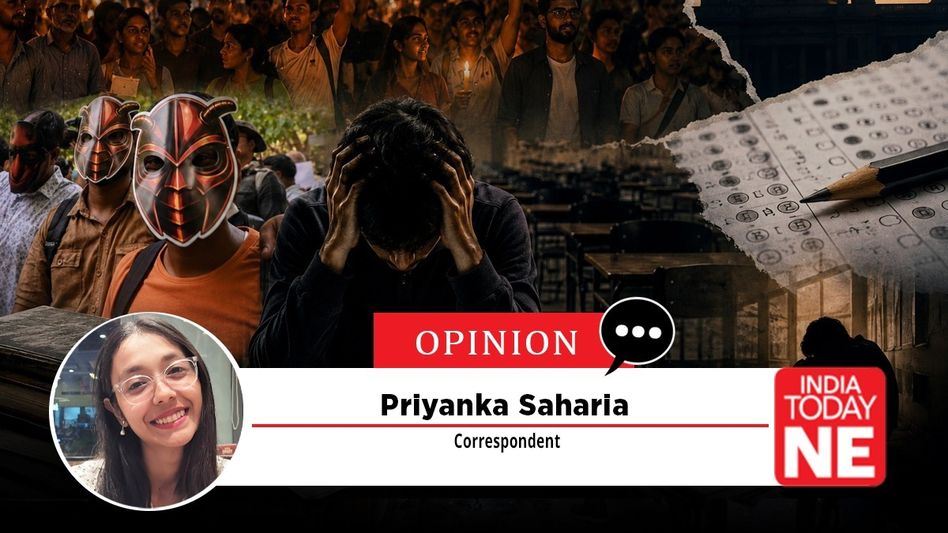

- Jun 08, 2026,
- Updated Jun 08, 2026, 9:47 PM IST

People across India, came out in support of Cockroach Janta Party (CJP). Many of them said they were not members of CJP, nor were they affiliated with any political party or organisation. They were there because they believed in the cause.
Some wanted accountability. Some wanted justice.
Amid the flood of memes, satire and funny videos about CJP, I noticed something important. Behind all the noise, there were genuine people raising genuine concerns. Some videos mocked the movement, saying "hamara youth asurakshit hai" or questioning where the country's youth is headed. But when I looked closely at the protests, I saw people from all age groups standing together, from Gen Z students to people in their sixties.
So, what brought them there?
Many had come out to support students affected by the NEET controversy and the alleged paper leak cases that shook the country this year.
The National Testing Agency (NTA), the autonomous body under the Ministry of Education responsible for conducting nationwide examinations, found itself at the centre of the controversy. Questions were raised about the integrity of one of India's most important examinations for medical aspirants.
But paper leaks are not new in India.
According to a report by The Indian Express, there have been dozens of serious paper leak cases over the last two decades, yet only a handful have resulted in convictions. The bigger question is: what happens to the students whose lives are disrupted because of these failures?
For many serious aspirants, competitive exams are not just tests. They represent years of hard work, sacrifice, coaching fees, family expectations, financial investments and emotional pressure. Some students spend one, two, three or even four years preparing for a single examination.
Then comes the news of a paper leak.
At a time when students should be thinking about admissions, careers and their future, they are instead forced to deal with uncertainty, anxiety and distrust. Years of preparation suddenly feel meaningless. The system they trusted appears to have failed them.
And it is not only the students who suffer. Their parents suffer too.
When CJP organised protests, many students and parents felt that at least someone was willing to listen to their voices. At least someone was willing to speak about the injustice they believed had taken place.
At Jantar Mantar, there were students, parents, teachers and activists who had gathered to demand accountability. Activist Sonam Wangchuk also raised concerns about the impact of such failures on students. While some YouTubers and social media influencers mocked the protesters or attempted to trivialise their concerns, many of the people present were there for a genuine reason: to demand answers.
And perhaps that is what matters most.
In all the social media noise, political arguments and online trolling, we should not forget the real questions:
Who takes accountability when examination papers are leaked?
Who is responsible when students lose years of their lives preparing for exams whose credibility later comes under question?
Who answers for the mental trauma and despair that students and families experience?
Why are stronger safeguards and stricter laws against paper leaks still not in place?
Why is it so difficult to conduct a major national examination without allegations of corruption or malpractice?
Why do those entrusted with power often fail to use it responsibly for the benefit of students and the country?
And finally, are we ever going to build a system where merit matters more than manipulation, where students can trust the institutions meant to serve them, and where corruption is no longer accepted as a normal part of public life?
These are the questions that deserve our attention, not the memes, not the mockery, and not the distractions.