Beyond the NEET Leak: Broken Trust, Shattered Dreams and a Failed System
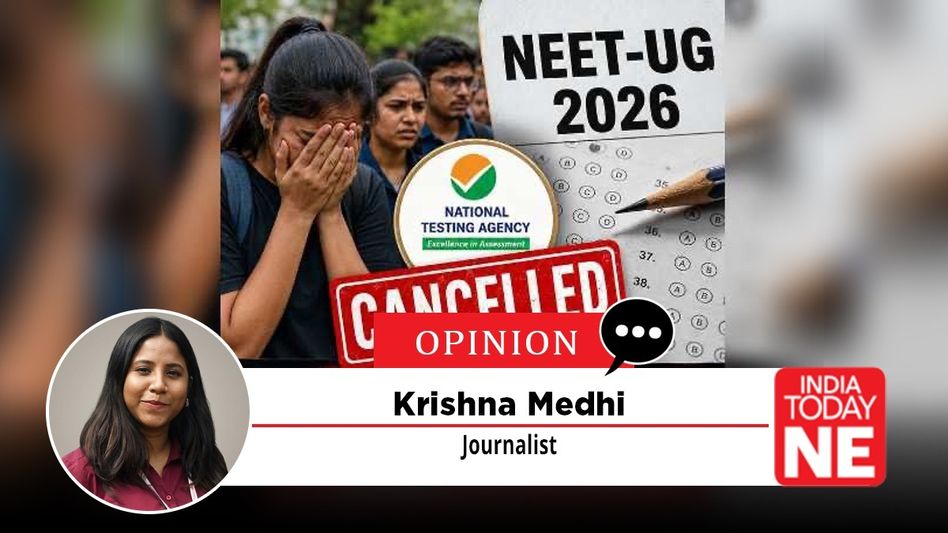
India’s examination system is facing more than a paper leak crisis, it is facing a crisis of trust. The cancellation of NEET-UG 2026 after allegations of a paper leak has once again exposed a painful reality: the people who suffer the most are often not the cheaters, but the honest students and families who build their lives around the belief that education is their only path forward.

- May 17, 2026,
- Updated May 17, 2026, 3:44 PM IST

India’s examination system is facing more than a paper leak crisis, it is facing a crisis of trust. The cancellation of NEET-UG 2026 after allegations of a paper leak has once again exposed a painful reality: the people who suffer the most are often not the cheaters, but the honest students and families who build their lives around the belief that education is their only path forward.
According to reports, the National Testing Agency (NTA) cancelled NEET-UG 2026 and announced a re-examination on June 21 after allegations of a paper leak surfaced. The matter is now under investigation. However, this is not the first time India’s examination system has come under scrutiny. From the AIPMT paper leak in 2015 to the NEET controversies in 2024, repeated examination scandals have steadily weakened public faith in merit-based examinations. For students preparing for NEET, this examination is not merely a test.
It is often a family’s biggest dream, built over years of sacrifice, pressure and hope. That is why the cancellation has hit particularly hard among students from humble and middle-class backgrounds. One repeater student from Assam described the emotional collapse he experienced after the announcement.
Coming from an Assamese-medium school, he had spent an entire year in a residential coaching institute in Guwahati. After the examination, he felt confident for the first time that he would secure a good medical college in Assam. But the announcement of reNEET shattered that belief. “I felt like one whole year of hard work had gone to waste,” he said. “In exams like this, preparation depends a lot on momentum, but now that momentum has completely broken.” His frustration extended beyond the cancellation itself. He questioned how such a leak could occur despite the involvement of a national agency like the NTA. More importantly, he raised a concern shared by many aspirants across the country — accountability. “The paper leaked in 2015, again in 2022 and it could happen again in 2027 as well,” he said. “Till today, the real criminals have neither been properly caught nor given strict punishment.” Perhaps the most heartbreaking part of his testimony was not about marks or rankings, but about his family.
He said his mother has been crying continuously ever since the news broke because she believed her son would finally become the first doctor in the family. Another NEET aspirant offered a more balanced perspective. She admitted that a re-exam may benefit students who narrowly missed qualification, but even she acknowledged the enormous psychological burden the decision has created. “The momentum we had built over time is now completely broken,” she said. “Right now, we are unable to trust NTA anymore. It feels like they are playing with students’ emotions and futures.” Her statement reflects a larger crisis. When students begin losing faith in the fairness of competitive examinations, the damage goes far beyond one cancelled test. It affects the very idea of meritocracy, the belief that honest hard work can change lives. That belief is especially important for poorer families.
Speaking about the issue, a parent of a NEET aspirant from a village described the sacrifices involved in supporting a child’s medical dream. “We are educating our son with a lot of struggle and sacrifice,” the parent said. “A child studies for years with dreams in his eyes and a family supports him with all their hopes. When something like this happens, it does not just affect one student, it breaks the confidence and peace of the entire family.” This is the side of the NEET controversy that often gets ignored in national headlines. For wealthier families, a re-examination may be an inconvenience. For poorer households, it can mean another year of uncertainty, additional coaching expenses, travel costs and unbearable emotional strain.
Many families take loans, relocate children to cities or cut down household expenses just to support preparation. When an examination is cancelled, the loss is not merely academic, it is deeply personal. Career coach and education expert Dinesh Lahoti believes the impact of such incidents extends far beyond logistics. According to him, the repeated leaks are slowly eroding students’ faith in the system itself. “Students trust that examinations in India are based on merit,” he said. “But when paper leaks happen repeatedly, the saddest part is that every time students believe the system will improve, yet every time the system fails again.” He also pointed out that the uncertainty surrounding re-NEET is disrupting students’ backup plans, including university admissions and other entrance examinations.
Many students from middle-class backgrounds are being forced to secure admissions elsewhere as a precaution, often in institutions that do not even guarantee fee refunds. Importantly, Lahoti highlighted another dangerous narrative emerging around re-NEET is the assumption that one extra month automatically guarantees dramatic improvement in scores. “NEET preparation requires years of dedication, discipline, and consistency,” he explained. “If everyone gets an extra month to prepare, then everyone’s performance level may improve together. Ultimately, what matters is securing a seat, not merely increasing marks.” His observation exposes another harsh truth: re-examinations do not reset competition equally for everyone.
Students already struggling emotionally, financially or mentally may find it much harder to restart preparation. The government has now proposed shifting NEET to Computer-Based Test (CBT) mode from next year as a possible solution to prevent future leaks. While this may improve security through better technology and encrypted systems, it also raises concerns about accessibility. As Lahoti noted, many students from rural India are still unfamiliar with computer-based examinations and lack proper digital access. Any reform, therefore, must also focus on infrastructure, training and equal opportunity.
Ultimately, the NEET controversy is not just about one examination. It reflects a deeper structural problem within India’s competitive examination culture, a system where millions of students stake their futures on a single test, while recurring leaks continue to undermine trust. If India truly wants to protect merit, then reforms cannot remain reactive or cosmetic. Accountability must become stronger than excuses and student welfare must become more important than institutional reputation. Otherwise, the country risks raising a generation of young people who no longer believe that honesty and hard work are enough. Because, in the end, the greatest damage caused by repeated leaks is not to an examination schedule; it is to the faith of millions of students who once believed the system would treat them fairly. For millions of ordinary Indian families, NEET is more than an entrance test. It is the bridge between struggle and opportunity, between poverty and possibility. Every paper leak weakens that bridge a little more.