Beyond the New Yalta: India's Stakes in the Trump–Putin–Xi Equation
The proposed meeting of three global power centres raises fundamental questions about the emerging world order and why India must move from safeguarding strategic autonomy to exercising strategic influence.

- Nov 15, 2026,
- Updated Nov 15, 2026, 3:37 PM IST

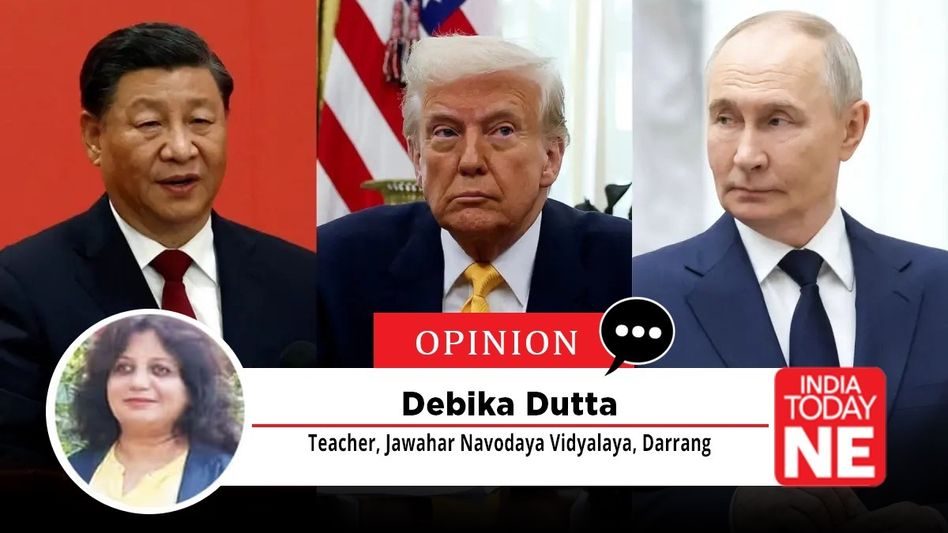
The proposed trilateral meeting of Donald Trump, Vladimir Putin and Xi Jinping in Shenzhen on November 19, on the sidelines of the Asia-Pacific Economic Cooperation (APEC) summit, carries implications far beyond the diplomatic significance of three powerful leaders sharing a negotiating table. The United States, Russia and China are not merely major military and economic powers; their strategic decisions influence international security, global commerce and geopolitical alignments. Confirmed by Washington and Moscow, the proposed engagement
marks an unprecedented gathering of the three leaders.
Nuclear arms control and the conflict involving Iran are expected to feature in the discussions, although no immediate agreement is anticipated. For India, the significance of this encounter lies in a larger question: could an
emerging understanding among the world's major powers alter the strategic space available to
other nations?
The historical resonance of Yalta is difficult to overlook. In February 1945, Franklin D. Roosevelt, Winston Churchill and Joseph Stalin met to deliberate on the post-war settlement and the political future of Europe. The conference became an enduring symbol of an international order shaped by great-power bargaining, often with little regard for the aspirations of nations outside the negotiating room.
The proposed Shenzhen meeting is neither a repetition of Yalta nor evidence of an impending division of the world into spheres of influence. The historical circumstances are different, and the contemporary international system is considerably more complex. Nevertheless, the underlying lesson remains pertinent: the concentration of
decision-making power in a handful of capitals can have consequences for countries that have no voice in those deliberations.
The danger is not diplomacy among powerful nations; it is the assumption that their interests alone can determine the future of the international order. Each leader approaches the proposed engagement with distinct strategic calculations. Trump is seeking an opening for discussions on nuclear arms control and the wider international security environment. Putin has an opportunity to reinforce Russia's international standing and demonstrate that Moscow remains indispensable to global diplomacy. Xi, as host, can showcase China's diplomatic reach and project Beijing as a central interlocutor in international affairs.
Yet the differences are substantial. Washington wants China included in future nuclear negotiations, while Beijing has resisted entering a framework alongside two countries possessing considerably larger nuclear arsenals. The expiry of the New START treaty between Washington and Moscow on February 5, 2026, has further complicated the arms-control environment.
Whether Shenzhen produces a substantive breakthrough or remains primarily symbolic, its diplomatic significance cannot be dismissed. For India, the implications are particularly consequential. New Delhi has built relationships with competing centres of power without surrendering its independent judgement. Its partnership with Russia remains important for defence cooperation, energy security and Eurasian strategic interests. Its engagement with the United States has expanded across defence technology, trade, critical technologies and the Indo-Pacific. Its relationship with China, meanwhile, remains complicated by unresolved territorial questions, strategic competition and concerns over Beijing's expanding regional influence. These relationships serve different national interests and
cannot be reduced to a binary choice between competing geopolitical camps.
India's foreign policy must remain guided by one overriding consideration: the sovereignty, security and
long-term interests of Bharat. A possible recalibration of US-Russia relations deserves particular scrutiny in New Delhi. Any genuine reduction in tensions between Washington and Moscow would be welcome if it contributed to international stability. However, India cannot afford to assume that an understanding between the two powers would automatically accommodate its interests.
Russia's deepening economic and strategic engagement with China has altered the Eurasian balance, while its longstanding defence relationship with India continues to hold considerable significance. A change in Moscow's relationship with Washington could create opportunities as well as uncertainties for New Delhi. India must therefore sustain its engagement with Russia while accelerating defence diversification, strengthening indigenous manufacturing and reducing vulnerabilities arising from excessive dependence on external suppliers. Historical friendships matter, but contemporary partnerships must be continuously reinforced through mutual interests
and practical cooperation.
China presents an equally significant challenge. Beijing may use the Shenzhen engagement to reinforce its diplomatic visibility, but international recognition of China's importance must not be confused with acceptance of its regional ambitions. India's experience provides sufficient grounds for vigilance. The unresolved boundary question, China's expanding presence in India's neighbourhood and its growing maritime footprint demand sustained strategic attention.
New Delhi must not presume that any accommodation between Washington and Beijing will necessarily advance Indian interests. The future of the Indo-Pacific cannot be determined exclusively by arrangements among external powers, particularly when the security and sovereignty of regional nations are directly involved.
This is precisely why strategic autonomy remains indispensable. However, India must recognise that strategic autonomy cannot become an excuse for strategic passivity. It does not mean maintaining artificial equidistance between competing powers or avoiding difficult diplomatic choices. It means retaining the sovereign freedom to cooperate where interests converge, disagree where they diverge and resist external pressure when national interests demand it.
India's participation in the Quad, BRICS and the Shanghai Cooperation Organisation demonstrates its ability to engage across different geopolitical platforms without becoming captive to any single alignment. Such diplomatic flexibility is an expression of strategic maturity, not inconsistency.
Yet the next phase of Indian foreign policy must be more ambitious. India should move from protecting its strategic autonomy to exercising strategic influence. Its economic weight, technological capabilities, military preparedness, demographic strength and engagement with the Global South provide a substantial foundation for a greater international role. The demand for reform of global institutions, particularly permanent membership of the United Nations Security Council, must be pursued with greater diplomatic urgency. India must also assert its interests in discussions concerning maritime security, international trade, energy security and emerging technologies. A country aspiring to global leadership cannot remain content with responding to decisions taken elsewhere.
The Shenzhen meeting should therefore serve as a strategic reminder for New Delhi. India must strengthen its economic resilience, accelerate indigenous defence capabilities, deepen partnerships across the Indian Ocean and reinforce its engagement with Southeast Asia. It must also make clear that no arrangement concerning the Indo-Pacific or the wider Asian security architecture can claim legitimacy while disregarding the interests of countries directly affected.
Ultimately, the emerging international order must not become another exclusive arrangement among powerful capitals. India should welcome every initiative that reduces nuclear risks and prevents international conflict, but it must remain vigilant against any understanding that compromises its legitimate interests. India must neither seek a place at the world's negotiating table as a diplomatic favour nor allow its future to be determined in its absence. Its ambition must be to become a power whose interests cannot be overlooked, whose voice cannot be marginalised and whose participation is indispensable to shaping the international order.