Conservative India vs modern relationships; UCC, live-in and social stigma
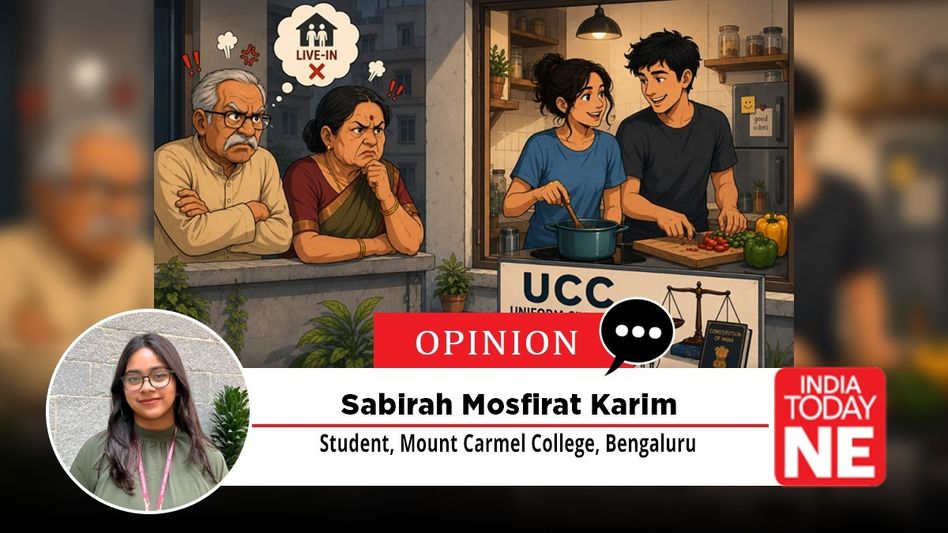
Can love ever remain a private choice in a society where family honour and public judgement still shape personal relationships? As debates over live-in relationships and UCC registration intensify, Assam finds itself caught between deeply rooted traditions and a younger generation demanding greater freedom over how they choose to live and love.

- May 26, 2026,
- Updated May 26, 2026, 4:04 PM IST

- Marriage remains the socially accepted basis of relationships in much of Assam
- Older generations often view cohabitation as contrary to culture and values
- Many couples fear relatives, neighbours and community judgement over personal choices
Live-in relationships continue to remain one of the most debated subjects in Indian society, especially in states like Assam, where customs and traditions still hold strong influence over people’s lives and decisions. While metropolitan cities across India have gradually become more accepting of couples choosing to live together before marriage, the idea still carries a sense of discomfort and social stigma in many parts of Assam.
Marriage continues to be viewed as the only legitimate foundation for a relationship, while any arrangement outside it is often treated with judgement or moral scrutiny. In a state like Assam, where social customs and community influence remain strong, this conservative mindset becomes even more visible.
Compared to cities such as Mumbai, Delhi, or Bengaluru, Assamese society is often seen as more traditional in its outlook toward relationships and marriage. However, the resistance towards live-in relationships is not limited to Assam alone. Across India, especially among older generations, live-ins are frequently viewed as something that goes against Indian culture and values. In many villages and smaller towns, people are either unfamiliar with the concept altogether or strongly reject it because it directly challenges the norms they have followed for generations. Marriage is still regarded as a sacred institution that binds not only two individuals but also two families. Anything outside that structure is often labelled inappropriate or immoral.
This social stigma stems largely from the conservative mindset that continues to dominate Indian society. People are conditioned from a young age to believe that relationships must ultimately lead to marriage and that family approval is central to any major life decision. Living together before marriage, therefore, is seen as violating both cultural expectations and societal discipline. Even today, many people hesitate to openly discuss live-in relationships because of fear of judgement from relatives, neighbours, or the larger community.
The debate surrounding live-in relationships has become even more intense with the introduction of the Uniform Civil Code (UCC) provisions that seek to regulate such arrangements through mandatory registration. The proposal has sparked mixed reactions among people. Supporters of the move argue that legal registration could provide accountability and protection, especially considering the increasing number of disputes and crimes involving couples in live-in relationships reported across the country. For them, mandatory registration appears to be a step towards legal recognition and security.
However, a large section of people view the idea differently. Many believe that forcing couples to register before living together defeats the very purpose of a live-in relationship. Unlike marriage, which is already deeply tied to legal and social structures, live-ins are often chosen by couples seeking greater personal freedom and independence from societal interference. Mandatory registration brings the law directly into people’s private lives and reduces the sense of privacy that such relationships are meant to offer. The question arises of whether there is any meaningful difference left between marriage and a registered live-in arrangement if legal formalities become compulsory.
At the same time, legal recognition under the UCC raises broader questions about how Indian society views relationships outside marriage. Many believe that if the state expects couples to register their live-in relationships, then such arrangements should also come with legal rights and protections similar to marriage. Benefits such as joint insurance, property rights, financial security, inheritance rights, or easier access to loans could make couples feel more secure about registering themselves. Without such protections, the law may appear intrusive rather than supportive.
Yet beyond legal debates, the strongest resistance towards live-in relationships still comes from families and society itself. In India, parents continue to play a major role in shaping their children’s personal decisions, particularly when it comes to relationships and marriage. Even as adults, many individuals feel obligated to follow their parents’ wishes because family approval is considered essential in Indian culture. A relationship is rarely seen as involving only two people; it is viewed as something that affects the reputation and honour of the entire family.
This is one of the primary reasons why live-in relationships remain difficult to accept socially. Most parents, especially those from conservative backgrounds, are uncomfortable with the idea of their children living with a partner before marriage. For them, such arrangements challenge the traditional values they were raised with and often create fear of social criticism. The concern is not only about morality but also about “what society will say.” In many households, maintaining social respectability becomes more important than allowing children complete freedom over their personal choices.
As a result, many young people in India find themselves caught between personal happiness and family expectations. They may wish to choose their own partners or live life according to their own values, but fear disappointing their parents or facing social isolation. In numerous cases, individuals eventually surrender to familial pressure because disobeying parents is still viewed negatively in Indian culture. The emotional burden of choosing between one’s family and one’s own desires remains particularly strong in conservative societies like Assam.
Women, however, continue to face the harshest judgement in these situations. Indian society has long functioned within a patriarchal structure where women’s choices, behaviour, and relationships are monitored far more strictly than men’s. Even today, women are criticised for actions that are considered ‘normal’ or acceptable for men. Whether it is being in a relationship, spending time with male friends, or expressing independence, women often become targets of societal judgement far more quickly than men do.
This double standard becomes even more evident in discussions around live-in relationships. A man in a live-in arrangement may face criticism, but a woman is far more likely to be labelled irresponsible, characterless, or disrespectful towards family values. In many Indian households, daughters are still expected to follow strict social rules and uphold family honour through their behaviour. Parents who may tolerate greater freedom for sons often impose stricter control over daughters, especially regarding relationships.
Despite India’s progress in education and women’s empowerment, many families still hesitate to give women complete independence over their lives and decisions. In several households, daughters are discouraged from openly discussing relationships, let alone expressing a desire to live with a partner before marriage. The fear of social judgement, gossip, and damage to family reputation often leads parents to oppose such relationships strongly.
In Assam too, women face significant pressure in this regard. Many families continue to believe strongly in traditional marriage systems, particularly arranged marriages where parents have a direct role in choosing their children’s partners. Arranged marriage is still widely considered the safer and more ‘respectable’ option because it aligns with societal expectations and ensures family involvement.
For many young women, therefore, the idea of entering a live-in relationship becomes almost impossible not because they personally oppose it, but because they know their families would never approve. In many cases, girls themselves reject the idea out of fear of parental opposition or social backlash. The burden of maintaining family honour often falls disproportionately on women, forcing them to sacrifice personal choices for social acceptance.
At the same time, it is impossible to ignore that attitudes are slowly beginning to change, particularly among younger generations. Increased exposure to different lifestyles through education, social media, films, and urban culture has led many young people to question traditional ideas surrounding relationships and marriage. For them, compatibility, emotional understanding, and personal freedom hold greater importance than blindly following societal expectations. Live-in relationships are increasingly seen by some as a practical way for couples to understand one another before making a lifelong commitment.
However, the pace of change remains slow because conservative thinking continues to dominate public opinion. In India, traditions are often valued more highly than individual freedom, and any lifestyle that challenges established norms is viewed with suspicion. Younger generations may be more accepting, but they still operate within a society where parental authority and community judgement carry enormous influence.
The conversation surrounding live-in relationships in Assam and across India ultimately reflects a deeper conflict between tradition and modernity. On one side stands a society deeply attached to customs, family control, and conventional ideas of marriage. On the other stands a younger generation increasingly demanding the right to make personal choices which are free from social interference. The growing discussions around UCC registration, women’s autonomy, and familial control reveal that the debate is no longer only about live-in relationships themselves. It is also about who gets to decide how adults should live their lives- individuals, families, or society?
As India continues to evolve socially and culturally, these conversations are unlikely to disappear. The resistance towards live-in relationships may still be strong, especially in conservative spaces, but changing attitudes among the youth suggest that the future may look very different from the present. Whether society fully accepts such relationships or not, the demand for personal freedom and individual choice is becoming increasingly difficult to ignore.