Demographic Debate in Northeast Calls for Balance Between Identity and Development
Every generation inherits certain questions that refuse to disappear. In Northeast India, one such question concerns demography. It surfaces in elections, public movements, policy debates and everyday conversations. It evokes strong emotions because it touches the deepest foundations of collective life—identity, language, land, culture and belonging. Yet the contemporary debate on demographic change is about far more than numbers. It is about whether communities can embrace the future with confidence while preserving the heritage that defines them.

- Jun 13, 2026,
- Updated Jun 13, 2026, 6:21 PM IST

Every generation inherits certain questions that refuse to disappear. In Northeast India, one such question concerns demography. It surfaces in elections, public movements, policy debates and everyday conversations. It evokes strong emotions because it touches the deepest foundations of collective life—identity, language, land, culture and belonging. Yet the contemporary debate on demographic change is about far more than numbers. It is about whether communities can embrace the future with confidence while preserving the heritage that defines them.
The issue has acquired renewed national attention following Union Home Minister Amit Shah's recent review of demographic changes in border regions and the Centre's decision to constitute a high-level committee to examine what it describes as "unnatural demographic change." The committee has been tasked with studying demographic shifts, their implications for national security, social stability and the preservation of tribal societies, and recommending appropriate policy responses. While the initiative has generated political debate, it has also brought into sharper focus a question that has long occupied public consciousness in the Northeast.
The region occupies a unique place within the Indian Union. Home to hundreds of tribes, languages and cultural traditions, the Northeast accounts for less than four per cent of India's population while sharing extensive international borders with Bangladesh, Bhutan, China and Myanmar. Geography has made the region both a frontier and a gateway. As India's engagement with Southeast Asia expands through the Act East Policy, the Northeast's strategic significance has increased dramatically. Consequently, questions relating to demographic stability, social cohesion and cultural confidence have assumed greater importance than ever before.
The demographic debate must therefore be approached with seriousness rather than slogans. Neither alarmism nor denial serves the public interest. What is required is an honest assessment of facts, historical experience and future challenges.
History explains why demographic questions resonate so deeply across the region. Tripura remains perhaps the most striking example. Large-scale migration in the decades surrounding Partition transformed the state's demographic landscape and altered long-established social and political equations. Communities that once constituted an overwhelming majority found themselves confronting a radically changed social reality within a relatively short historical period. The consequences continue to influence public discourse and political developments to this day. For many across the Northeast, Tripura represents an important lesson in how demographic change can reshape the trajectory of a society.
Assam presents a different but equally significant story. For decades, concerns regarding migration have influenced politics and public policy. The Assam Movement emerged from anxieties about identity, representation and cultural preservation. Whatever one's political viewpoint, it is impossible to understand contemporary Assam without recognising the centrality of these concerns. The movement left a lasting imprint on the state's political consciousness and continues to shape discussions about citizenship, migration and demographic change.
Yet reducing the demographic question solely to international migration would be a mistake. The Northeast is changing in many ways. Internal migration, urbanisation, educational mobility and economic transformation are reshaping the region. Guwahati has emerged as a major metropolitan centre. Shillong continues to attract students and professionals from across the region. Improved connectivity, expanding markets and growing educational opportunities have accelerated population mobility. Development itself has become a driver of demographic change.
This distinction is important because it reveals a larger truth. Population movements are neither inherently beneficial nor inherently harmful. Throughout history, migration has contributed to economic growth, innovation and cultural exchange. The challenge arises when demographic shifts occur at a pace that generates insecurity among local communities. When people begin to fear that their language, customs or political voice may gradually diminish, demographic concerns become inseparable from questions of governance.
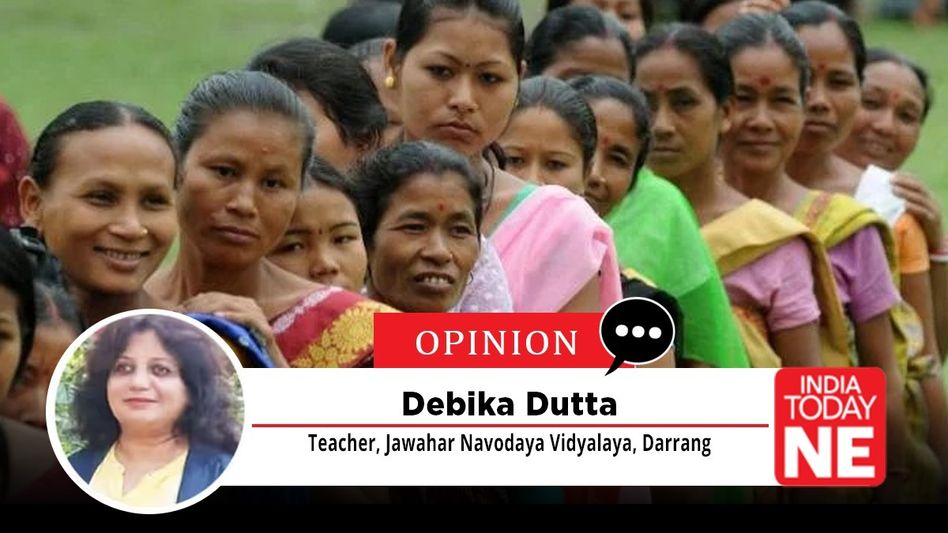
For indigenous communities across the Northeast, these concerns are neither abstract nor theoretical. Land is often tied to ancestral memory and collective identity. Language embodies generations of cultural experience. Traditional institutions preserve social cohesion and historical continuity. Communities that perceive themselves becoming marginal within their ancestral homelands naturally worry about the future of their cultural inheritance.
Such anxieties should not be dismissed as parochial or reactionary. Around the world, indigenous peoples seek safeguards to preserve their identities while participating fully in modern democratic societies. India's constitutional framework recognises this reality. The Sixth Schedule, autonomous district councils, Inner Line Permit systems and various protective mechanisms were created precisely because the architects of the Republic understood that national unity could not be built upon cultural uniformity. Diversity required accommodation, not assimilation.
Critics of the current demographic discourse nevertheless raise important objections. They argue that demographic concerns are sometimes amplified for electoral advantage. They warn that excessive emphasis on migration risks stigmatising minority communities and deepening social divisions. Others contend that pressing challenges such as unemployment, healthcare, education and economic development often receive insufficient attention when identity-based debates dominate public discussion.
These criticisms deserve careful consideration. Democracies function best when debates remain grounded in evidence rather than emotion. No community should be reduced to a stereotype, and no citizen should be judged through the lens of demographic assumptions. The language of public discourse matters because careless rhetoric can undermine social harmony and weaken trust.
However, acknowledging these concerns does not require ignoring demographic realities. Every modern state studies population trends because demographics influence governance. Governments rely upon such data to plan schools, hospitals, infrastructure, housing and welfare programmes. Migration management, border administration and demographic analysis are normal responsibilities of any sovereign nation. To discuss demographic change is not inherently exclusionary. It becomes problematic only when facts are replaced by prejudice.
Supporters of the Centre's approach argue that demographic change cannot be viewed solely through a political lens. They point to concerns regarding border security, illegal infiltration and the protection of vulnerable indigenous communities. Amit Shah has repeatedly linked demographic stability to national security, law and order and the preservation of tribal societies, while emphasising the need for stronger border management and technology-driven surveillance along sensitive frontiers. Whether one agrees entirely with this assessment or not, the concerns themselves cannot simply be dismissed. Responsible governance requires policymakers to anticipate demographic challenges before they become sources of social tension.
The more productive approach is to combine demographic awareness with constitutional restraint. Legitimate concerns regarding illegal migration and border management can coexist with respect for individual rights and human dignity. Protecting indigenous identities need not imply hostility towards lawful migrants. Security and inclusion are not mutually exclusive objectives. A mature democracy must be capable of pursuing both simultaneously.
The most enduring response to demographic anxiety, however, lies in development. Prosperous societies are generally more confident societies. Economic opportunity reduces insecurity. Quality education broadens horizons. Better infrastructure strengthens integration. Strong institutions create trust. In recent years, the Northeast has witnessed substantial improvements in connectivity, investment and public infrastructure. New highways, railway lines, airports and digital networks have begun to reduce the region's historical isolation. These developments matter because confidence in the future often reduces fear of change.
The future of the Northeast will therefore depend not only on demographic trends but also on the quality of institutions. Strong institutions create trust. Trust enables coexistence. And coexistence allows diversity to flourish without fear. The real challenge is not choosing between identity and development, security and openness, or tradition and modernity. It is creating a framework in which these objectives reinforce one another.
The Northeast today stands at the centre of one of India's most important national conversations. The debate is not ultimately about census tables or electoral arithmetic. It is about confidence. It is about whether communities believe that their identity will endure in a rapidly changing world. It is about whether development can strengthen rather than weaken cultural heritage. It is about whether a region renowned for its diversity can remain both rooted and dynamic.
The future of the Northeast will not be secured by fear, nor by denial. It will be secured by democratic confidence—confidence in institutions, confidence in constitutional values and confidence in the enduring strength of the region's cultures and communities. The Northeast has never been a museum of static identities. It has always been a meeting ground of peoples, ideas and traditions. Its challenge today is not to resist change, but to shape it wisely.
In the end, the question is not simply who belongs. The deeper question is whether India can build a future in which every community feels secure enough to belong.