
Diplomatic defiance: Araghchi meets Putin as US-Iran peace hopes wither
According to Kazem Jalali, Iran’s envoy to Russia, the primary objective of the Araghchi-Putin meeting is to demonstrate a "united front" against what both nations describe as Western hegemony.

- Apr 28, 2026,
- Updated Apr 28, 2026, 4:11 PM IST

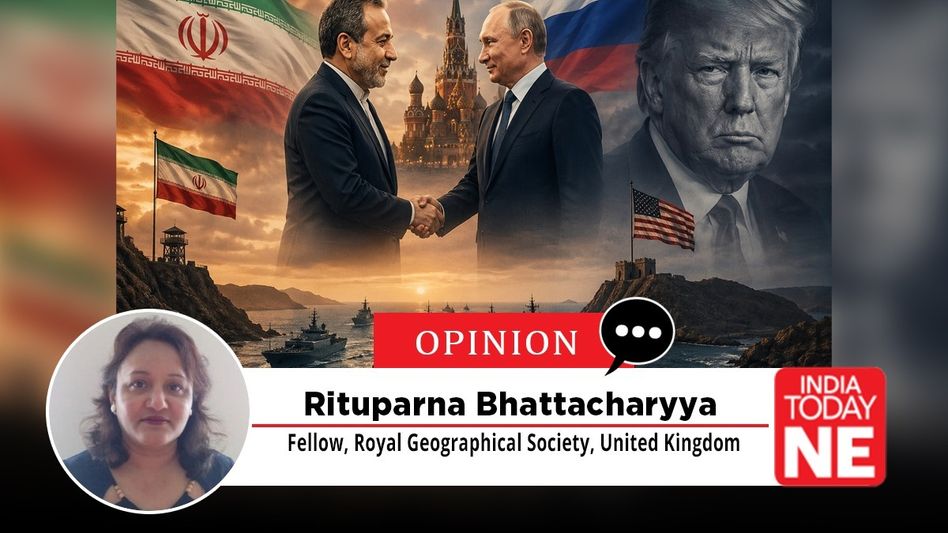
In a high-stakes display of geopolitical solidarity, Iranian Foreign Minister Abbas Araghchi arrived in Moscow on 27 April 2026, for critical consultations with Russian President Vladimir Putin. The visit, framed by Tehran as a strategic countermove to Western pressure, comes at a moment when the Middle East teeters on the edge of a wider.
A United Front Against the West
According to Kazem Jalali, Iran’s envoy to Russia, the primary objective of the Araghchi-Putin meeting is to demonstrate a "united front" against what both nations describe as Western hegemony. As sanctions continue to squeeze both economies, the deepening military and diplomatic partnership between Moscow and Tehran has become a cornerstone of their respective foreign policies.
The Kremlin talks are expected to focus on:
• Defence Cooperation: Strengthening bilateral security pacts.
• Economic Integration: Bypassing Western financial systems through alternative trade routes.
• Regional Security: Aligning strategies regarding the ongoing volatility in the Levant.
Peace Talks Stalled: The "Trump Factor"
The Moscow summit occurs against the backdrop of crumbling diplomatic efforts elsewhere. For months, Pakistan and Oman have acted as intermediaries, attempting to bridge the chasm between Washington and Tehran. However, those efforts hit a significant roadblock this week.
President Donald Trump recently moved to cancel a scheduled visit by U.S. envoys to Islamabad. In a characteristically blunt statement, Trump dismissed Iran’s latest proposals as "simply not enough." While he effectively shut the door on formal diplomatic missions for now, he signalled that the "phone is always open," suggesting that any breakthrough would require a direct, high-level overture from Tehran rather than mediated diplomacy. At the same time, one could surmise that Trump has taken into account Iran’s substantial resilience.
Market Turmoil and the Fragile Ceasefire
The ripple effects of this diplomatic deadlock are being felt globally. Oil prices surged to a near three-week high today (see below), as traders reacted to the dashed hopes of a U.S.-Iran rapprochement. The prospect of sustained or intensified sanctions on Iranian crude continues to keep the energy markets on edge.
That said, the situation in the Strait of Hormuz has reached a critical "yellow alert" status following the breakdown of the Pakistan-Oman-mediated talks and Foreign Minister Araghchi’s defiant visit to Moscow. As of 27 April 2026, the world’s most vital oil chokepoint is seeing a significant uptick in both military posturing and economic volatility.
Here is the current breakdown of the situation:
1. Military Escalation & "Shadow Boxing"
Following Donald Trump’s cancellation of the Islamabad peace mission, the Islamic Revolutionary Guard Corps (IRGC) has reportedly increased the frequency of its naval drills in the Strait.
• Increased Patrols: Iran has deployed additional fast-attack craft and "swarm" boats near the shipping lanes.
• Drone Surveillance: Reports indicate a 40% increase in Iranian surveillance drone activity over international waters compared to last month.
• U.S. Response: The U.S. Fifth Fleet, stationed in Bahrain, has moved two additional destroyers toward the mouth of the Persian Gulf to ensure the "freedom of navigation" for commercial tankers.
2. The Energy Squeeze
With oil prices hitting a three-week high, the Strait is once again being used as a geopolitical lever.
• Insurance Premiums: Maritime insurance for tankers transiting the Strait has spiked by 15% in the last 48 hours due to the perceived risk of seizures or "limpet mine" attacks.
• Traffic Congestion: While the Strait remains open, some shipping companies are opting for "waiting zones" in the Gulf of Oman, hesitant to enter the Persian Gulf until the fallout from the failed U.S.-Iran talks settles.
3. Strategic Signalling
Tehran’s envoy, Kazem Jalali, hinted from Moscow that "regional security is a collective responsibility," which many analysts interpret as a veiled threat that Iran may restrict access if its own oil exports are further hindered by U.S. sanctions.
Key Statistic: Approximately 20-25% of the world's total petroleum consumption passes through this 21-mile-wide passage daily. Any disruption here, coupled with the current Israeli-Hezbollah tensions, could push global oil prices toward the $110-$120 per barrel mark. The following table summarises the current status, impact level and the overall risks.
Summary of Risks
|
Factor |
Current Status |
Impact Level |
|
Commercial Shipping |
Navigable but high-risk |
High |
|
Naval Presence |
High concentration of US/Iran vessels |
Critical |
|
Geopolitical Tension |
Stalled talks causing aggressive posturing |
Very High |
The eyes of the global energy market remain fixed on the Musandam Peninsula. If the Araghchi-Putin talks result in a new military cooperation pact, we may see a more permanent Russian naval presence near the Strait, further complicating the Western security umbrella in the region.
Adding fuel to the fire is the deteriorating situation on the ground in Lebanon. Despite an active ceasefire agreement, an Israeli strike targeted Hezbollah positions, resulting in the deaths of 14 individuals. This breach has raised fears that the "shadow war" between Israel and Iran-backed proxies could escalate into a direct confrontation, rendering the current diplomatic manoeuvres in Moscow even more consequential.
The Road Ahead
As Araghchi and Putin conclude their talks, the message to the international community is clear: Iran is not without powerful allies. With the U.S. adopting a "hard-bargain" stance and regional violence surging, the Moscow-Tehran axis appears to be hardening, leaving little room for the "peace through negotiation" that Pakistan and Oman have been desperately trying to facilitate.
Overall Perspective
"The era of unilateral concessions is over," a senior Iranian official noted shortly after landing in Moscow. "If Washington wants to talk, they know where to find us. Until then, our path leads through Moscow and Beijing."
(The views expressed in this article are those of the author and do not necessarily reflect the views of India Today NE or its affiliates)
MORE NEWS












Copyright©2026 Living Media India Limited. For reprint rights: Syndications Today
