Dr H S Panwar: An Enduring Conservation Legacy
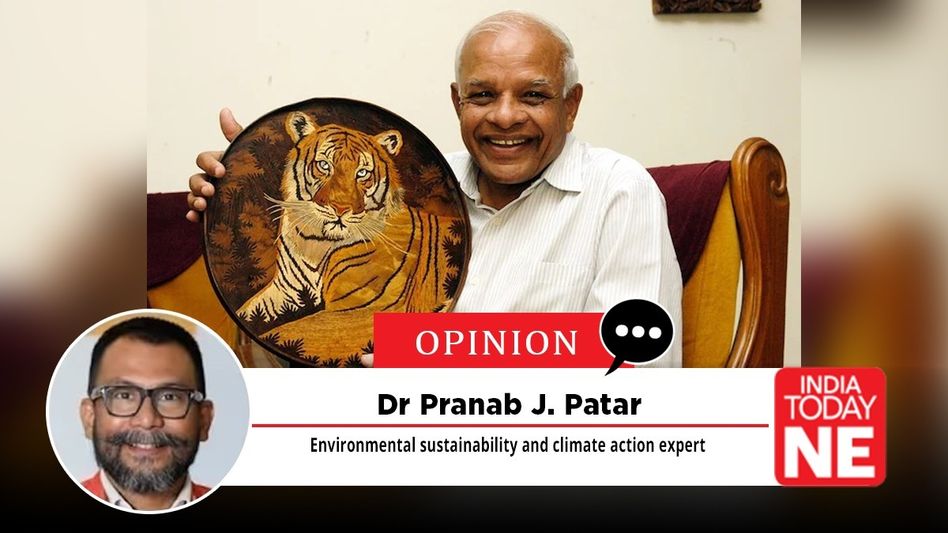
With the passing of Dr. Hemendra Singh Panwar last week, Indian conservation has lost one of its finest minds and one of the principal architects of modern wildlife conservation planning in the country.

- Jun 04, 2026,
- Updated Jun 04, 2026, 4:17 PM IST

With the passing of Dr. Hemendra Singh Panwar last week, Indian conservation has lost one of its finest minds and one of the principal architects of modern wildlife conservation planning in the country. Some years ago, we had also bid farewell to his long-time collaborator, Dr. W.A. Rodgers. Together, they produced what is arguably one of the most influential conservation planning documents ever written in India—Planning a Wildlife Protected Area Network in India (1988).
In the conservation fraternity, Rodgers and Panwar are remembered for their scholarship, foresight, and unwavering commitment to safeguarding India's natural heritage. I consider myself fortunate to have met both of them during their prime and to have had opportunities to listen to their perspectives on wildlife conservation and protected area management. Their depth of understanding, coupled with an ability to think beyond immediate challenges, left a lasting impression on me.
Looking back today, it is difficult to overstate the significance of their work.
At a time when protected areas in India were often established around the presence of charismatic wildlife species or administrative convenience, and their number was handful, Rodgers and Panwar asked a much larger and more fundamental question: Was India's protected area network truly representative of the country's immense biological diversity?
Their answer led to a paradigm shift in our conservation approach. Through a pioneering biogeographic classification of India, the country was divided into ecological zones and provinces, providing a scientific framework to identify conservation gaps and prioritize landscapes that remained inadequately protected. What seems intuitive today was, in many ways, revolutionary at the time.
Many of the concepts that are now routinely discussed in conservation circles—ecosystem representation, landscape-level conservation, ecological connectivity, and gap analysis—were brought into sharper focus in India through their work. Long before these ideas became mainstream, Rodgers and Panwar were advocating for a more systematic and science-based approach to conservation planning.
Assam, in particular, has been one of the beneficiaries of this vision. The strengthening and expansion of our protected area network, including landscapes such as Manas, Kaziranga, Nameri, and several other national parks and wildlife sanctuaries, owe much to the scientific foundation laid by their work. By recognizing Northeast India as a distinct and globally significant biogeographic region, they helped strengthen the case for conserving some of the richest biodiversity landscapes in the country.
As we confront increasingly complex challenges—from climate change and habitat fragmentation to accelerating biodiversity loss—the core message of their work remains remarkably relevant: conservation must be rooted in sound ecological science, represent entire ecosystems rather than individual species alone, and be planned at a landscape scale.
Dr. Panwar's passing marks the end of an important chapter in Indian conservation. Yet the legacy of Rodgers and Panwar continues to endure—in the protected areas they helped inspire, in the institutions they influenced, and in the generations of conservation practitioners who continue to build upon the foundations they laid.
For those of us who had the privilege of knowing them, their contributions extend beyond reports, maps, and conservation frameworks. They shaped the way many of us think about nature, conservation, and our responsibilities towards future generations. Indian conservation owes them an enduring debt of gratitude.
Dr Pranab J Patar, is an award-winning environment and sustainability expert, currently associated with the Finance Department, Govt of Assam, contributing towards building a climate resilient and clean development pathway for the state.