From Sacred Responsibility to Sustainable Productivity: The Evolution of Livestock Care in India
India’s livestock sector helped fuel an agricultural revolution, but has the relentless pursuit of higher productivity come at the cost of ecological balance and animal well-being? As climate change, water scarcity and declining indigenous breeds reshape rural India, experts are looking back at traditional livestock practices for answers to a more sustainable future.

- May 31, 2026,
- Updated May 31, 2026, 4:09 PM IST

- Traditional livestock systems linked animal care with ecology, soil and water
- Open wells and grazing commons helped reduce heat, stress and dehydration
- White Revolution boosted output but weakened older balances of sustainability
Livestock in Indigenous India: A Way of Life
For centuries, livestock in India was not merely an economic asset but an inseparable part of the country’s social, cultural, and ecological fabric. From the cowsheds of ancient villages to today’s commercial dairy farms and intensive poultry systems, India’s relationship with livestock has undergone a dramatic transformation. As the country emerged as one of the world’s largest producers of milk and livestock products, livestock care evolved alongside changing patterns of agriculture, urbanisation, technology, and rural livelihoods. Yet, amid this rapid transformation, an important realisation is beginning to shape discussions around the future of Indian agriculture: livestock productivity and sustainability must go hand in hand.
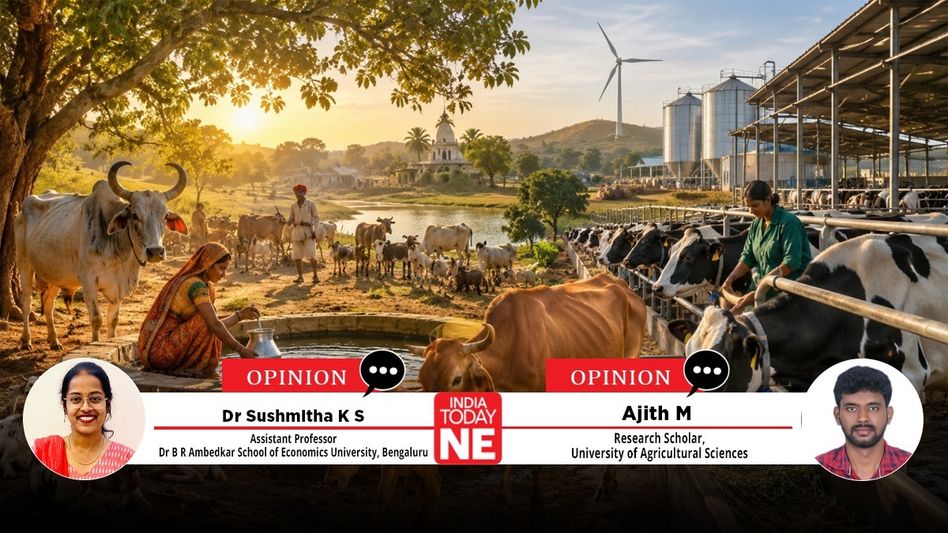
In indigenous India, livestock care was deeply rooted in coexistence with nature rather than mere commercial production. Cattle, buffaloes, goats, sheep, camels, and poultry were integrated into agricultural systems designed around ecological balance and long-term sustainability. Animals were not confined to highly intensive systems but were allowed to graze freely across village commons, pasturelands, and forest edges. These open grazing systems reduced stress on livestock, improved natural immunity, and allowed animals to adapt to seasonal climatic conditions. Traditional livestock management recognised that healthy animals were central not only to food production but also to soil fertility, water conservation, and household security.
Open Well Systems and Reduced Stress on Livestock
Water systems played an equally significant role in sustaining livestock health in early India. Open wells, ponds, tanks, and community water bodies formed the backbone of rural ecosystems. Unlike the heavy dependence on borewells seen today, open wells supported natural groundwater recharge and maintained stable water availability throughout the year. Livestock had easier access to water, particularly during the harsh summer months, which reduced dehydration and heat stress. The presence of shade trees around wells and grazing lands further protected animals from extreme temperatures. These interconnected ecological systems ensured that livestock remained productive without being subjected to excessive physiological distress.
Traditional Indian livestock systems were remarkably aligned with what modern science now identifies as principles of animal welfare and sustainable agriculture. Animals moved freely, interacted naturally in herds, and followed seasonal breeding cycles. Crop residues were reused as fodder, while cattle dung returned to the soil as organic manure, creating a circular agricultural economy with minimal waste. Productivity was not measured solely in litres of milk or rapid growth rates but in the animal’s longevity, resilience, fertility, and ability to thrive under local conditions.
Indigenous Breeds and Ecological Adaptation
Indigenous breeds such as Gir, Sahiwal, Ongole, Hallikar, and Tharparkar were valued because they were naturally suited to India’s diverse climates and required fewer external inputs such as expensive feed, medicines, and intensive care. Pastoral communities across India developed highly adaptive livestock management systems based on deep ecological knowledge. Communities such as the Raikas of Rajasthan, Maldharis of Gujarat, and Todas of the Nilgiris carefully managed grazing routes, breeding practices, and seasonal migration patterns to ensure ecological balance. Their systems minimised stress on both land and livestock while maintaining sustainable productivity over generations.
Women formed the backbone of livestock care within households. They managed feeding, milking, cleaning, fodder collection, and the day-to-day well-being of animals, making livestock not only an economic resource but also a crucial component of household stability and nutrition.
The Shift Towards Commercial Productivity
The decades following Independence marked a major turning point in Indian livestock management. Faced with food shortages and growing population pressures, the country shifted from subsistence-oriented livestock systems toward commercial production. The White Revolution led by Verghese Kurien transformed India into the world’s largest milk producer. Cooperative movements such as Amul modernised milk procurement, veterinary access, cold-chain systems, and rural dairy economics. Crossbreeding programs introduced exotic breeds with higher milk yields, while artificial insemination, commercial feed systems, mechanised dairies, and intensive poultry farming rapidly increased output.
These developments significantly improved food availability and rural incomes, but they also altered the traditional balance between productivity and sustainability. Common grazing lands steadily declined due to urban expansion and land fragmentation. Open wells and traditional water systems were increasingly replaced by deep borewells, leading to growing groundwater depletion in many regions. Livestock, particularly in commercial systems, began moving into more confined environments with limited mobility and greater dependence on external feed inputs. In several cases, productivity became disconnected from ecological sustainability and animal well-being.
The Current Challenges Facing Livestock Care
Today, India’s livestock sector contributes enormously to rural livelihoods and the national economy, but it also faces mounting challenges. Rising temperatures and climate change are increasing heat stress among animals, reducing milk yields, fertility, and disease resistance. Water scarcity has become a growing concern, particularly in drought-prone regions where livestock struggle to access adequate drinking water and fodder resources. The decline of indigenous breeds has further increased vulnerability, as high-yield crossbreeds often require greater feed, water, and veterinary care while being less resilient to Indian climatic conditions.
Modern veterinary science increasingly confirms what traditional Indian systems had long understood: animal welfare and productivity are closely connected. Animals exposed to excessive stress, poor ventilation, overcrowding, dehydration, or nutritional imbalance cannot sustain long-term productivity. Sustainable livestock systems are now being recognised globally as essential not only for environmental protection but also for economic efficiency and food security.
Productivity and Sustainability Must Go Together
Reducing distress on livestock through better housing, shade management, water availability, and natural grazing directly contributes to improved immunity, reproductive health, and overall productivity. In this context, there is renewed interest in indigenous livestock wisdom and sustainable farming practices. Organic dairy farming, free-range poultry systems, natural farming movements, and conservation programs for native cattle breeds are gaining attention across India.
Many experts now argue that future livestock systems must combine scientific innovation with ecological understanding rather than treating them as opposing approaches. Climate-resilient housing, improved fodder systems, groundwater conservation, open well recharge, and sustainable breed management are increasingly viewed as essential for the future of Indian agriculture.
Women at the Centre of Sustainable Livestock Care
Women continue to remain central to this transformation. Across rural India, women still perform much of the daily labour associated with livestock care and are increasingly becoming leaders in dairy cooperatives, self-help groups, and rural livestock enterprises. Strengthening their access to training, finance, veterinary support, and market opportunities could become one of the most effective pathways toward building resilient and sustainable livestock economies.
Reconnecting Modern Science with Ecological Wisdom
India’s livestock journey reflects a broader lesson about development itself. Indigenous systems were not anti-productivity; rather, they understood that productivity could not come at the cost of ecological imbalance, water depletion, or animal distress. The open well systems, grazing-based management, biodiversity-rich farming, and low-stress animal care practices of earlier India were not merely traditions but sustainable survival models refined over centuries.
As India confronts the combined pressures of climate change, food security, and rural transformation, the future of livestock care may ultimately depend on reconnecting modern science with ecological wisdom. Because in the long run, livestock productivity and sustainability are not separate goals—they are inseparable.