How India can fix the thali to fight hidden hunger
What if India's hunger crisis didn't disappear—it simply became invisible? As full plates replace empty stomachs, a quieter threat is shaping the future of millions: a nation that eats enough, yet remains dangerously undernourished.
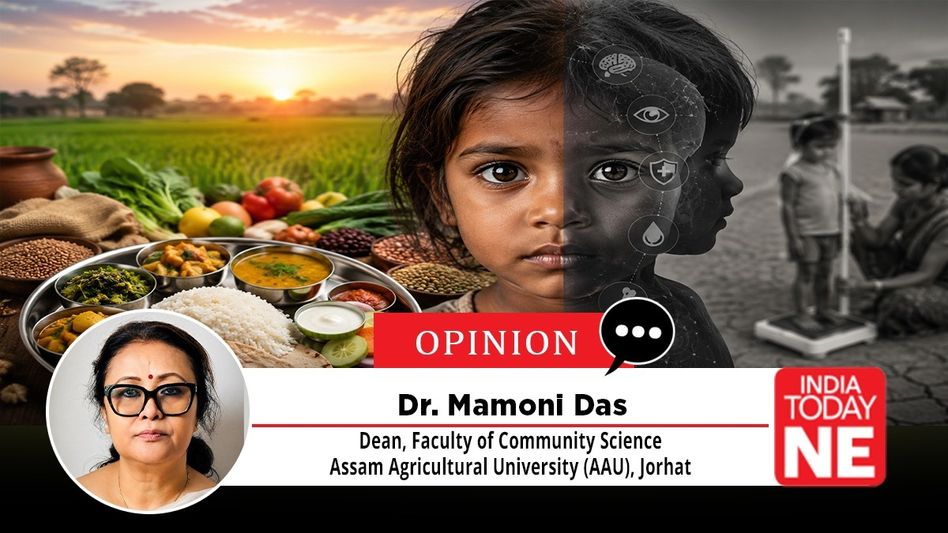

- Jun 19, 2026,
- Updated Jun 19, 2026, 2:38 PM IST

- Vitamin D, iron and B12 deficiencies affect over half of Indians
- Anaemia continues widely among women and children, weakening health and productivity
- Traditional thalis once offered balance, but processed foods reduced dietary diversity
India has largely won the battle against visible hunger. Grain production has soared, and caloric availability has improved considerably. Yet, walk into any Anganwadi centre in rural Assam or review the growth charts of preschool children across the Northeast, and a different picture emerges. People are eating, but they remain malnourished. This is the paradox of hidden hunger—and it is one that nutrition science has been working to resolve for years.
The Quiet Drain of Hidden Hunger Defying Easy Solutions
Micronutrient deficiency does not announce itself the way food scarcity does. There is no immediate crisis, no dramatic visible symptom, and that is precisely what makes it so persistent. Vitamin D insufficiency, iron deficiency, and Vitamin B12 deficiency each affect more than half the Indian population. Anaemia remains widespread among women and children. The consequences include reduced cognitive development, compromised immunity, and lower work capacity, which accumulate quietly and cost the country an estimated 0.8 to 2.5 per cent of GDP. It is a slow drain, and because it is slow, it rarely commands the urgency it deserves.
The more pressing question is: what does it take to actually move the needle? In my experience spanning three decades in food and nutrition research, the answer lies in two complementary directions.
The first is returning to the wisdom embedded in traditional food systems. The second is strengthening that foundation with targeted, evidence-backed interventions—most notably, food fortification in India, which has emerged as one of the most scalable solutions to bridge the micronutrient gap without altering established dietary habits. Early in my career, I believed that simply demonstrating nutritional superiority would be enough to shift food habits. I learned that tradition, taste, and texture often matter more than a nutrition label—a lesson that now shapes every research design we undertake.
Bridging Every Traditional Thali with Strategic Fortification Approaches
The Indian thali, at its best, is a nutritionally sound meal. It brings together cereals, pulses, vegetables, and dairy in a balance that generations of food culture arrived at intuitively. Our findings affirmed that the traditional meal pattern holds genuine nutritional merit and can serve as a meaningful starting point for addressing micronutrient gaps. The challenge is that the everyday thali has quietly changed. Processed foods have displaced local greens. Millets have been replaced by polished rice. What was once a naturally diverse meal has, in many households, narrowed considerably.
This is where research has a critical role to play; not only in documenting what is missing, but also in identifying practical and culturally acceptable ways to restore nutritional diversity.
Our work on finger millet processing, for instance, demonstrated that simple traditional methods like soaking can significantly enhance the nutritional availability of the grains. Millets already exist in people's food memory across much of India; the task is to bring them back onto the daily plate, backed by evidence that makes the case compelling to both communities and policymakers.
Yet even the most diverse diets often fall short of meeting all micronutrient requirements, especially for populations whose food access is constrained by income, geography, or market availability. This is where food fortification in India has emerged as a quiet game-changer. Enriching staples such as rice and wheat with iron, folic acid, zinc, and Vitamin B12 is among the most efficient public health interventions available, precisely because it works within existing dietary habits rather than requiring people to adopt new ones. When thoughtfully implemented alongside dietary diversity, fortification offers a powerful and scalable complement to traditional food-based approaches. Research at AAU on sorghum-based composite flours points to the untapped potential of underutilised grains in improving nutritional quality, a finding with direct implications for fortification strategies and policy.
The Local Imperative That Should Not Be Ignored
National-level programmes often overlook a critical truth: nutrition is deeply local. The dietary patterns of a tea plantation worker in Upper Assam or a preschool child attending an Anganwadi in Jorhat are shaped by factors that aggregate data cannot fully capture. Our community-level work, including the establishment of nutrition gardens, restoration of Bari Systems (homestead gardens), promotion of locally based proprietary foods, revival of traditional food practices, promotion of gender equity, nutritional assessments of preschool children attending Anganwadi centres in different villages of different blocks across Assam and the nutritional profiling of indigenous foods—reflects a deliberate effort to build a body of evidence that is specific enough to be actionable at the local level.
State Agricultural Universities, like ours, are uniquely positioned to serve this function. We are embedded in the communities we study. Our researchers understand the region's cropping patterns, food cultures, and policy landscape. That proximity is not just an advantage; it is a responsibility. The research we produce must feed directly into state nutrition programmes, school meal policies, Anganwadi dietary guidelines, and FSSAI fortification standards. Strengthening the translational continuum from laboratory- and field-based research to evidence-backed policy formulation is essential for achieving meaningful societal impact.
Hidden hunger will not be resolved by data alone. It will be resolved when research institutions, government bodies, and communities work from the same evidence base and when the science produced in our laboratories finds its way into the decisions that shape what people eat every day.
The science is clear. The tools from fortification to traditional grain revitalisation are in our hands. Scaling them nationally is not a technical challenge. It is a choice. And it is one India can no longer afford to delay.
The thali is a good place to start. And the research, fortunately, already points the way.