How the cockroach became a political metaphor and protest identity
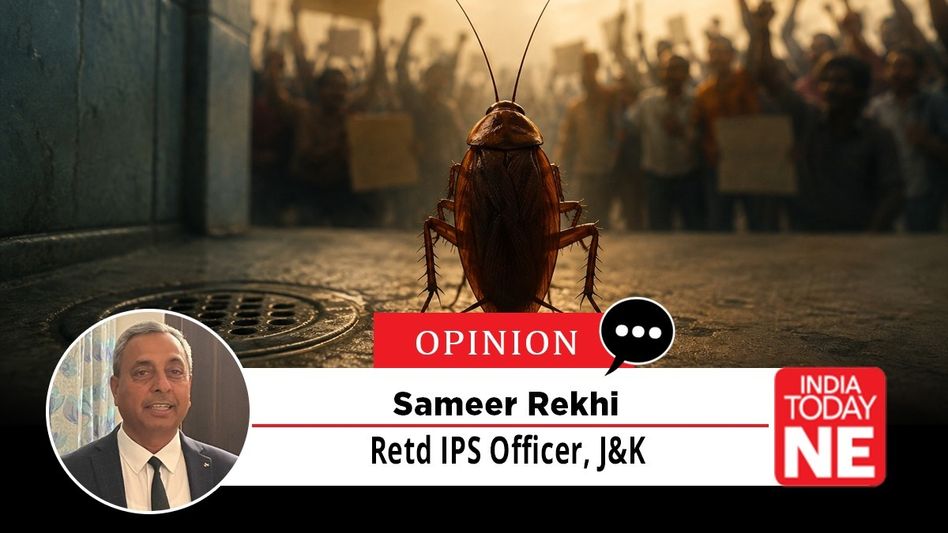
What happens when an insult meant to put people down takes on a life of its own? A cockroach, once a creature people could not wait to crush, has somehow crawled into the heart of a political movement—and turned the joke back on those who coined it.

- Sep 03, 2026,
- Updated Sep 03, 2026, 11:24 AM IST

- The writer spares a washroom cockroach after reflecting on its endurance
- He describes how households relentlessly chase them, yet they always return
- A remark from high office turned the insect into a public label
I saw a cockroach in my washroom today.
Normally, I would have tried to get it out. If that failed, I would have looked for something with which to finish the job. Today I did neither. I let it move around. Perhaps I had begun to respect the cockroach.
It is said that only cockroaches will survive a nuclear holocaust. I don’t know whether that is true. But they certainly have a remarkable record of survival. We spray them, chase them or crush them. We clean the house, and yet they return. No place is out of bounds for them. They travel far and wide through their highways: the drainage and ducts. A glimpse of a cockroach is enough to send a house into a tizzy. It is attacked from all angles but escapes quite dexterously, only to reappear later.
Perhaps they simply refuse to accept our view that they should not exist. I feel, rightly so. A cockroach is a representative of its species as much as a human being is of his own. We can only berate or abhor it. It doesn’t so much as shrug its shoulder.
And one fine day, the cockroaches’ fortunes changed. Quite unexpectedly, they had some kind of resurrection.
A casual remark from a high office chair gave the word a life of its own. What was said as a remark became a label, then a joke, then a face, then an identity, then a movement and finally, a party.
The Cockroach Janta Party.
Almost miraculously, it crystallised. One could not have planned it better. Young people began calling themselves cockroaches. There were placards, slogans, posters, memes all around.
The creature most of us would happily remove from our homes had suddenly become ubiquitous. It found people willing to put its name not only on a political banner, but on their own bodies and faces.
The joke became quite serious. The cockroaches sat on dharnas, shed tears when gassed, belted out obscene memes, songs and slogans, and offered scented flowers to the cops who could not stand their stench. And they did not stop at that.
The cockroaches began visiting government schools. They looked at classrooms, toilets, meals and buildings. They asked questions about examinations and public money. Ironically, they started demanding public swachhata.
The cockroach had become rather inquisitive. Perhaps this was karma. The creature had spent generations being chased, crushed and insulted. Maybe its day had finally come. Somewhere, perhaps, karma was keeping an account of its day-to-day existence. Long-suffering, yet stoic and unyielding. Surviving the human onslaught. Karma thought its compensation was due. And then came the remark. The dues got paid.
The cockroach was reborn. Not as an insect. As a metaphor. And metaphors, once released, are difficult to catch. Sometimes slurs boomerang upon the thrower. Humans have for long terrorised and vilified the poor insect. Now, karma decides it’s his turn to turn the tables on the ones crossing Lakshman Rekha.
The remarkable thing is that the cockroach itself seems completely unaware of all this.
The one in my washroom certainly was. It went about its business. No knowledge of high office. No knowledge of karma. It simply moved across the floor. I watched it for a while. Then I left it alone. Perhaps it had earned that much. After all, it has survived us for millions of years. And now it has survived something else. It has been given an honourable life.
I did not have the heart to take it away from him. Or her. One should not interfere with karma, especially when karma appears to be working in favour of the cockroach.
(The author is a retired IPS officer of AGMUT cadre)
(Disclaimer: The views expressed in this article are those of the author and do not necessarily reflect the views of India Today NE or its affiliates)