Kerala, Cinema and the Measure of Cultural Confidence
Kerala has always carried parallel identities with quiet complexity. It is the state of political literacy, remittance economies and ideological articulation. It is also the land where temple lamps still glow before dawn, where sandalwood mingles with monsoon air, where the names of Anantha Padmanabha and Ayyappa are spoken not as heritage symbols but as living presences. These are not contradictions. They are continuities layered over time

- Feb 23, 2026,
- Updated Feb 23, 2026, 1:32 PM IST

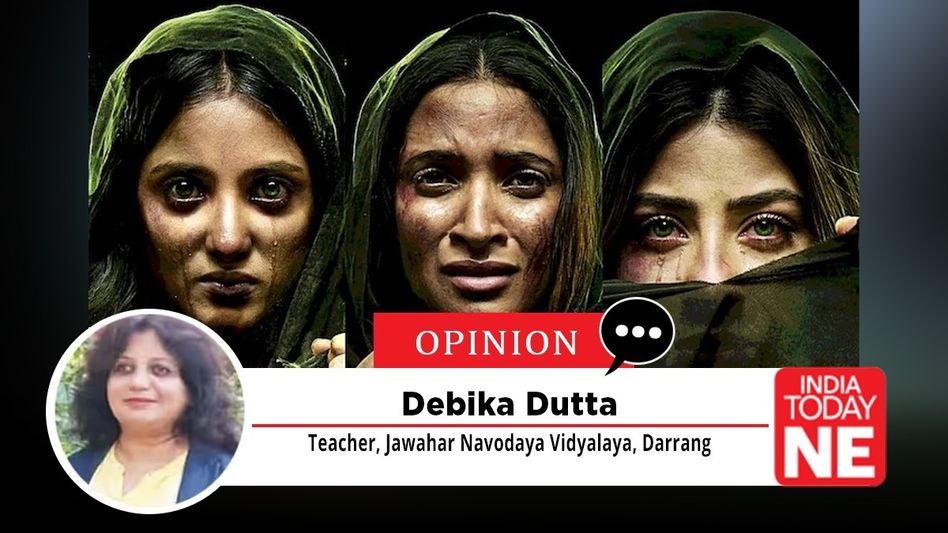
A society’s reflex often reveals more than its rhetoric. When protests precede a film’s release, the agitation is rarely about cinema alone. It signals an unease about memory — about who defines it, who preserves it, and who challenges it. The debate surrounding The Kerala Story is, at its core, not a quarrel over screenplay. It is a contest over Kerala’s self-image within the larger civilisational idea of India.
Kerala has always carried parallel identities with quiet complexity. It is the state of political literacy, remittance economies and ideological articulation. It is also the land where temple lamps still glow before dawn, where sandalwood mingles with monsoon air, where the names of Anantha Padmanabha and Ayyappa are spoken not as heritage symbols but as living presences. These are not contradictions. They are continuities layered over time.
Yet public discourse often prefers simplification. For decades, a dominant intellectual framework described Kerala primarily through reform movements, class politics and post-Independence ideological shifts. Those chapters are real and significant. But civilisational continuity — the endurance of ritual, sacred geography and inherited dharma — was frequently relegated to the margins of analysis. Faith became sociology. Tradition became footnote.
When a cultural product appears to foreground themes outside that established frame, discomfort surfaces quickly. Some fear misrepresentation. Others fear that inconvenient aspects of history might be foregrounded. Beneath both responses lies a deeper anxiety: narrative authority is being contested.
Serious reflection demands restraint. Kerala’s social evolution has indeed been shaped by missionary encounters, reformist impulses, Gulf migration and long phases of Left governance. These forces altered aspirations and social habits in varying degrees. But to attribute complex transformations solely to ideological engineering would be reductive. Societies change through interaction — economic, political, global. Change, however, does not automatically equal civilisational erasure.
India’s cultural fabric has never been uniform. Practices vary by ecology, lineage, occupation and region. Dietary habits, social customs and local traditions have always reflected diversity within a shared civilisational grammar. Confidence lies not in denying variation, but in recognising the underlying coherence that holds variation together.
And that coherence in Kerala remains unmistakable. Despite political shifts, sacred centres continue to draw devotion. The annual pilgrimage to Sabarimala is not a nostalgic ritual; it is a living affirmation of discipline and faith. Temple festivals remain community anchors cutting across economic divides. Household observances, quietlytransmitted, sustain memory beyond public spectacle. Civilisation endures less through declaration than through repetition — through everyday fidelity to inherited practice.
The larger lesson extends beyond one state or one film. Regions that have long been described through selective lenses eventually seek fuller articulation. The mature response is neither outrage nor suppression, but clarity. Cultural self-respect expresses itself through scholarship, composure and conviction.
The idea of Bharat as a civilisational continuum provides steadiness in moments of agitation. This continuum predates modern political formations. It has withstood invasion, colonisation, ideological contestation and globalisation. It absorbs shocks without surrendering its core. Kerala does not stand outside this arc; it is woven into it.
Cinema must remain free to explore uncomfortable subjects. Freedom of expression is not a concession but a strength. Yet freedom is sustained best within a culture that possesses inner confidence. A civilisation anchored in dharma does not fear scrutiny. It answers with perspective rather than panic.
The essential question, then, is not whether one film captures total truth — no film ever does. The deeper question is whether cultural confidence is strong enough to engage disagreement without insecurity. Can inheritance be defended without aggression? Can critique avoid caricature? Can complexity be acknowledged without surrendering conviction?
Kerala’s identity is neither brittle nor monolithic. It is layered, adaptive and deeply rooted. Political tides may shift. Migration may reshape aspiration. Ideologies may claim influence. Yet beneath these currents flows a steadier stream — a civilisational consciousness that harmonises diversity without dissolving unity.
In the final measure, mature societies are not defined by the decibel of their reaction but by the depth of their grounding. Civilisations that know who they are do not tremble before narratives. They engage, evaluate and move forward.
Confidence, when rooted in memory and dharma, requires no agitation. It stands — quiet, self-assured and enduring.