Manipur Is Not Ready for a Census: Remove AKT, Implement NRC First
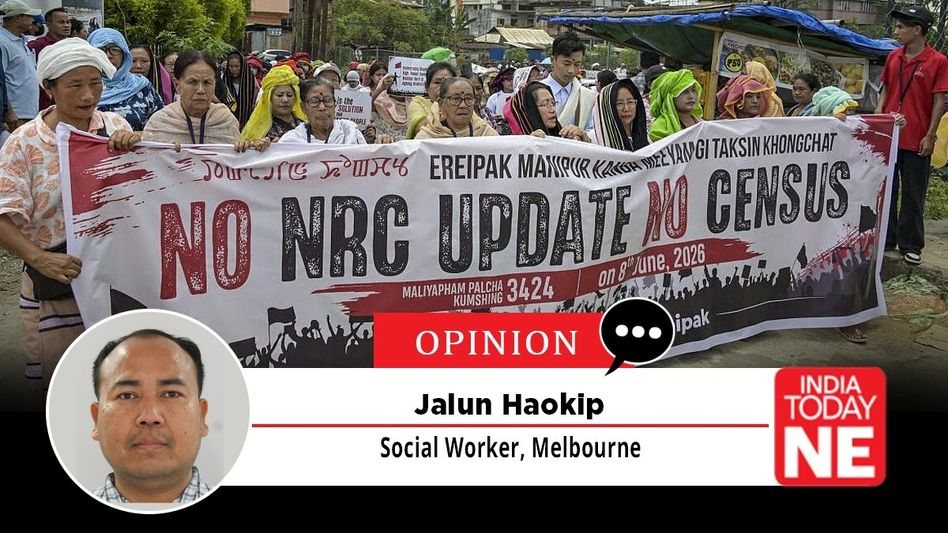
A census is meant to establish facts, and Manipur needs one. But why, then, are people in Manipur protesting against it? The answer lies not in opposition to counting people, but in concerns about whether a census conducted under present conditions can produce a credible and fair demographic record.

- Aug 23, 2026,
- Updated Aug 23, 2026, 6:49 PM IST

A census is meant to establish facts, and Manipur needs one. But why, then, are people in Manipur protesting against it? The answer lies not in opposition to counting people, but in concerns about whether a census conducted under present conditions can produce a credible and fair demographic record.
A census is far more than a routine counting exercise. It is the statistical foundation on which governments understand their population, plan development, allocate resources and preserve the demographic record. In a conflict-affected state such as Manipur, therefore, the question is not simply whether a census should be conducted, but whether it can be conducted credibly and fairly under conditions that accurately reflect the people who actually live in the state and its diverse communities.
This is the central concern repeatedly raised by the Thadou Inpi Manipur (TIM) and other Manipur civil society organisations. Their position is not that population enumeration is unnecessary. Rather, they have argued that conducting a census amid displacement, disrupted governance, contested identities and unresolved questions concerning citizenship and Scheduled Tribe (ST) classification risks producing a demographic record shaped by the consequences of conflict rather than the underlying population reality.
In its August 10, 2026, statement following the Government of Manipur’s consultation on the state’s demographic profile, TIM called for the census to be deferred until normalcy is restored, internally displaced persons are safely rehabilitated, the disputed “Any Kuki Tribes” (AKT) category is removed from Manipur’s Scheduled Tribes list, and the National Register of Citizens (NRC) is updated. These concerns should be understood as a demand for the conditions necessary to make the eventual census credible, accurate and publicly trusted.
Another issue that cannot be ignored is the reported presence of undocumented or illegal immigrants in Manipur. The state shares a porous border with Myanmar, approximately 398 kilometres long, and has experienced significant cross-border movement amid prolonged instability there. The scale and legal status of undocumented migration should not be determined by political rhetoric or communal suspicion; they should be established through documentation, investigation and due process. But precisely because the issue is consequential, it cannot simply be ignored when preparing for a census.
A Census Cannot Substitute for Citizenship Verification
A census is not a citizenship-verification exercise. It is designed to count people and collect demographic information, not to determine citizenship or immigration status. Those questions must be addressed through separate legal processes.
Where serious questions exist about undocumented migration, the government should have effective mechanisms to distinguish Indian citizens, indigenous residents, internally displaced persons, lawful migrants, refugees or asylum seekers, and foreign nationals residing in India without lawful status.
This does not mean that people who have lawfully moved to Manipur from elsewhere in India should be treated as foreigners. Indian citizens have constitutional rights to move and reside anywhere in the country, subject to applicable law. Nor should refugees fleeing conflict automatically be classified as illegal immigrants. The distinction must be based on law, evidence and due process.
The principle is simple: everyone should be counted, but counted correctly. A census should record the population, while separate legal mechanisms establish citizenship, immigration and residency status.
The NRC Question Cannot Be Ignored
Civil society organisations of Manipur and the general public,both in the hills and valley, have called for the NRC to be updated before a census is conducted. Their concern is straightforward: the state should have a credible and transparent mechanism for establishing citizenship before creating a new demographic baseline.
This does not mean that everyone whose ancestry or place of origin lies outside Manipur should be regarded as a foreigner. Citizenship should be established through law and documentation, not inferred from ethnicity, language, place of residence or political claims.
Where lawfully implemented, an NRC could provide a framework for establishing a documented citizenship baseline against which subsequent demographic changes could be assessed. For Manipur, therefore, sequencing matters. Establishing a reliable citizenship framework first would strengthen confidence in the demographic data that follows.
What Australia Demonstrates
Australia held its latest Census on 11 August 2026, using that night as the reference point for the information collected. Participation is compulsory, with penalties for non-compliance, and the Census collects detailed demographic information, including ancestry, language spoken at home other than English, country of birth, parents’ countries of birth, citizenship and, for people born overseas, their year of first arrival in Australia.
Australia also maintains extensive administrative records on citizenship, immigration, population movements and residence. Yet it continues to conduct a comprehensive census because administrative records and a population census serve different purposes while complementing one another.
The lesson for Manipur is not that it should copy Australia's system, but that a census is most credible when supported by reliable administrative mechanisms. If Australia, despite having sophisticated systems for recording citizenship and population movements, continues to regard a census as essential, Manipur should be equally careful about the conditions under which its demographic record is established.
Demographic Change Without Documentation
Demographic change is neither abnormal nor inherently suspicious. Societies naturally experience migration, intermarriage, urbanisation and population movement. The critical distinction is between lawful demographic change and population growth resulting from undocumented or unlawful migration.
If foreign nationals enter unlawfully, improperly obtain identity or welfare documents, acquire land through prohibited means, or access benefits intended for citizens or constitutionally recognised communities, the consequences could extend beyond statistics. If established through due process, such developments could affect land rights, political representation, employment, welfare entitlements, electoral rolls and access to constitutional protections.
This concern is particularly serious in Manipur, where land, identity, tribal recognition and political representation are already deeply contested. The state must therefore establish the facts and protect the integrity of its demographic data before creating a new population baseline that could influence political and administrative decisions for decades.
Indigenous Identity Must Not Be Lost Through Administrative Ambiguity
For the indigenous Thadou community, demographic integrity is inseparable from preservation of identity. Thadou Inpi Manipur and other Thadou organisations have repeatedly maintained that Thadou is a distinct indigenous community and should not be treated as Kuki or subsumed under the disputed AKT category.
Accurate enumeration is therefore particularly important. A census should record people's identities; it should not impose or institutionalise political identities that communities do not claim. The objective should be neither to manipulate census figures in favour of one community nor to exclude another, but to ensure that every community is accurately and fairly represented.
The Legacy of Earlier Migration from Myanmar
The demographic history of Manipur also requires attention to earlier waves of migration. The alleged settlement of refugees in Manipur from Myanmar during 1967–1973, including the reported 1,500 Kuki refugee families, as documented in an official letter dated 20 June 1973 from P. Haokip, then a Lok Sabha MP from Manipur, forms part of Manipur’s historical population movements and should be properly documented and understood.
There is also an account that these “Kuki refugees” were driven out of Myanmar into Manipur because they were considered illegal immigrants by the Myanmar authorities at the time, reportedly on the grounds that they identified as Kuki rather than Thadou or another recognised native ethnic community of the country, and were believed to have originated from the Indian state of Manipur. “Kuki” has never been a recognised ethnic community in Myanmar, whereas Thadou is recognised alongside other ethnic communities, including Naga and Meitei, as well as other communities officially grouped under the broader Chin umbrella.
In the Myanmar census, individuals who do not identify with a recognised ethnic community have the option of being recorded under the “Other” category, and so-called Kukis are among those included in this category. This approach is worth considering for Manipur as well, once the AKT category has been removed, to ensure that individuals who do not belong to a recognised ethnic category are appropriately recorded.
Historical migration, however, should not be conflated with contemporary undocumented immigration. Each case must be assessed according to the law and circumstances applicable at the time. The objective should be neither to stigmatise people because of their origin nor to overlook legitimate concerns about undocumented migration, but to establish the facts through reliable records and due process.
The “Any Kuki Tribes” Issue Must Be Resolved Before the Census and NRC
The “Any Kuki Tribes” (AKT) category poses a serious concern for the forthcoming census. In January 2026, TIM, together with the Thadou Students’ Association and Thadou Community International, called for the suspension of census-related activities until the AKT is removed from the list of Scheduled Tribes of Manipur through the appropriate constitutional process.
The AKT, introduced in 2003 for political reasons, first appeared in the official 2011 Census Scheduled Tribe data for Manipur, which recorded 28,342 people under the category. In contrast, Thadou has consistently been recorded as the largest tribal community in Manipur in every Census of India since 1881, with a population of 215,913 in the 2011 Census.
TIM has argued that the AKT should first be removed through the appropriate constitutional process, before the census and NRC are implemented, following the state government’s recommendation citing its redundancy, national security concerns and the potential misuse of the category by illegal immigrants and non-Manipur, non-tribal populations seeking Scheduled Tribe status at the expense of the state’s indigenous communities.
A census should not be allowed to entrench a disputed classification before its legal status is resolved. People must be free to identify themselves accurately, classifications must be legally clear, and the process must be conducted without intimidation or political interference.
The concern is particularly serious in areas where government authority remains limited and where armed Kuki militant groups and their proxy so-called Kuki civil society organisations exercise significant influence, effectively functioning as a parallel authority under a Kuki Unified Command comprising Kuki SoO and non-SoO groups and headed by a leader from the Kuki SoO groups. The ground rules of the SoO agreement have also been repeatedly breached by signatory parties.
TIM submitted a 31-page, evidence-based memorandum to the Central and state governments on 31 August 2025, seeking the abrogation of the SoO agreement and citing numerous persistent breaches of its ground rules, particularly those affecting the Thadou community. It has also raised concerns about gross, rampant and widespread human rights violations against Thadous by Kuki militant groups, including SoO and non-SoO groups, and their associated Kuki civil society organisations. These concerns include allegations that Thadou have been forced, coerced, or otherwise pressured to reject and deny their distinct Thadou identity, support and promote Kuki supremacist agendas and campaigns, identify as Kuki, and obtain Scheduled Tribe certificates only under the Any Kuki Tribe (AKT) category in areas where Kuki militants are present.
Conducting a census under such circumstances could result in members of the Thadou community and other non-Kuki tribes, including Aimol, Gangte, Simte, Kom, Vaiphei, Paite, Hmar, Mizo and Zou, being enumerated under the AKT category, potentially inflating the reported Kuki population and influencing subsequent political claims.
Concerns have also been raised that the approximately 28,000 people recorded under AKT in the 2011 Census could increase substantially in a new census, potentially reaching several lakhs. Some have linked the existing figure to the settlement of approximately 1,500 refugee families from Myanmar and expressed concern that subsequent undocumented or illegal immigration could further increase the number.
The implications would extend beyond statistics. An inflated or disputed population figure could later be invoked in political and administrative debates and potentially used to strengthen competing demands concerning Kuki separate administration or sovereignty.
Protecting the Integrity of Scheduled Tribe Certificates
The issue of undocumented immigration becomes even more consequential when constitutional protections are involved. In its December 2025 memorandum to the Governor and Chief Secretary, TIM called for a state-level Scheduled Tribe (ST) scrutiny mechanism and safeguards to ensure that no foreign national or otherwise ineligible person is issued an ST certificate claiming membership of a notified tribe.
The principle is straightforward: constitutional protections for genuine Scheduled Tribe communities must be preserved and granted only to those who meet the applicable legal requirements. Improperly issued ST certificates could affect employment, education, political representation, land rights, welfare benefits and public confidence in the reservation system.
Before establishing a new demographic baseline, the government should therefore strengthen mechanisms to verify identity, citizenship and ST eligibility.
Refugees Are Not Automatically Citizens, and Citizens Are Not Automatically Foreigners
The past and current crisis in Myanmar has further complicated Manipur's demographic situation. People fleeing violence and persecution deserve humane treatment and appropriate humanitarian protection. But humanitarian protection and citizenship are not the same. A person who enters India seeking refuge does not automatically become an Indian citizen.
At the same time, members of Manipur's indigenous communities must not be treated as foreigners merely because they share ethnic, cultural or linguistic ties with communities across an international border. The answer cannot be communal suspicion or collective labelling. It must be documentation, verification and the rule of law.
India is not a party to the 1951 Refugee Convention or its 1967 Protocol and does not have a dedicated national refugee law, although it has administrative mechanisms for dealing with persons seeking refugee protection. The experience of Tibetan refugees illustrates the distinction between humanitarian protection and citizenship: prolonged residence or refugee status in India does not, by itself, confer Indian citizenship or the full rights of citizens. Refugee registration documents primarily establish identity and refugee status; they are not, by themselves, proof of Indian citizenship. Similarly, an Aadhaar card is not a citizenship document. It is a biometric identity document and is not treated as proof of Indian citizenship.
Protecting people fleeing persecution while safeguarding the demographic integrity and constitutional rights of indigenous communities are not contradictory objectives. Both require lawful registration, case-by-case assessment, rigorous verification and accurate records.
Postponement Is Responsible, Not Anti-Census
Opposing an immediate census should not be portrayed as opposition to the census itself. The real question is whether the conditions currently exist for credible and trustworthy enumeration.
TIM's August statement points to continuing displacement, inadequate normalcy and governance, unresolved identity questions, the need to update the NRC and disputed tribal classification as reasons why the present environment may not be suitable for a credible census.
A postponement would give the government time to restore normalcy, rehabilitate internally displaced people, strengthen citizenship-verification mechanisms, address undocumented migration through lawful procedures, update the NRC where legally appropriate, strengthen safeguards against fraudulent identity and ST certificates, resolve disputed tribal classifications, and establish transparent procedures for recording recognised indigenous identities.
These are not demands to prevent a census indefinitely. They are measures intended to ensure that when a census is conducted, it accurately reflects Manipur's population and commands public confidence.
Census Must Record Reality, Not Legitimise the Demographic Consequences of “Ethnic Cleansing”
The greatest danger is that a census conducted under abnormal circumstances could turn temporary conditions into permanent statistics.
A village emptied by violence could appear permanently diminished. Internally displaced people could be counted away from their ancestral homes. An undocumented foreign national could potentially be included without adequate verification. A genuine indigenous community could be recorded under a disputed identity. An unresolved constitutional classification could acquire renewed demographic significance simply because it was incorporated into the official enumeration.
Conducting a census under the present circumstances would risk legitimising a demographic landscape shaped by what has been described as “ethnic cleansing,” particularly in areas under Kuki militant control where the Meitei population has been completely displaced, as well as in areas, including the valley, where other communities have been displaced during the violence in Manipur since May 2023.
It would also risk entrenching the effects of unresolved displacement, questions surrounding undocumented immigration, disputed identity classifications and the exercise of authority by armed groups.
Once recorded, census figures can influence public policy for decades and may be cited in debates over political representation, delimitation, land, development and welfare planning. A census should capture the underlying demographic reality of Manipur, not simply document the consequences of an unresolved conflict.
Manipur Needs One Standard: Evidence
The way forward should not be determined by competing communal claims. It should be based on evidence, documentation and constitutional law.
If someone is an Indian citizen, the state should have a lawful mechanism to establish that status. If someone belongs to a recognised Scheduled Tribe, the relevant notified identity should be accurately recorded. If someone is an internally displaced citizen, displacement should not erase their demographic connection to their original or usual place of residence. If someone is a foreign national, their status should be determined through due process. Where an identity or constitutional classification is disputed, the government should resolve the matter transparently under established laws.
A credible census requires facts before figures, verification before enumeration, and law before political convenience.
Count Everyone—but Count Them Correctly
Manipur does need a census. But it needs a census that the people of Manipur can trust.
There is little value in lamenting migration that occurred decades or generations ago—whether lawful or unlawful—without establishing the facts and taking effective measures to prevent similar problems in the future. The priority should be to strengthen documentation and verification, ensure that future population changes occur lawfully and transparently, and protect the rights, land and interests of Manipur’s indigenous peoples.
Realistically, establishing the status of people whose families migrated to the country decades or generations ago can be extremely difficult. Deportation, often invoked as a political slogan, would be even more difficult to implement in practice, particularly when the country of origin or nationality does not recognise the person or refuses to accept them back. Therefore, while efforts to identify undocumented immigrants and pursue lawful deportation where possible should continue, preventive measures should also be a top priority.
The Manipur state government, under Chief Minister Y. Khemchand, who has been criticised for appearing overly eager to appease and accommodate Kuki SoO militant groups and for deflecting responsibility on critically important issues by stating that “it is a subject of the Central government, not a state subject,” must instead demonstrate leadership and take ownership of the responsibilities that come with his position as Chief Minister of an Indian state. He must take a principled stand, represent the people of Manipur, and act decisively in the best interests of the state—protecting its people, upholding the rule of law, and safeguarding Manipur’s demographic and constitutional future.
A census should count people, not political claims; document reality, not displacement; and record established facts, not unresolved disputes. The objective is not to exclude anyone. It is to ensure that no one is wrongly included, no genuine citizen is wrongly excluded, no indigenous community is misidentified, and no temporary consequence of conflict is mistaken for permanent demographic reality. Manipur deserves a census that accurately, lawfully, and fairly records its people—and a demographic record that future generations can trust.
The writer, Jalun Haokip (MSW), is a Melbourne-based Manipur native with professional experience in social work across both mainstream and Indigenous Australian communities in various parts of Australia. He currently works as a family violence practitioner within the Victorian Government in Melbourne. He can be reached at jalunhaokip@gmail.com.