Modi's Australia Visit an Opportunity to Shape the Indo-Pacific
Prime Minister Modi’s visit provides an opportunity to deepen these efforts through greater cooperation with Australia. Practical initiatives benefiting both civilian and commercial interests—as well as defence cooperation—include maritime domain awareness, coordinated coast guard operations, information sharing, resilient port infrastructure and logistics cooperation.

- Jul 03, 2026,
- Updated Jul 03, 2026, 9:46 PM IST

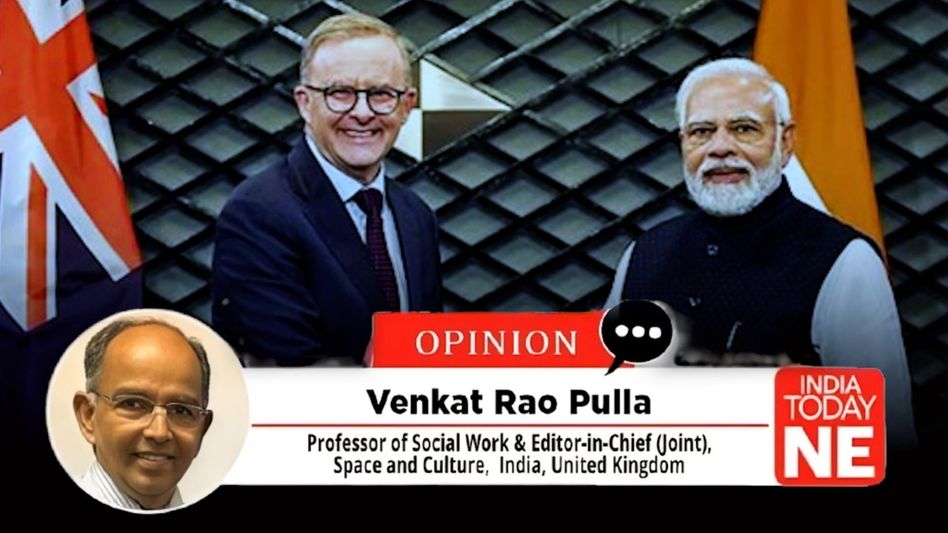
Prime Minister Narendra Modi’s impending visit to Australia (July 8–10, 2026) comes at an extremely significant moment in the Indo-Pacific. The agenda looks familiar, at least at first glance: commerce, investment, defence cooperation, education, critical minerals and energy. Reports that India will seek more Australian uranium for its expanding civil nuclear power programme have added another practical dimension to the discussions. But the real significance of the visit lies elsewhere.
It is no longer merely about strengthening the bilateral relationship between two friendly democracies. It is about whether India is ready to shape the emerging geopolitical and economic architecture of the Indo-Pacific with greater confidence, clearer objectives and practical ambition. Australia is transforming. India is growing. Even more rapidly, the strategic environment around them is changing.
Australia’s new National Defence Strategy reflects a country preparing for a more uncertain future. It emphasises resilience, sovereign capabilities, diversified supply chains, defence preparedness and stronger regional partnerships. Meanwhile, conflicts in Europe and the Middle East, maritime insecurity in the Red Sea, economic coercion, competition for critical minerals, and rapidly rising energy demand driven by artificial intelligence, advanced manufacturing and digital infrastructure continue to disrupt global supply chains.
These are not isolated developments. They are part of a broader shift in how countries perceive security. National strategy is increasingly defined not only by military strength but also by economic resilience, technological capability, trusted partnerships and secure supply chains.
A More Confident India Shapes Global Perceptions
India’s economy has grown rapidly over the past decade. Its industrial ambitions have expanded. Its digital public infrastructure has attracted global attention. Its Navy has become more active in the Indian Ocean, and its diplomacy has extended from the Gulf and Africa to Southeast Asia and the Pacific.
This growing footprint has transformed how many nations view India. Australia is one of them. A decade ago, much of the Australia-India conversation revolved around education, cricket, migration and unrealised trade potential. Those foundations remain important, but they no longer define the relationship. Today, the discussion increasingly centres on strategic trust, renewable energy, critical minerals, resilient supply chains and the shared responsibility of maintaining stability in the Indo-Pacific.
This visit should encourage India to think differently about this evolving partnership. Summit diplomacy is often characterised by striking photo opportunities and carefully crafted joint statements. But what matters in the long run is what follows. Today, successful diplomacy is measured more by action than symbolism. The real test is not whether agreements are signed, but whether they create lasting institutions, investments and partnerships.
India therefore has an opportunity to approach Australia not merely with expectations, but with concrete proposals.
One obvious area is energy. India requires uranium imports from Australia for its expanding civil nuclear energy programme. If discussions advance, they will be based on the existing Australia-India Civil Nuclear Cooperation Agreement, which permits Australian uranium exports for peaceful purposes under international safeguards.
India’s demand for energy is rising rapidly as manufacturing expands, cities grow, electric mobility increases and artificial intelligence drives fresh investment in data centres and digital infrastructure. Nuclear energy is expected to become one component of India’s broader energy mix, alongside solar, wind, hydropower and emerging technologies. Australia also possesses extensive expertise in mining, environmental regulation and resource development.
The opportunity extends beyond uranium alone. India and Australia can build the foundation for broader clean energy cooperation encompassing nuclear fuel supply, critical minerals, battery technologies, hydrogen research, grid resilience and advanced energy innovation. Such collaboration would strengthen energy security while advancing the long-term economic interests of both countries.
Critical Minerals on the Agenda
Australia possesses vast reserves of lithium, cobalt, nickel and rare earth elements essential for batteries, electronics, defence and renewable energy systems. India, meanwhile, has manufacturing capability, engineering talent, growing domestic demand and an ambitious industrial policy.
Too often, multinational supply chains end with the export of raw materials. Instead, India should encourage collaborative investment across the entire value chain—from exploration and mining to refining, processing, advanced manufacturing and recycling. Such partnerships create employment, facilitate technology transfer and reduce dependence on vulnerable global supply chains.
Business Should Be at the Core of This Visit
Traditionally, Australian opportunities for Indian businesses have been viewed through three lenses: education, mining and agriculture. These sectors remain important, but the relationship has moved well beyond them.
Australian institutions are conducting cutting-edge research in quantum technologies, biotechnology and artificial intelligence. Australian companies are investing in sustainable energy, space technology and advanced manufacturing. These complement India's rapidly expanding innovation ecosystem.
Indian investment has significant opportunities in Australia's critical minerals, food processing, logistics and digital infrastructure sectors. Likewise, Australian companies can contribute to India's manufacturing ambitions, renewable energy transition and research ecosystem.
Governments must do more than simply facilitate trade. They should strengthen industry partnerships, simplify investment processes and encourage collaboration among universities, start-ups and technology companies.
The Indian Ocean—Hindu Sagar—is the stage for a modern baithak, where diplomacy and business must engage in meaningful manthan. For centuries, the Indian Ocean connected civilisations through commerce, culture and maritime exchange. Today, it once again occupies a central place in global affairs. These waters carry energy shipments, container traffic, submarine communication cables and critical resource exports.
India at the Centre of Maritime Trade
The same ocean borders Australia's western coast. It underpins the economies of the Gulf, connects Africa's eastern coastline and links Southeast Asia. In other words, stability in the Indian Ocean is no longer simply a regional concern; it is a global economic imperative.
India has already demonstrated significant capabilities in humanitarian assistance and disaster relief, anti-piracy operations and maritime cooperation. It has strengthened ties with Indian Ocean island nations and expanded naval partnerships across the region.
Prime Minister Modi’s visit provides an opportunity to deepen these efforts through greater cooperation with Australia.
Practical initiatives benefiting both civilian and commercial interests—as well as defence cooperation—include maritime domain awareness, coordinated coast guard operations, information sharing, resilient port infrastructure and logistics cooperation.
Beyond the Quad
Much commentary continues to ask whether the Quad will evolve into a military alliance. That may no longer be the most relevant question.
The Quad has gradually evolved into a framework for practical cooperation on issues such as maritime awareness, critical minerals, supply chain resilience, disaster response, cybersecurity, emerging technologies, healthcare and infrastructure, where member countries can collaborate for mutual benefit.
Indian diplomacy has demonstrated an ability to build productive relationships across diverse regions and with partners that may not always share identical strategic perspectives. That adaptability has become one of India's defining diplomatic strengths.
Business councils should engage more actively with these diplomatic initiatives. Indian universities should identify meaningful areas for collaborative research. Defence industries should pursue opportunities for co-development rather than simple procurement. Technology partnerships should become the norm rather than the exception, while private investment should actively support government-led initiatives.
However, the value of Prime Minister Modi’s visit will not be measured solely by the agreements announced during the visit. It will depend on whether both countries begin to see each other as long-term partners in building a resilient Indo-Pacific economy.
For India, this means engaging Australia not merely as a supplier of resources or a destination for exports, but as a valued partner in innovation, energy, technology, maritime cooperation and industrial development.
For Australia, it means recognising that India's rise presents opportunities extending far beyond trade statistics.
The Indo-Pacific is entering an era in which individual bilateral relationships matter less than networks of trusted partnerships in ensuring prosperity and security. Countries that plan together, invest together and innovate together will be better positioned to navigate an uncertain future.
India Is Not a Spectator
Mr Modi’s visit to Australia is an opportunity to demonstrate that India's diplomacy is now matched by economic ambition, technological confidence and practical statecraft. If managed effectively, the visit could represent another significant step in the evolution of India-Australia cooperation, which is increasingly vital to the future of the Indo-Pacific.
The era of diplomacy defined solely by speeches is over. Today, history is shaped by quiet, enduring partnerships that influence the trajectory of regions. This visit offers India an opportunity to build exactly that.