More Than a Festival: Delhi’s Literary Gathering Reclaims the Power of Ideas
The 14th Delhi Literature Festival opened at IGNCA under the theme “Literature, Culture and Prosperity,” blending literary dialogue with cultural reflection. Dignitaries, international guests, and writers gathered for debates, tributes, awards, and thought-provoking sessions, celebrating heritage, new voices, and literature’s societal impact.

- Feb 07, 2026,
- Updated Feb 07, 2026, 8:16 PM IST

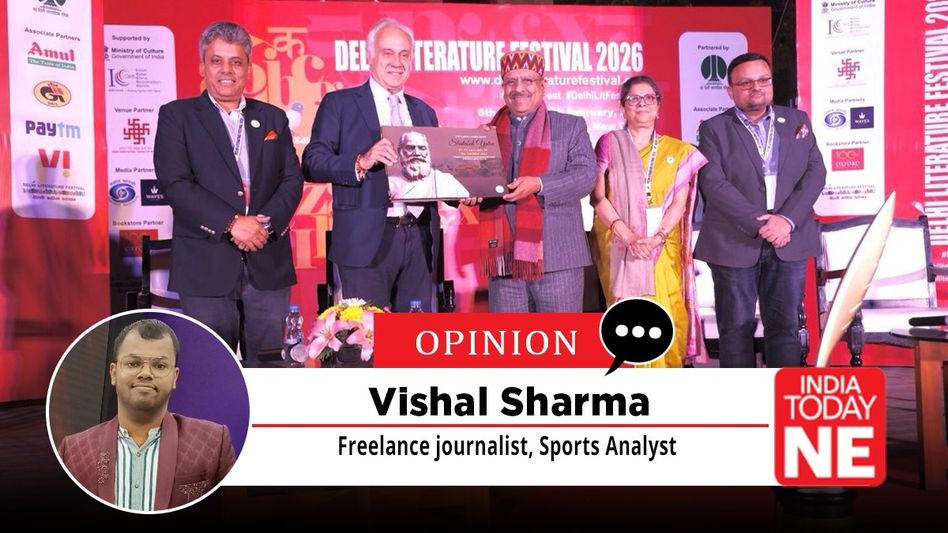
The capital’s literary heartbeat grew louder on Friday evening as the 14th edition of the Delhi Literature Festival (DLF 2026) was formally inaugurated at the Indira Gandhi National Centre for the Arts (IGNCA). What began quietly earlier this week has already begun shaping up as one of the most thoughtful cultural gatherings of the year, a three-day celebration of ideas, narrative, and critical dialogue under the theme “Sahitya, Sanskriti aur Samriddhi” (Literature, Culture and Prosperity)swiftly unfolded into an invigorating blend of literary reflection, spirited debate and aesthetic tribute — and it all began with an inauguration that was as diplomatic as it was literary.
The festival’s opening ceremony on 6 February was presided over by Vijender Gupta, Speaker of the Delhi Legislative Assembly, who formally inaugurated the special programme and set a reflective tone for the three-day celebration. Addressing the gathering, Gupta underlined the enduring relevance of literature in shaping public thought and cultural identity.
During the inaugural speech of the special programme Vijender Gupta, said, “literature is not limited to stories and books alone; rather, it guides society in the way it thinks and understands the world.” He added that literature keeps us connected to our culture and civilization and shows the right path to the younger generation.
Among the distinguished international guests present was the Ambassador of Spain to India, H.E. Juan Antonio March Pujol, whose presence lent a distinct global dimension to the inaugural evening and reinforced the festival’s spirit of cross-cultural dialogue. While the festival’s Chairperson, Bharati Bhargava, said that the objective of this festival is not merely to talk about development, but also to preserve and carry forward our cultural heritage. She added that literature can be a powerful medium to bring positive change in society.
Walking into the IGNCA’s amphitheatre on opening night, one couldn’t help but notice the deliberate blend of voices seasoned jurists, spiritual thinkers, journalists, and novelists, curious audience/fans all converging to explore what “prosperity” truly means beyond economics. This festival does not just celebrate books; it interrogates narratives that define society.
The evening also paid homage to the late Hindi writer Vinod Kumar Shukla, with a tribute session evoking both the depth and humanity of his work, a symbolic reminder that while festivals champion new voices, they are rooted in the legacies of those who shaped Indian letters.
Speaking with Founder & Director, Delhi Literature Festival, Ajay Sharma, said,“ As you know that our Prime Minister Modi has given us a slogan, “Virasat bhi, Vikas bhi ” means (Heritage and Development), carrying the legacy, the initiative forward, Delhi Literature Festival decides this years theme, Sahitya, Sanskriti and Samridhi, and the idea is that how we can connect with our past, our rich culture and heritage and connect it with the future and the next generation, the gen Z.”
While talking of how government support helped in navigating the pathway of DLF 2026, the Director stated, “ the idea is quite simple that art and culture should always be patronised, earlier it’s kings/emperors who used to promote heritage, now government plays pivotal role, with such support we feel encouraged and it will continue this year too.”
Later in the evening, the ‘Author Awards 2026’ were held. Writers from different languages were honoured for their outstanding work. Awards were presented in a total of 13 categories. The platform also gave new and emerging writers an opportunity to express themselves, which boosted the enthusiasm of young authors.
Right after the formal speeches, the festival made space for its first major highlight of the night: Acharya Prashant engaging audiences in a deeply charged conversation about “Truth Without Apology”, setting expectations high for the sessions to come. The first day concluded with a special session by Acharya Prashant. A large number of people attended the session and listened to him attentively.
As the three-day programme continues through 8 February, Delhi Literature Festival feels more than just another cultural event in the capital’s crowded arts calendar. It is emerging as an arena of intellectual exchange, inviting readers and thinkers alike to consider how literature might help us navigate not only personal stories but shared futures.
Going forward to upcoming sessions will have renowned authors and poets such as Seema Anand, Neelotpal Mrinal, and Shambhu Shikhar will share their works and thoughts with the audience. The festival will feature book discussions, poetry recitations, and an exchange of ideas.