Narendra Modi: Prime Minister of longest tenure
Narendra Modi emerged from a dramatically different political environment. Unlike Nehru, who belonged to the generation of freedom fighters, Modi rose through the ranks of organisational politics. His political journey from a modest background to the highest executive office of the world’s largest democracy has become a significant part of his public image.

- Jun 06, 2026,
- Updated Jun 06, 2026, 1:02 PM IST

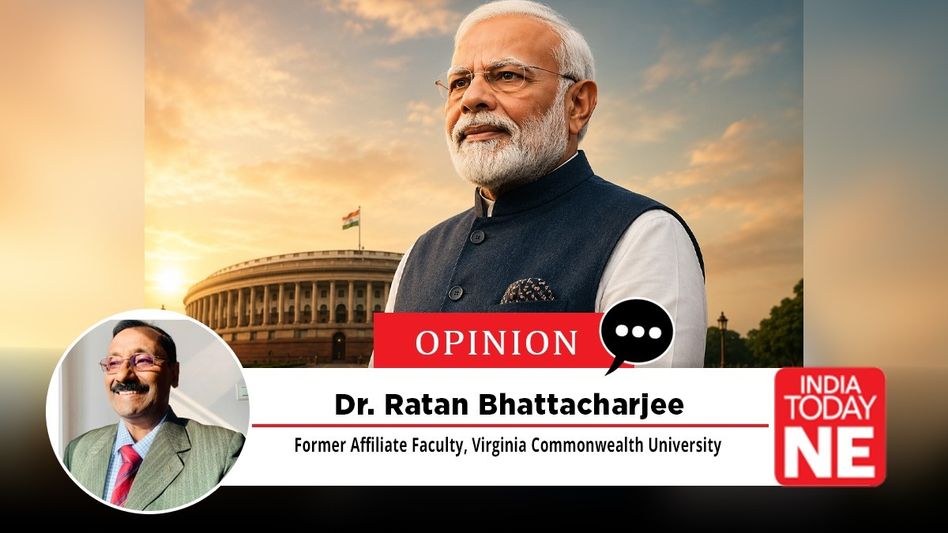
Finally on June 10 the long waited day has come. Narendra Modi surpasses Nehru’s tenure as Prime Minister. The story of Narendra Modi’s political journey reflects broader transformations within Indian democracy. His rise demonstrates the increasing importance of mass communication, leadership branding, and aspirational politics in the modern era. Whether admired or criticised, Modi has undeniably reshaped India’s political landscape. His influence extends beyond party politics, affecting discussions on governance, national identity, economic development, and India’s place in the world. Jawaharlal Nehru served as Prime Minister for approximately seventeen years, making him India’s longest-serving Prime Minister for decades. His leadership was characterised by institution-building, democratic consolidation, economic planning, and a commitment to secularism. Nehru inherited a nation traumatised by Partition, widespread poverty, illiteracy, and communal violence.
Despite these immense challenges, he laid the foundations of modern India through the establishment of scientific institutions, public sector enterprises, educational centers, and democratic traditions. His vision of a socialist-inspired mixed economy influenced Indian policymaking for several decades. Narendra Modi emerged from a dramatically different political environment. Unlike Nehru, who belonged to the generation of freedom fighters, Modi rose through the ranks of organisational politics. His political journey from a modest background to the highest executive office of the world’s largest democracy has become a significant part of his public image. The history of independent India has been shaped by a handful of leaders whose political influence transcended their own generations. Among them, Jawaharlal Nehru and Narendra Modi occupy distinct and significant positions. Nehru, the first Prime Minister of India, guided the newly independent nation through its formative years from 1947 to 1964. Narendra Modi, who assumed office in 2014, has emerged as one of the most influential political figures in contemporary India. As Modi continues to lead the country through successive electoral victories, comparisons with Nehru have become increasingly common. The possibility of Modi serving a longer tenure than Nehru has generated considerable political and academic discussion, inviting an examination of leadership styles, governance models, public appeal, and their respective impacts on India. His supporters often portray him as a self-made leader who understands the aspirations of ordinary Indians. This narrative has played a substantial role in his sustained popularity across diverse social groups. The political circumstances surrounding Modi’s rise to power were also fundamentally different.
By 2014, India had experienced decades of coalition governments, economic liberalisation, and changing social dynamics. Public frustration over corruption scandals, administrative inefficiency, and economic concerns created an environment conducive to political change. Modi’s campaign effectively projected him as a decisive leader capable of delivering development, economic growth, and strong governance. His victory marked a significant shift in India’s political landscape, with the Bharatiya Janata Party securing a parliamentary majority on its own. One of the defining characteristics of Modi’s tenure has been the centralisation of political leadership around his personality. Unlike many previous Prime Ministers who operated within broader collective frameworks, Modi has become the principal face of government policy, electoral campaigns, and national initiatives. His communication skills, extensive use of digital media, and ability to connect with large audiences have contributed to his enduring political appeal. Through radio broadcasts, social media engagement, and public rallies, he has maintained direct communication with citizens on an unprecedented scale.
Economic development has remained a central pillar of Modi’s governance philosophy. Initiatives such as Digital India, Make in India, Startup India, and various infrastructure programs have sought to transform India’s economic landscape. Massive investments in highways, railways, airports, and digital connectivity have aimed to modernise the nation’s infrastructure. The expansion of digital payment systems and financial inclusion initiatives has brought millions into the formal banking sector. Supporters argue that these measures have accelerated India’s emergence as a major global economic power. At the same time, Modi’s tenure has witnessed ambitious welfare programs targeting the poor and marginalised sections of society. Housing schemes, sanitation campaigns, cooking gas distribution, healthcare initiatives, and direct benefit transfers have reached millions of households. Programs such as Swachh Bharat Abhiyan have sought to address longstanding public health challenges, while the construction of toilets across rural India has been presented as a major social transformation. These initiatives have contributed significantly to Modi’s popularity among lower-income groups. Foreign policy has emerged as another notable dimension of Modi’s leadership.
Under Modiji’s tenure, India has pursued a more assertive global role. Strategic partnerships with major powers, engagement with the Indian diaspora, and active participation in international forums have enhanced India’s global visibility. Modiji’s personal diplomacy and frequent international engagements have projected India as a confident and ambitious nation seeking greater influence in global affairs. Relations with countries across Asia, Europe, the Middle East, and the Americas have received considerable attention. Comparisons with Nehru often focus on contrasting visions of nationhood. Nehru emphasised secularism, scientific temper, and non-alignment in foreign policy. Modi, by contrast, has emphasized cultural nationalism, civilisational identity, and strategic pragmatism. Supporters argue that Modi has revived pride in India’s ancient heritage and cultural traditions while simultaneously promoting modernisation. Critics, however, contend that some aspects of his political approach challenge the secular framework envisioned by India’s founders. These debates reflect broader ideological differences that continue to shape Indian political discourse.
The electoral success achieved under Modi’s leadership is particularly remarkable. Winning consecutive parliamentary majorities in a country as vast and diverse as India is an extraordinary political accomplishment. His ability to maintain popularity across multiple election cycles distinguishes him from many contemporary democratic leaders worldwide. Electoral victories in numerous state and national contests have reinforced the perception of Modi as the dominant figure in Indian politics. Today nearly all the border adjacent states are being ruled by BJP under the leadership of Modi as the Prime Minister. Media and communication strategies have also contributed significantly to Modi’s political longevity. He has effectively utilised digital platforms to bypass traditional channels and communicate directly with citizens. This approach has enabled him to maintain a consistent narrative and respond rapidly to political developments. His campaigns often combine traditional grassroots mobilisation with sophisticated technological outreach, creating a powerful electoral machine capable of reaching millions of voters.
The Covid-19 pandemic represented one of the greatest challenges of Modi’s tenure. India faced immense public health and economic pressures during the crisis. Government responses included nationwide lockdowns, vaccination campaigns, healthcare infrastructure expansion, and economic relief measures. While the handling of certain phases of the pandemic attracted criticism, India’s large-scale vaccination effort was widely recognised as one of the most extensive public health operations in human history. Infrastructure development under Modi has been particularly visible. New highways, expressways, railway modernization projects, metro systems, and digital networks have transformed many parts of the country. Advocates view these developments as essential foundations for future economic growth. The emphasis on connectivity, logistics, and urban development reflects a broader vision of India as a globally competitive economy capable of sustaining long-term expansion. Another factor contributing to Modi’s enduring appeal is his ability to frame politics around national aspirations. His speeches frequently emphasise themes of self-reliance, national pride, technological advancement, and India’s emergence as a leading global power. These themes resonate strongly with younger generations seeking opportunities in a rapidly changing world.
The narrative of a rising India has become a central component of his political message. Critics have raised concerns regarding freedom of expression, institutional autonomy, economic inequalities, and social polarisation. Opposition parties argue that democratic institutions require stronger safeguards and greater pluralism. Supporters counter that strong leadership is necessary to implement reforms and overcome bureaucratic inertia. The comparison with Nehru extends beyond duration in office. Nehru’s legacy is associated with institution-building during the early years of independence, while Modi’s legacy may ultimately be judged by India’s transformation in the twenty-first century. Both leaders have operated in vastly different historical contexts, making direct comparisons challenging. Nehru confronted the task of nation-building from the ground up, whereas Modi has focused on accelerating growth and redefining India’s global position.
If Narendra Modi ultimately surpasses Nehru’s tenure as Prime Minister, it will represent a significant milestone in Indian political history. Longevity in office, however, is only one measure of leadership. Historical judgment depends not merely on years served but on the lasting impact of policies, institutions, and ideas. Leaders are remembered not only for electoral victories but for the changes they bring to society and the legacy they leave for future generations.
As India continues its journey through the twenty-first century, scholars, historians, and citizens will continue to debate the relative achievements of Nehru and Modi. Such comparisons are inevitable when leaders leave deep marks on national life. Nehru helped define the foundations of independent India, while Modi seeks to redefine its future trajectory. Their legacies, though different in character and context, represent two major chapters in the evolving story of the Indian republic. Should Modi remain in office longer than Nehru, it would symbolize not only a personal political achievement but also a reflection of the changing dynamics of Indian democracy, where leadership, public expectations, and national ambitions continue to evolve in new and significant ways.
(Dr. Ratan Bhattacharjee is former Affiliate Faculty Virginia Commonwealth University & Retd. Head Post Graduate Dept of English Dum Dum Motijheel College)