Pride Beyond the Rainbow: How Northeast India is shaping a new conversation
We live in a world where every thought, photo and feeling can be shared instantly. Yet for millions, revealing their true identity remains the hardest thing to post — and that's exactly why Pride exists.

- Jun 21, 2026,
- Updated Jun 21, 2026, 11:56 AM IST

- Pride began as protest and still centres rights, dignity and recognition
- India's first Pride parade took place in Kolkata in 1999
- Bollywood and queer film festivals have widened visibility through storytelling
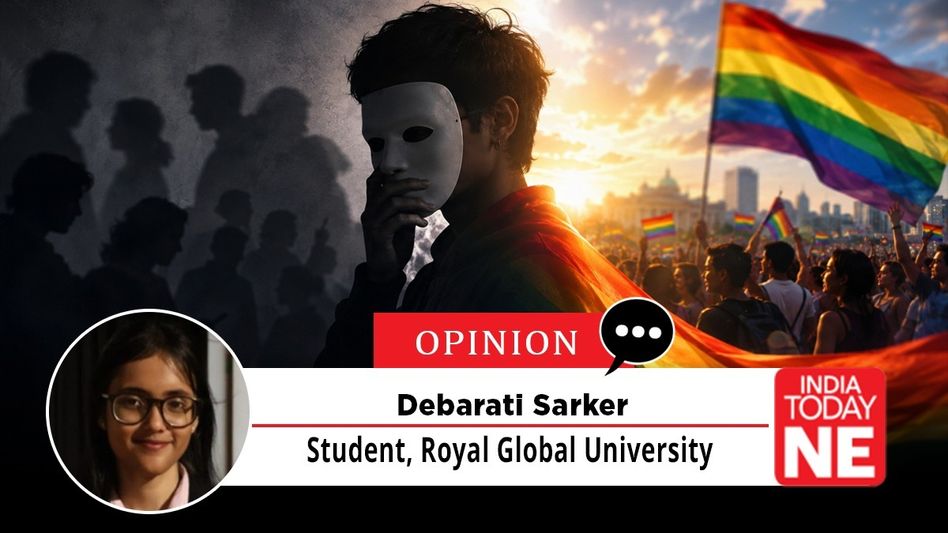
In an age of self-expression, why do so many still feel the need to hide who they are?
Never before has a generation been more visible. We document our lives through Instagram stories, curate playlists that reflect our moods, and share our thoughts with the world in real time. Individuality is celebrated, authenticity is encouraged, and self-expression has become a defining feature of modern culture. Yet for many people, being completely open about who they are remains a challenge. This contradiction lies at the heart of Pride.
While speaking about the meaning of Pride, an individual from the queer community, Taniska Das, explained: “Pride is essentially a form of protest. It is about fighting for rights that have been denied, overlooked, or even taken away. It represents the struggle for recognition and inclusivity that we strive to achieve, not just through the people of the society but also from the legal governing system. For me, Pride is a way of demanding those rights back so that we can simply live as normal human beings and be treated with dignity and respect.”
Every June, rainbow flags appear across social media feeds, public spaces, and institutions around the world. While often associated with celebration, Pride is rooted in something much deeper: the belief that every individual deserves the freedom to live authentically and without fear.
The movement traces its origins to the Stonewall Riots of 1969 in New York City, where members of the LGBTQ+ community resisted discrimination and police harassment. What began as an act of protest evolved into a global movement advocating equality, visibility, and dignity.
In India, the journey of the rainbow began on July 2, 1999, when the Kolkata Rainbow Pride Walk became the country’s first Pride parade and the first in South Asia. Today, Pride marches are held in over 21 Indian cities, reflecting a growing engagement with identity, inclusion, and representation.
The conversation has also expanded into popular culture. Bollywood, often criticised for reducing queer characters to stereotypes, has gradually begun embracing more nuanced narratives. Films such as Aligarh, Ek Ladki Ko Dekha Toh Aisa Laga, Shubh Mangal Zyada Saavdhan, and Badhaai Do have brought LGBTQ+ stories into mainstream cinema, helping audiences engage with experiences once rarely discussed on screen.
Beyond activism and Pride marches, storytelling has become a powerful tool for visibility. Queer film festivals like the KASHISH Pride Film Festival, Bangalore Queer Film Festival, and Chennai International Queer Film Festival have created platforms for LGBTQ+ stories often overlooked by mainstream media. By bringing diverse experiences to the screen, these festivals encourage dialogue, challenge stereotypes, and help audiences understand identity through a more human lens.
Representation, however, extends beyond media. It is also about visibility in everyday life: classrooms, workplaces, communities, and public discourse. Seeing oneself reflected in society can foster belonging that has long been denied to many.
As the national conversation evolved, Northeast India began shaping its own narrative. A key milestone came in 2014 when Guwahati hosted the region’s first Pride Walk. Since then, initiatives such as Queer Pride Guwahati, Queeriosity, Xonmonnoy, and other community-led efforts have created spaces for dialogue, awareness, and support. What began as a small gathering has grown into a movement involving students, activists, artists, professionals, and allies across the region.
Speaking to India Today NE, a representative of Queeriosity, Guwahati, said inclusivity in Northeast India reflects a wider generational shift rather than a region-specific change. They stated:
“I wouldn't say this is something specific to the Northeast. Rather, it reflects a broader change taking place among people, especially the younger generation. Many young people today are more accepting of LGBTQ+ individuals and understand that being queer is completely normal. At the same time, there are still those who oppose LGBTQ+ rights. However, I do see progress. More organisations, NGOs, and support groups are working with queer communities and creating awareness. So yes, society is becoming more inclusive, but what we need is a legal framework that makes us feel accepted and validated, just like the ordinary citizens of the country.”
Despite this progress, challenges remain. Many queer individuals continue to face stigma, discrimination, family pressure, and misunderstanding. For some, the struggle is not only social acceptance but also being understood within their own homes.
Yet the continued growth of Pride movements across the world, India, and the Northeast suggests these conversations are no longer confined to the margins. They are increasingly part of mainstream discourse, driven by a generation willing to question norms and embrace diversity.
When asked how young people should approach inclusion, Taniska said: “What I would like is simple: treat queer people the same way you would treat anyone else. Inclusion means equality. It means seeing people as people. If young people can embrace that mindset, it would make a significant difference.”
Pride, ultimately, is not about asking for special treatment. It is about recognising a simple truth: everyone deserves dignity, respect, and the freedom to be themselves. After all, “a rainbow stands out because every colour is allowed to exist.”