Riding toward nowhere: What India’s streets are telling us about a generation running on empty
Over several weeks this year, travelling from Delhi to Bangalore, Bangalore to Pune, Pune to Guwahati, and finally home to Manipur, I had conversations I had not planned for. In autos and taxis, on Rapido bikes navigating city traffic, at tea stalls and bus terminals. With riders spending twelve hours a day on these roads. With friends at research institutions. With older men and women who had watched governments come and go and still believed in the process, and with younger people who had stopped believing but had not stopped thinking.

- May 22, 2026,
- Updated May 22, 2026, 10:54 AM IST

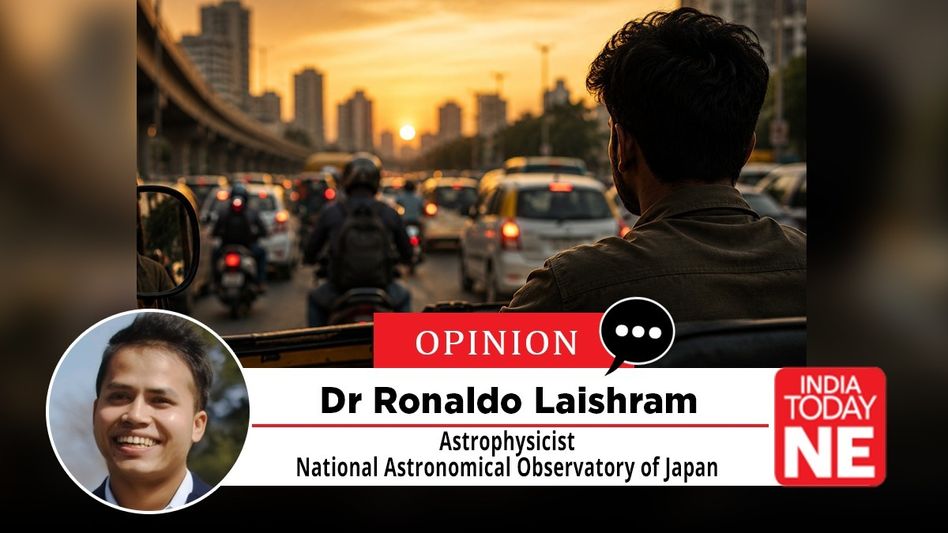
It was a Friday evening in Delhi. The kind of evening where the air sits heavy and the traffic does not move. I opened a ride app and within minutes a car pulled up. The driver was in his mid-twenties, a commerce graduate, a few months on the platform. He had other plans. Most of them do.
We sat in traffic. He told me about the applications sent, the interviews that went quiet, the father who kept saying something will come. He was not broken by any of this. That is the first thing you notice about these young men behind the wheel and on the roads. They are sharp. They are watching everything. They just have nowhere to put it.
Before I reached my destination he said something that did not leave me for the rest of the trip. That they keep telling us to be patient, he said, but patience also has an expiry date.
A Country of Young People, A Nation Short of Futures
India is, on paper, one of the most remarkable demographic stories in the world. Nearly two-thirds of its 1.4 billion people are under thirty-five. Every policy paper, every budget speech, every government address has celebrated this as the demographic dividend, a vast young population powering one of the great economic stories of this century.
The streets tell a different story.
Over several weeks this year, travelling from Delhi to Bangalore, Bangalore to Pune, Pune to Guwahati, and finally home to Manipur, I had conversations I had not planned for. In autos and taxis, on Rapido bikes navigating city traffic, at tea stalls and bus terminals. With riders spending twelve hours a day on these roads. With friends at research institutions. With older men and women who had watched governments come and go and still believed in the process, and with younger people who had stopped believing but had not stopped thinking.
What I found was not apathy. What I found was a generation that is profoundly, uncomfortably aware, and running out of road.
The Graduate on the Bike
Despite an official unemployment rate of 4 to 6 percent, among unemployed Indians aged 20 to 29, graduates now account for about two-thirds, up from 46 percent in 2017 according to the State of Working India 2026 report. Not school dropouts. Not people who never tried. People who did everything they were told to do, studied, qualified, applied, and arrived at a labour market that had no space for them.
In Bangalore I spent a lot of time taking Rapido bikes and autos to move around the city. Something kept happening in those fifteen and twenty minute rides. The conversations were honest in a way that formal settings rarely are. One rider was an IT professional who still drove on weekends to support his family. Another had an engineering degree and still checked his job application emails every morning. He mentioned it with a small laugh, the kind that has stopped expecting anything.
One of them, from Silchar, working in Bangalore for a few years, told me quietly about the life he was trying to build and how many invisible walls kept appearing in his way. He was not angry. He was just sad in the particular way of someone who can see exactly what he wants and cannot understand why it is so hard to simply be allowed to have it.
|
Gig workers on platforms like Uber, Ola, and Rapido often face unstable earnings, rising fuel and maintenance costs, and limited access to predictable social security. In February 2026, app-based transport workers launched a nationwide strike against the failure of both state and central governments to notify minimum base fares, even after guidelines were issued to regulate exactly this. The platforms continue to set fares unilaterally. The news cycle treated it as a traffic disruption. Many of the drivers could not afford to lose the earnings that day.
What the Older Generation Carries
In different cities I also spoke with older people, retired professionals, small business owners, men and women who had built dignified lives through decades of patience and steady work. There is real warmth in their wisdom and real weight in their experience.
But the younger people I met spoke about their parents with a kind of gentle frustration. Their parents carry loyalties to parties and leaders that shaped their adulthood, built through moments when those identities felt protective and felt like home. That is not something you dismiss. It is something you understand.
Their children, however, have grown up with different information. They watch the same speeches, the same rallies, the same promises cycle through, and measure them against the reality of their own lives. In Guwahati, one auto driver put it simply while taking me across the city. He said he understood why his parents believed what they believed, but that understanding alone did not solve hunger, rent, or the absence of work.
He was not angry when he said it. Just tired in the way of someone who has understood something fully and cannot change it.
What Is Being Offered Instead
India’s younger generation detects hypocrisy faster than any generation before it. A young voter may admire cultural pride but refuse communal hatred. The old formulas are beginning to fray. Caste arithmetic, religious mobilisation, and ideological inheritance can still matter, but none of them is sufficient on its own anymore.
Many of the young people I met could sense how public attention is repeatedly pulled toward identity, religious anxiety, caste calculation, and political spectacle, while the slower questions of employment, education, wages, and dignity remain unresolved. They could trace it, name it, explain it. What they could not do was escape its consequences.
Identity politics costs something even when you see through it. It takes up space that could hold policy. It generates heat that could generate light. And it works most effectively on those who have the least, people for whom belonging to something feels like the only available security when the economy has offered them nothing else.
A country cannot celebrate a demographic dividend while failing to convert that demographic into dignity. At some point the dividend expires. What remains is the debt.
What Leadership Can Still Do
None of this is beyond repair. That is the important thing to say clearly. The young man checking his emails every morning has not given up. The IT professional riding on weekends to keep his family afloat has not given up. The rider from Silchar quietly building a life in a city far from home has not given up. They are still here, still trying, still waiting for a system that was supposed to work for them to actually do so.
What they need is not charity. It is not sympathy from a podium. It is the basic, unglamorous work of governance: jobs that match the degrees being issued, social security that follows workers across platforms, investment in regions and cities outside the established centres of opportunity, and leaders who speak about employment with the same urgency they currently reserve for everything else.
If those in power choose to genuinely address this, the results would not just be economic. A young person who can see a livelihood ahead of them thinks differently, engages differently, builds differently. A generation that feels included in its own country’s future does not need to be managed or divided. It participates. It contributes. It stays.
This generation is not asking for the impossible. They are asking for what was promised. And they are watching, with more clarity than any generation before them, whether it will come.
The Weight of a Wasted Generation
The 18th Lok Sabha is the oldest in India’s history, with an average MP age of 56. India has never been younger. Its parliament has never been older. The people making decisions about the futures of millions of jobless graduates are, structurally, among the least likely to understand what those futures feel like from the inside.
A generation that is exhausted, divided, and preoccupied with survival does not organise, does not demand, does not imagine alternatives loudly enough to be heard. The gig worker does not have the luxury of political engagement when he needs to complete fifteen rides before sundown to make the day worthwhile.
What a country does with the energy and intelligence of its young people in their most generative years, it does to its own future. That choice is not made once. It is made every day, in every budget, in every policy that favours division over investment, in every promise that arrives at election time and disappears before the counting is done.
Before leaving Bangalore, one driver asked me something I had no good answer for. What is actually being built for us, he said. Not promised. Built.
He already had another request. He accepted it and pulled away into the traffic without looking back.
He had places to be. People to carry. A country to keep moving, one kilometre at a time, while the country figures out whether it owes him anything back.