Saina Nehwal Retires — The Pioneer Who Turned Indian Badminton Into a Global Force
Saina Nehwal’s last competitive appearance came at the Singapore Open in 2023, after which she stepped away from official tournaments due to a chronic knee condition and arthritis that made elite-level play untenable.

- Jan 23, 2026,
- Updated Jan 23, 2026, 8:50 PM IST

Saina Nehwal’s last competitive appearance came at the Singapore Open in 2023, after which she stepped away from official tournaments due to a chronic knee condition and arthritis that made elite-level play untenable. She had been inactive on the international circuit from about couple of years ago before formally confirming her retirement in January 2026, acknowledging that her physical conditions could no longer handle the demands of professional badminton.
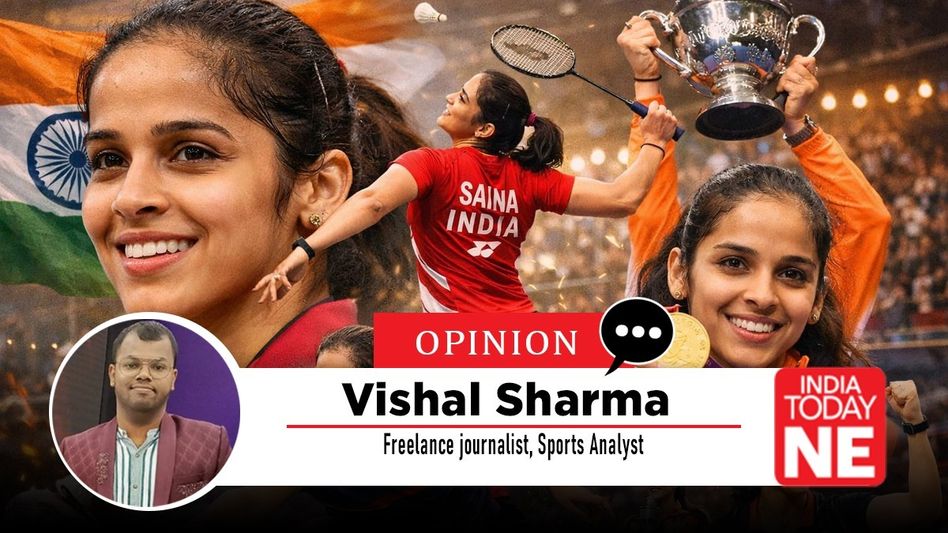
Saina Nehwal’s retirement draws the curtain on one of the most consequential careers Indian sport has witnessed in the modern era. Long before India became a regular presence on badminton’s biggest stages, Saina was already there winning, resisting, and redefining what was considered possible. Her rise was not symbolic; it was statistical, historic, and earned the hard way.
Persistent injuries for almost two years, especially to her knee and foot, gradually eroded Saina Nehwal’s physical ability to train and compete at the intensity elite badminton demands. After years of pushing through pain and repeated setbacks, she acknowledged that her body could no longer match her competitive desire, consequently leading her not to announce but to accept the retirement with honesty and dignity.
In announcing her retirement from competitive badminton, Saina Nehwal offered one of the most candid reckonings in Indian sport in recent memory not about medals or legacy, but about the physical limits of the human body. The former world No. 1 and 2012 Olympic bronze medallist revealed that chronic knee degeneration and arthritis left her unable to sustain the rigours of elite training, forcing her decision to step away after nearly two decades at the top.
In announcing her retirement from competitive badminton, Saina Nehwal chose reflection over rhetoric. Her decision was not framed by fading motivation or lost relevance, but by an honest admission of what her body could no longer endure. After years at the elite level, injury not ambition finally dictated the timing of her exit.
“It’s fine if you are not capable of playing anymore,” she said on a podcast, describing how her cartilage had “totally degenerated” and how swollen knees curtailed even short sessions. Outlook India Rather than a dramatic exit, Saina spoke of quiet acceptance, a testament to an athlete who knows that longevity in sport is as much about patience and sacrifice as it is about glory.
In a sporting culture often obsessed with youth and peak performance, her words remind us that courage sometimes means knowing when to let go.
Saina Nehwal had many firsts to her name, but never boast of her achievements
Even as she collected milestones that changed Indian sport, Saina remained understated, grounded always, focused more on the journey to the court than celebration.
She remains India’s first Olympic medallist in badminton, claiming bronze at London 2012, and the first Indian woman to reach the final of the BWF World Championships, winning silver in 2015. In 2015, she also became the first Indian woman to achieve the world No. 1 ranking, a milestone that shifted India’s standing within the sport. With over 24 international titles, including eleven Super Series victories and five Commonwealth Games titles out of which 3 gold medals, her career was built on sustained excellence rather than fleeting brilliance. Saina turned historic firsts into lasting standards for Indian badminton, her medals told the story; her longevity confirmed the legacy.
Yet numbers alone fail to capture her sporting value. Saina competed in an era with limited support systems, frequent injuries, and immense pressure, often returning from setbacks to remain relevant at the elite level for almost two decades. She set benchmarks that later champions could chase, and in doing so, normalised India’s presence in elite badminton finals.
From Modest Courts to Global Podiums
Saina Nehwal’s journey reads less like a routine sporting biography and more like a quiet revolution that reshaped Indian badminton. From a young girl training in Hyderabad’s modest academies to becoming a global force, Saina carried ambition that far exceeded the infrastructure around her. Long before floodlit arenas and packed stands became normal for Indian shuttlers, she was already imagining podiums that once felt unreachable.
Her early breakthroughs were signs of stubborn belief medals at junior events, a fearless presence on court, and a work ethic that refused shortcuts. Then came the moments that changed perception entirely: an Olympic bronze at London 2012, historic victories on the world stage, and the rare honour of becoming world No. 1. Every milestone achieved by Saina Nehwal went beyond personal success, reshaping the limits Indian women believed they could reach in elite sport.
What makes Saina a true sporting hero is not just the medals, but the pathway she created. She stood tall in an era when women athletes still fought for visibility, handling injuries, expectations and pressure with resilience. As a super woman of Indian sport, Saina Nehwal didn’t just win laurels for the country — she inspired thousands, especially young girls, to pick up a racquet and dream without limits.
Breaking Barriers Beyond Medals
Saina Nehwal’s influence cannot be measured only in rankings or titles. She arrived at a time when Indian badminton was still searching for its identity on the global stage, especially in the women’s game. With every hard-fought match, she challenged outdated notions around physicality, professionalism and longevity in women’s sport. Her consistency over more than a decade, despite injuries and changing generations, spoke of an athlete who refused to fade quietly. Saina made excellence look repeatable, not accidental.
A Legacy Still in Motion
Even today, her presence carries weight beyond the scoreboard. For younger players, she represents proof that global success is achievable from Indian courts. For fans, she remains a symbol of grit and self-belief. Saina Nehwal’s story continues to inspire not because it is flawless, but because it is fiercely real, a legacy built on courage, discipline and an unrelenting will to compete.
The tributes that followed Saina Nehwal’s retirement announcement said as much about her stature as her medals ever did. Virat Kohli hailed her as a trailblazer who “changed the game for Indian badminton,” acknowledging how her fearlessness redefined ambition for a generation. PV Sindhu, both peer and torchbearer, called Saina her inspiration, crediting her for making global success feel possible for Indian shuttlers. Sachin Tendulkar, too, praised her grit and longevity, noting how she carried Indian sport with quiet pride. Together, these voices underlined one truth: Saina didn’t just win titles she shifted belief.
As she steps away, Indian badminton stands on stronger foundations, deeper talent pools, higher expectations, and global respect. That structure did not emerge overnight. It began when Saina Nehwal chose to fight, win, and stay. Her retirement ends a career, but the pathway she carved remains firmly open.