Seats, Census, and Silenced Women
The failure of the Constitution (131st Amendment) Bill, 2026 in the Lok Sabha is not a rejection of women’s reservation; it is a reminder that even widely accepted reforms can falter when layered with structural uncertainty.

- Apr 18, 2026,
- Updated Apr 18, 2026, 9:42 AM IST

The failure of the Constitution (131st Amendment) Bill, 2026 in the Lok Sabha is not a rejection of women’s reservation; it is a reminder that even widely accepted reforms can falter when layered with structural uncertainty. When a measure grounded in equity becomes contingent on complex institutional processes, consensus can give way to hesitation.
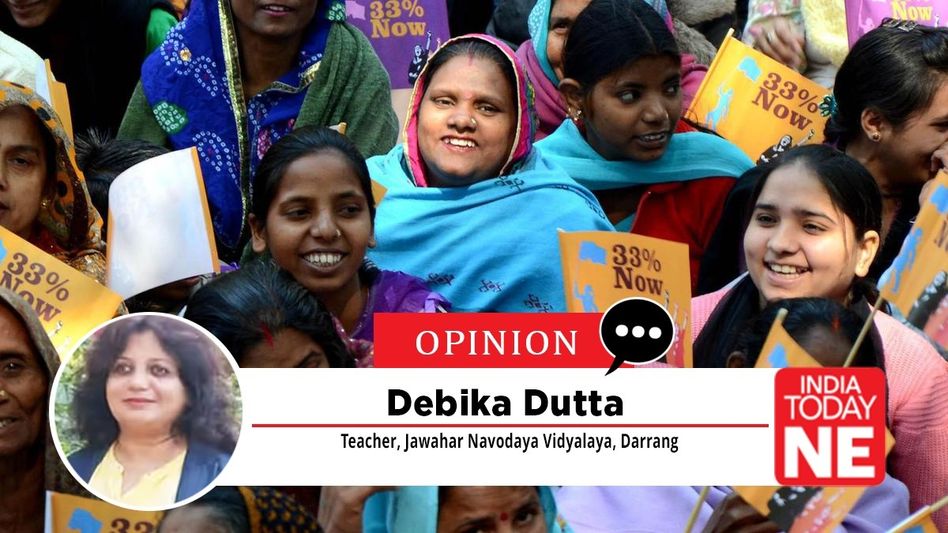
The proposal to reserve 33 per cent seats for women in Parliament and State Assemblies has, for decades, commanded broad political support. Its rationale is clear. Women today constitute only about 15 per cent of the Lok Sabha, a figure that sits uneasily with India’s democratic aspirations. This is despite the success of reservation at the grassroots, where more than 1.4 million elected women representatives in Panchayati Raj Institutions have already altered the character of local governance. The national legislature, however, continues to reflect a gap that is difficult to justify.
The difficulty in the present instance lay not in principle, but in design. By linking implementation to the next Census and a subsequent delimitation exercise, the Bill placed a time-sensitive social reform within the framework of an uncertain administrative timeline. The debate, inevitably, shifted—from the urgency of gender justice to the complexities of redrawing India’s electoral map.
Delimitation, in itself, is both necessary and overdue. India’s population has expanded from about 548 million in 1971 to over 1.4 billion today, making a revision of constituency boundaries a logical step. Proposals to increase the strength of the Lok Sabha beyond the current 543 seats are therefore grounded in democratic reasoning. Yet, representation in a federal polity cannot rest on arithmetic alone.
States that have stabilised population growth are understandably wary of losing relative political weight. For the Northeast, the implications are even more sensitive. With smaller populations and limited parliamentary representation, states such as Arunachal Pradesh, Nagaland, Mizoram, and Sikkim already operate with a narrow legislative voice. A purely population-driven redistribution risks further narrowing that space, raising concerns that go beyond numbers to questions of visibility, inclusion, and strategic relevance.
This is not a marginal issue. The Northeast is not only geographically distant from the national capital; it is also central to India’s security architecture and its Act East engagement. Any perception of diminishing its voice in the national legislature carries consequences that are both political and psychological. Federal balance, in this sense, is not an abstract principle—it is a lived necessity.
It is within this larger context that the Bill’s conditionality became difficult to sustain. By tying women’s reservation to delimitation, it effectively made one reform dependent on another that requires deeper political consensus. The result is a familiar outcome: a widely supported idea deferred by the weight of its own design.
The delay is not without cost. With the Census yet to be conducted and delimitation to follow, the timeline for implementing reservation remains uncertain. For a reform that has already waited decades, further postponement risks weakening both its urgency and its credibility. Gender representation cannot remain perpetually contingent on processes that are themselves evolving.
At the same time, the government’s approach reflects a coherent long-term vision. Integrating reservation with delimitation could, in principle, ensure that representation evolves within a restructured electoral framework, avoiding repeated adjustments in the future. This is a rational and forward-looking objective. Yet, governance also demands responsiveness to present deficits, particularly when they concern democratic inclusion.
A balanced path forward would require decoupling immediacy from complexity. Advancing women’s reservation within a defined timeframe, while allowing wider consultations on delimitation to continue, could help preserve both momentum and consensus. Equally essential is the incorporation of safeguards that protect the representational interests of smaller states, ensuring that electoral reform strengthens rather than unsettles the Union’s federal fabric.
What this episode ultimately reveals is not a failure of intent, but a misalignment of priorities. In a democracy as diverse as India, sequencing matters as much as substance. When reforms of different scales are bound together, the more contentious one often determines the fate of the other.
The case for women’s reservation remains compelling, and the national consensus around it is unlikely to diminish. The challenge now is to ensure that this consensus translates into action without being subsumed by larger structural debates. For the Northeast, the moment also serves as a reminder that representation is not merely about numbers, but about voice, presence, and participation in the national narrative.
India’s democratic strength lies in its ability to reconcile competing imperatives, but reconciliation cannot become a pretext for indefinite delay. The broad consensus on women’s reservation must now translate into timely action, even as wider consultations on delimitation continue with due sensitivity to federal balance and regional concerns. For the Northeast, the assurance that its voice will remain secure in any future restructuring is equally essential. Because when inclusion is postponed—even for reasons of design—the cost is not merely procedural; it is a democratic deficit the system can ill afford to sustain.