Securing the Siang: Why infrastructure matters more than paper treaties
The ongoing construction of major hydropower projects by China on the upstream reaches of the river threatens to fundamentally alter the river's flow regime. The local indigenous population recognizes that in the event of an extreme flood or an emergency release of water by Beijing, downstream communities face catastrophic risks and therefore the need for creating dam reservoirs to mitigate and protect from such flooding.

- Jul 12, 2026,
- Updated Jul 12, 2026, 5:59 PM IST

In a recent article, “The strategic alignment of the Ganga treaty of renewal and protection of Siang River basin” published in The Arunachal Times,it wassuggested that India should rely on transboundary water treaties rather than building strategic infrastructure to secure the Siang River basin. However, the argument that India should abandon the Siang Upper Multipurpose Project (SUMP) in favour of upgraded diplomatic treaties fundamentally misreads both the geopolitical realities of transboundary water management and the genuine sentiments of the indigenous communities in Arunachal Pradesh. While forging a unified Ganges-Brahmaputra-Meghna ecological treaty sounds like an elegant solution in academic corridors, relying solely on international diplomacy while halting crucial physical infrastructure ignores the immediate, existential threats posed by the upstream Chinese dams. The proposition that distant geopolitical agreements can substitute for on-the-ground disaster preparedness and tangible water security is a dangerous strategic miscalculation that leaves India’s northeast vulnerable.
A central pillar of the opposition to SUMP relies on the assumption of universal local resistance, often citing the destruction of ancestral lands and culture. However, this narrative is heavily shaped by external observers rather than the affected communities themselves. On June 28, 2026, a meeting of project-affected families who support the proposed project's Pre-Feasibility Report (PFR) was held in Boleng, resulting in the constitution of the Siang Development People's Forum (SDPF). The SDPF leadership rightly observed that most of the criticism has come from individuals residing outside the project-affected area who do not fully understand the realities facing the local population. Far from a unilateral imposition, the project has proceeded through extensive consultative processes and sustained dialogues across villages of likely project-affected families of both districts. Consequently, MoU’s for the PFR have reportedly been signed by a substantial majority of the likely project-affected villages. In a democratic society, the voices of these directly affected communities must be duly respected, and allegations that the project will destroy Adi culture and society are based on misinformation designed to create unnecessary apprehension.
Critics who frame SUMP primarily as an ecological hazard conveniently overlook the far greater danger cascading down from the Yarlung Tsangpo. The ongoing construction of major hydropower projects by China on the upstream reaches of the river threatens to fundamentally alter the river's flow regime. The local indigenous population recognizes that in the event of an extreme flood or an emergency release of water by Beijing, downstream communities face catastrophic risks and therefore the need for creating dam reservoirs to mitigate and protect from such flooding. For these frontline citizens, there is a significant difference between the unplanned, devastating flooding that could arise from upstream manipulation and a planned, scientifically assessed development process. Therefore, the issue is primarily one of safety, security and the long-term welfare of the Adi people, with power generation being the other aspect of the project. Far from SUMP being an aggressor; it is a vital water shield necessary for the downstream communities to plan their future settlements, livelihood activities and disaster preparedness.
Furthermore, the assertion that India can neutralize Beijing’s water weaponization by presenting a unified diplomatic front at global forums completely ignores historical precedent. Critics may need to look at the Mekong River, where six countries reside downstream of China's extensive cascade of mega-dams. Despite decades of multilateral diplomatic pressure and the existence of frameworks, where downstream nations attempt to negotiate equitable sharing, China remains unbound by water-sharing treaties and routinely manipulates the river's flow, devastating downstream agriculture and ecosystems. Beijing does not yield to the pressure of lower riparian states relying solely on legal theories. Expecting a different outcome for the Brahmaputra basin by merely signing an upgraded accord with Dhaka borders on negligence.
True security cannot be achieved by relinquishing India's right to build necessary, protective infrastructure in the fleeting hope, that an international tribunal will rein in a superpower that actively rejects customary environmental law. India must prioritise the physical security and disaster preparedness of Arunachal Pradesh. By listening to the pragmatic voices of the local communities and securing the region with the Siang Upper Multipurpose Project, the nation can establish a robust, physical defence of its sovereignty and its citizens.
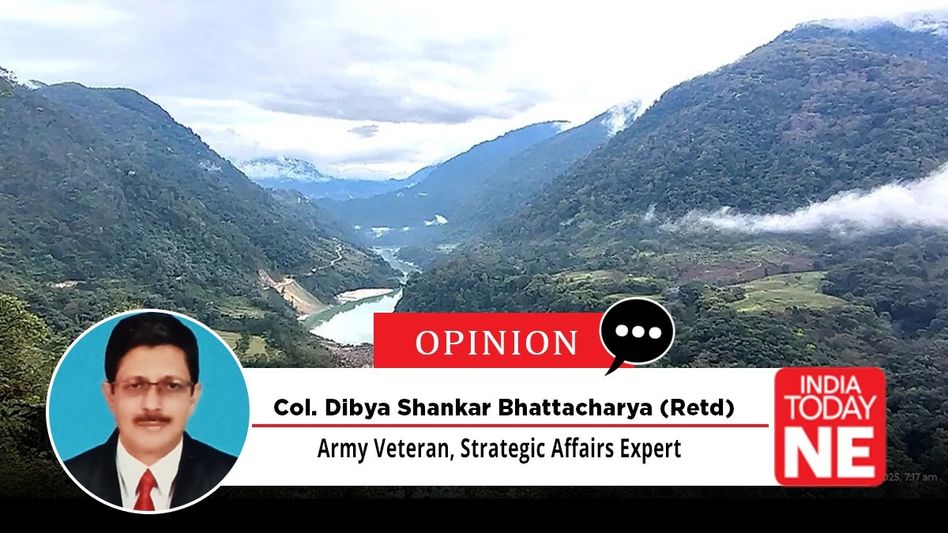
-The author is a well-known Army veteran, strategic affairs expert and a practicing advocate in Gauhati High Court