The Ignored Crisis: Why the World Must Act to Protect Bangladesh's Hindu Minority
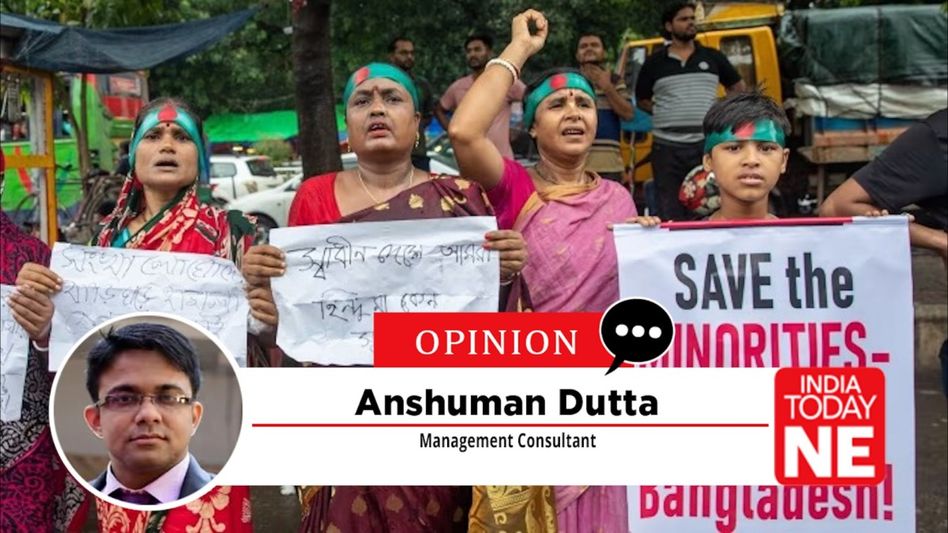
In the turbulent months following Bangladesh's political upheaval in August 2024, a vulnerable community has found itself caught in the crossfire of competing political forces. The Hindu minority, comprising approximately 8% of Bangladesh's population, faces an escalating pattern of violence, intimidation, and displacement that demands urgent international attention.

- Dec 24, 2025,
- Updated Dec 24, 2025, 9:47 AM IST

In the turbulent months following Bangladesh's political upheaval in August 2024, a vulnerable community has found itself caught in the crossfire of competing political forces. The Hindu minority, comprising approximately 8% of Bangladesh's population, faces an escalating pattern of violence, intimidation, and displacement that demands urgent international attention.
The attacks are not abstract statistics, they represent temples desecrated, homes burned, families terrorized, and communities fractured. While some violence has targeted perceived political opponents regardless of faith, the reality is that Hindu communities have borne a disproportionate burden of post-transition violence. The distinction between "political" and "communal" violence offers cold comfort to families fleeing their ancestral homes.
Reports of attacks vary widely, but even conservative estimates paint a disturbing picture. Dozens of documented incidents between August 2024 and early 2025 include temple vandalism, property destruction, and physical assaults. More troubling still is the climate of fear these incidents create the undocumented harassment, the quiet exodus, the communities that shrink not through a single dramatic event but through a thousand small acts of intimidation.
The Dangerous Power Vacuum
Bangladesh's political transition has created space for extremist elements that view religious minorities as convenient scapegoats. Islamist factions, previously constrained, have exploited the power vacuum to advance exclusionary agendas. This is not about Islam, Bangladesh has a proud tradition of religious coexistence, but about organized extremism filling the void left by political instability.
The interim government faces immense challenges, but protecting all citizens regardless of faith is not optional, it is the fundamental duty of any legitimate government. When temples are attacked with impunity, when minority communities live in fear, the very fabric of Bangladesh's pluralistic society unravels.
The international community's muted response to this crisis is inexcusable. Where are the forceful condemnations? Where are the fact-finding missions? Where is the sustained diplomatic pressure that typically follows systematic targeting of religious minorities?
The world has rightly mobilized around religious persecution in Myanmar, China, and elsewhere. The suffering of Hindus in Bangladesh deserves equal moral attention. To remain silent is to signal that some minorities matter less than others—a dangerous precedent that emboldens perpetrators everywhere.
A Call to Action
To the International Community: Religious freedom is a universal human right, not a regional concern. The United Nations, democratic governments, and international human rights organizations must prioritize this crisis. Send fact-finding missions. Document violations. Apply diplomatic pressure. Make protection of minorities a condition for international support and legitimacy.
To Bangladesh's Leaders: Your country's future depends on protecting all citizens. Every attack on a temple, every Hindu family driven from their home, diminishes Bangladesh's standing in the world and betrays the inclusive vision of your founding. History will judge you by how you protect the vulnerable, not how you appease the violent.
To Regional Powers: India and other South Asian nations have both strategic interests and moral responsibilities. Advocate forcefully for minority protection while supporting Bangladesh's democratic institutions. Refugee crises, extremism, and instability respect no borders prevention serves everyone's interests.
To Civil Society: Bangladeshi activists, journalists, and religious leaders working for interfaith harmony are heroes who deserve international support and protection. Amplify their voices. Support their work. Their success is Bangladesh's success.
To the Global Media: Sustained coverage is essential. This cannot be a story that flares briefly and fades. The world's attention is itself a form of protection—perpetrators operate most freely in darkness.
Long-term solutions require addressing root causes: strengthening democratic institutions, ensuring rule of law, promoting economic opportunity for all communities, and countering extremist ideologies through education and dialogue. Bangladesh needs international partnership in building these foundations, not just crisis intervention.
But first, the bleeding must stop. Families huddled in fear need to know the world sees them, that their lives matter, that help is coming.
A Moral Imperative
This is not about geopolitics, though geopolitical interests are affected. This is not about scoring points in regional rivalries, though regional stability hangs in the balance. This is about fundamental human dignity about the right of every person to worship freely, live safely, and raise their children without fear of persecution for their faith.
The Hindu minority in Bangladesh is not asking for privileges. They are asking for what every human being deserves: protection, equality, and the chance to live in peace in the land of their ancestors.
The question before the international community is simple and stark: Will we act, or will we watch another minority community suffer in silence?
History teaches us that indifference to persecution anywhere ultimately threatens freedom everywhere. Bangladesh's Hindus are calling for help. The world must answer.
Anshuman Dutta is a columnist and strategist focused on education, technology, identity, and Northeast India.