The purple city as an outcome: Liveability is the first architecture
This choice of colour is deeply intentional, drawing inspiration from the kopou phul (foxtail orchid), Assam’s state flower and a cherished symbol of Rongali Bihu, traditionally tucked into hair as the festive season dawns.

- Jun 03, 2026,
- Updated Jun 03, 2026, 2:40 PM IST

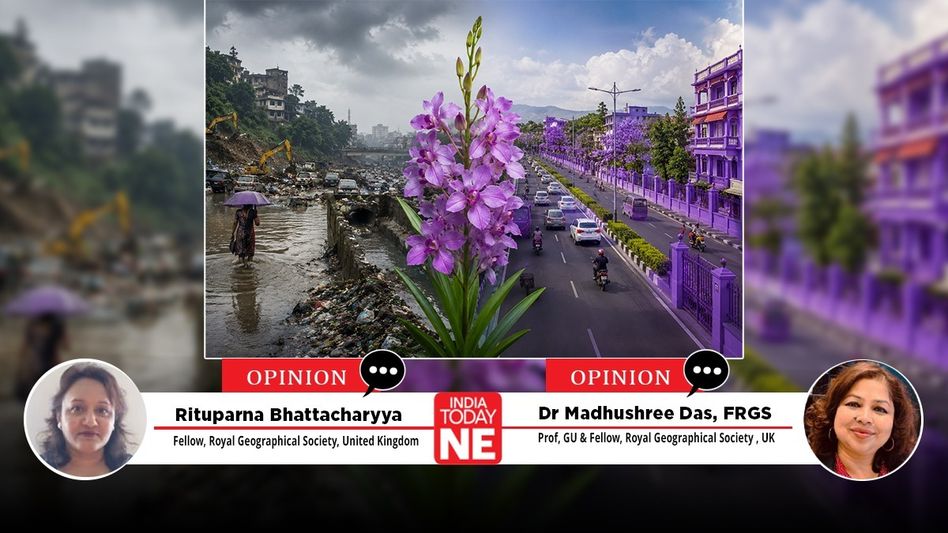
The Guwahati Municipal Corporation’s recent weekend announcement to reimagine the city as India's "Purple City" struck a deeply resonant chord with the Assamese spirit. This choice of colour is deeply intentional, drawing inspiration from the kopou phul (foxtail orchid), Assam’s state flower and a cherished symbol of Rongali Bihu, traditionally tucked into hair as the festive season dawns. Mayor Mrigen Sarania’s ambitious vision to coat gates, boundary walls, buildings, and storefronts in vibrant shades of magenta and purple, positioning it as the Northeast's answer to Jaipur’s Pink City, is, on the surface, a captivating concept. Civic identity is undeniably vital, and few emblems resonate as instantly or profoundly with the residents of Guwahati as the kopou.
Yet, because this sentiment is so genuine, the initiative demands a candid evaluation rather than passive acclaim. A fresh coat of paint, no matter how symbolic, cannot mask the daily hardships of urban life; before Guwahati is draped in purple, its foundational infrastructure must work.
Look no further than the most heartbreaking example: just weeks ago, during April’s pre-monsoon deluges, a young woman named Payal Nath tragically drowned as flash floods submerged parts of the city. Her untimely death was not a mere natural disaster, but the direct consequence of what locals have come to bitterly term "artificial flooding". The tragedy sparked political outrage, with opposition factions demanding the Mayor’s immediate resignation. Politics aside, the core grievance is felt across partisan lines: a major capital housing over two million residents should not dissolve into a network of stagnant lakes after just a few hours of rainfall.
The triggers are thoroughly documented and entirely anthropogenic, natural wetlands that historically absorbed urban runoff have been aggressively reclaimed for real estate development. Hillsides face rampant, often illicit, quarrying, while drainage systems are choked, both by citizens using them as trash dumps and by an archaic, poorly maintained municipal network.
Municipal engineers themselves admit that comprehensive drainage overhauls demand inter-departmental synergy and "will take time". While such bureaucratic honesty is appreciated, it underscores exactly why public patience has completely eroded. Massive budgets are allocated annually toward flood mitigation, yet from Anil Nagar to Rukminigaon, families find their homes inundated with the same contaminated water every time the monsoon cycle repeats.
Beyond the waterlogging, residents face the gruelling daily trial of simple transit; Guwahati’s traffic gridlock has evolved into a chronic structural crisis rather than a temporary nuisance.
Cramped arterial routes, chaotic parking, hijacked sidewalks, and the glaring absence of a robust mass-transit backbone ensure that even brief commutes can easily steal an hour. A newly painted purple skyline will offer cold comfort to a commuter trapped in an engine-idling bottleneck for forty minutes at Ganeshguri.
Citizens also point to two persistent issues that authorities frequently dismiss as minor but that are deeply disruptive to daily life. Aggressive packs of stray dogs patrol residential neighbourhoods, making frequent reports of dog bites, particularly targeting children, a source of perennial anxiety. Furthermore, in an urban centre striving to craft a sophisticated, designer identity, stray cattle routinely occupy major thoroughfares, crippling traffic flow and posing severe safety hazards after dark. These are age-old dilemmas with readily available solutions; their endurance signals a deficit of sustained administrative will rather than a lack of strategic insight.
This critique does not overlook the tangible strides made by the civic body, such as Guwahati recently securing the title of the cleanest capital in the Northeast in the Swachh Survekshan rankings, a laudable jump in national prestige. Initiatives like the zone-wise sanitation contests, the slated deployment of a thousand Swachh Sakhis, and the pragmatic reintroduction of a modest Rs 30 monthly doorstep waste-collection fee are highly commendable.
The core issue is one of sequencing and prioritisation, as cosmetic beautification and fundamental civic functionality need not be mutually exclusive. However, when public funds and administrative bandwidth are limited, the chronological order of these projects sends a definitive message to the public. A municipal corporation that prioritises painting walls magenta while leaving drainage networks choked stands vulnerable to accusations of favouring aesthetics over actual substance. Conversely, an administration that systematically unclogs drains, clears roadways, manages stray animals, and then drapes a high-functioning city in the proud hues of the kopou truly earns its cultural symbolism.
Guwahati does not have to compromise on beauty for the sake of liveability, but it must maintain strict honesty regarding its immediate priorities. By all means, let the purple dawn, but as a victory lap for a city that has successfully mastered its infrastructure, rather than a cosmetic distraction from an urban landscape still fighting for stability. After all, the kopou only truly blossoms when the underlying conditions are perfectly ripe.