The RSS and the Indian Argument
The latest controversy surrounding the Rashtriya Swayamsevak Sangh (RSS) began with a familiar political exchange. Karnataka Minister Priyank Kharge questioned the organisation's transparency, legal status and financial disclosure, arguing that an institution exercising significant influence in public life should be subject to greater scrutiny.

- Jun 20, 2026,
- Updated Jun 20, 2026, 11:47 AM IST

The latest controversy surrounding the Rashtriya Swayamsevak Sangh (RSS) began with a familiar political exchange. Karnataka Minister Priyank Kharge questioned the organisation's transparency, legal status and financial disclosure, arguing that an institution exercising significant influence in public life should be subject to greater scrutiny. The response from RSS supporters was swift and predictable. They viewed the remarks as an ideological attack on an organisation that has spent decades engaged in social service, nation-building and community outreach. Predictably, political parties, television panels and social media platforms transformed the issue into yet another episode in India's seemingly endless ideological contest. Yet the significance of the controversy lies not in the immediate political reactions it generated but in the larger question it once again brought to the surface: why does the RSS continue to occupy such a central place in India's public discourse nearly a century after its founding?
Few organisations in independent India have inspired such sharply divergent opinions. The RSS is simultaneously admired, criticised, studied, feared, celebrated and scrutinised. Supporters regard it as one of the most important socio-cultural movements in modern Indian history. Critics often view it as a powerful ideological force whose influence deserves constant examination. Between these two positions lies a reality that is frequently overlooked. Whether one supports or opposes the RSS, its continued relevance cannot be denied. Unlike many institutions that fade into historical memory with the passage of time, the RSS has become more visible, more influential and more debated as it approaches its centenary. That phenomenon alone makes it worthy of serious analysis.
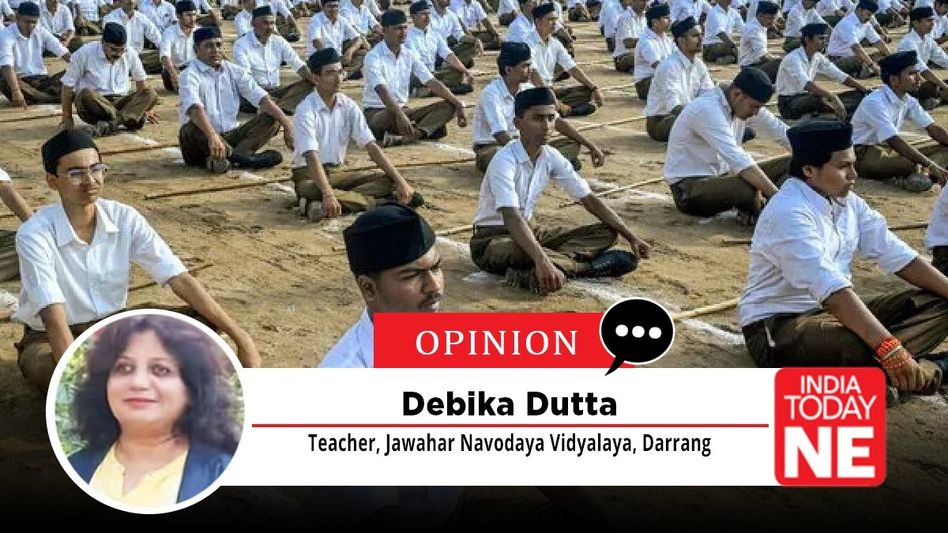
The growth of the organisation offers part of the explanation. Founded by Dr. Keshav Baliram Hedgewar in 1925, the RSS began as a volunteer movement dedicated to character-building and social organisation. Over the decades, it expanded into a vast network of educational institutions, social-service initiatives, tribal welfare programmes, labour organisations, student groups and community-development projects. Recent organisational figures indicate that the number of daily shakhas has crossed eighty thousand, reflecting a remarkable expansion even in its hundredth year. Such growth cannot be explained solely through political influence. Institutions may benefit from favourable political circumstances, but they do not survive for a century unless they establish enduring roots within society. The longevity of the RSS suggests that it has succeeded in creating a sense of belonging and purpose among large sections of the population, particularly among volunteers who see participation not as a political activity but as a form of civic engagement.
It is precisely this influence, however, that forms the basis of many criticisms directed at the organisation. Liberal and Left scholars have long argued that the RSS's conception of cultural nationalism raises important questions about pluralism and inclusion in a diverse society. Some critics contend that its understanding of Indian nationhood places excessive emphasis on cultural homogeneity within a civilisation that has historically thrived through diversity and
coexistence. Others worry that the growing influence of the RSS and its affiliated organisations may blur the distinction between cultural mobilisation and political influence. Questions have also been raised regarding transparency, institutional accountability and the extent to which organisations of significant social reach should be expected to disclose information about their functioning and finances. These concerns cannot simply be dismissed as partisan hostility. In a democracy, scrutiny of influential institutions is both legitimate and necessary.
At the same time, an intellectually honest assessment must also confront a reality that many critics find difficult to explain. If the RSS were merely an ideological project disconnected from social realities, its influence would almost certainly have diminished rather than expanded. The organisation's continued growth suggests that it addresses concerns that resonate with many Indians. Supporters argue that the RSS offers something increasingly scarce in contemporary society: a framework for community, discipline, service and cultural continuity. In an age marked by rapid social change, technological disruption and growing individualism, institutions that provide a sense of collective purpose often acquire renewed significance. For many volunteers, the RSS is not primarily a political organisation but a vehicle for social engagement, personal development and community service.
The debate becomes even more interesting when viewed from the perspective of the Northeast. For much of post-Independence history, the region occupied a somewhat peripheral place in national political conversations. The Northeast's extraordinary diversity of cultures, languages, ethnicities and faith traditions frequently challenged simplified narratives about Indian identity. Over the past two decades, however, the region has moved closer to the centre of national attention. Infrastructure development, political integration and expanding economic connections have transformed the relationship between the Northeast and the rest of the country. Simultaneously, organisations associated with the RSS have increased their presence through educational initiatives, tribal outreach programmes, cultural activities and social-service projects.
Supporters interpret this expansion as evidence of successful national integration. They argue that institutions affiliated with the RSS have worked in remote areas where state capacity was often limited and have helped strengthen connections between local communities and the broader national mainstream. Critics, however, remain cautious. They question whether cultural outreach can ever be entirely separated from ideological objectives and express concern about the potential impact on distinct local identities. The resulting debate reflects a broader challenge confronting not only the Northeast but India as a whole: how can a nation strengthen a shared sense of belonging while preserving the rich diversity that constitutes its greatest strength?
The persistence of the RSS debate also reflects a wider global phenomenon. Across continents, societies are grappling with questions of identity, heritage and national purpose. Globalisation has created unprecedented opportunities for economic growth and cultural exchange, but it has also generated anxieties about continuity and belonging. In many countries, citizens are searching for institutions that can provide a sense of rootedness in an increasingly fluid world. The appeal of the RSS must be understood within this broader context. Its emphasis on cultural memory, civilisational confidence and social responsibility resonates with those who believe that
economic development alone cannot sustain a nation. At the same time, its critics remind us that cultural confidence must never come at the expense of constitutional values, democratic freedoms and pluralistic traditions. Both perspectives emerge from legitimate concerns about India's future.
The challenge before India, therefore, is not to choose between cultural rootedness and constitutional pluralism. It is to ensure that one strengthens the other. A confident civilisation should not fear diversity, and a vibrant democracy should not be hostile to cultural self-awareness. The most successful societies are those that find ways to reconcile continuity with change, tradition with modernity and collective identity with individual freedom. The debate surrounding the RSS ultimately derives its significance from the fact that it touches each of these questions simultaneously.
As the RSS enters its second century, both its supporters and its critics face important responsibilities. Admirers of the organisation must recognise that influence inevitably brings expectations of transparency and accountability. Institutions that aspire to shape public life cannot remain insulated from public scrutiny. Critics, meanwhile, must move beyond caricatures and engage honestly with the reasons behind the organisation's enduring appeal. Reducing the RSS to a political stereotype may generate applause within ideological circles, but it does little to explain why millions continue to participate in its activities across generations and regions.
The debate over the RSS is unlikely to end because it is not fundamentally a debate about the RSS. It is a debate about India itself—about how a civilisation with ancient roots understands its place in a modern democratic age; about the relationship between cultural memory and constitutional citizenship; about unity, diversity and national purpose. The RSS remains at the centre of that argument not because all Indians agree about it, but because they do not. A century after its birth, it continues to be one of the institutions through which India negotiates some of its most enduring questions. That, more than any political controversy or ideological dispute, explains why the RSS continues to command the nation's attention