West Asia’s Dangerous New Faultline
Few geopolitical rivalries today carry consequences as far-reaching as the escalating confrontation between Israel and Iran. In West Asia—a region long accustomed to cycles of instability—this rivalry is entering a particularly dangerous phase.

- Mar 14, 2026,
- Updated Mar 14, 2026, 1:29 PM IST

Few geopolitical rivalries today carry consequences as far-reaching as the escalating confrontation between Israel and Iran. In West Asia—a region long accustomed to cycles of instability—this rivalry is entering a particularly dangerous phase. What for decades remained largely a shadow conflict, fought through covert operations, cyber manoeuvres and proxy networks, now risks evolving into a more direct strategic confrontation. Should such an escalation occur, its consequences would extend far beyond the region, influencing global energy markets, diplomatic alignments and the broader architecture of international security.
The roots of this hostility lie in the profound political transformation that followed the Iranian Revolution. The emergence of the Islamic Republic dramatically altered the political landscape of the Middle East. Since then, Tehran has consistently refused to recognise Israel and has positioned itself as a leading critic of Israeli policies in the region. Israel, in turn, views Iran’s expanding regional influence and strategic ambitions with deep suspicion. Over the decades, this mutual distrust has hardened into one of the defining rivalries of contemporary geopolitics.
In recent years the confrontation has acquired a sharper strategic edge. Israeli leaders, including Prime Minister Benjamin Netanyahu, have repeatedly emphasised that Iran must not be allowed to develop nuclear weapons capability. Iranian authorities, however, maintain that their nuclear programme is intended solely for peaceful civilian purposes. The gradual weakening of diplomatic arrangements such as the Joint Comprehensive Plan of Action has further complicated efforts to manage these tensions through negotiation. As diplomatic mechanisms falter, the relationship is increasingly defined by deterrence, covert operations and the ever-present risk of miscalculation.
Yet the Israel–Iran rivalry extends far beyond bilateral hostility. Over the past decade it has evolved into a wider contest for influence across West Asia. Iran has cultivated political and military partnerships in several parts of the region, enabling it to project influence through networks of allied actors. Israel, meanwhile, has strengthened its own diplomatic and security partnerships, expanding ties with several Arab states that share concerns about Iran’s regional ambitions. The result is a complex geopolitical environment in which local conflicts are often intertwined with broader strategic rivalries.
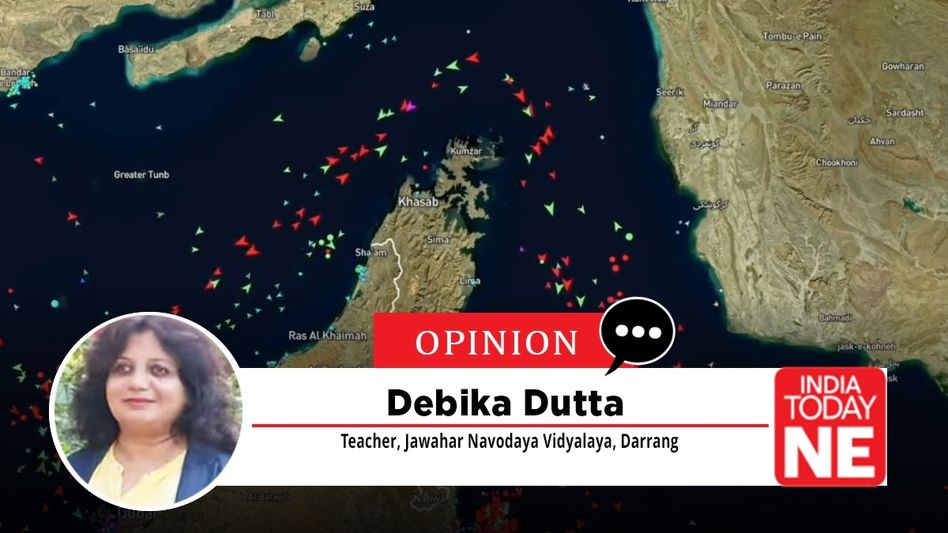
The economic implications of these tensions are equally significant. West Asia remains central to the global energy system, and instability in the region frequently reverberates across international markets. The narrow maritime passage known as the Strait of Hormuz is one of the world’s most critical energy chokepoints, carrying a substantial share of global oil shipments. Any disruption in this vital corridor could quickly drive up energy prices and intensify the economic uncertainties already confronting the international economy.
Major powers are therefore observing developments with increasing concern. The United States remains Israel’s principal strategic partner and continues to play a decisive role in shaping the region’s security landscape. At the same time, Washington is acutely aware that a wider conflict could draw multiple actors into a prolonged confrontation. Meanwhile, countries such as China and Russia have expanded their diplomatic engagement in West Asia, reflecting the broader dynamics of great-power competition in an increasingly multipolar world.
These developments are unfolding at a time when the global order is already under considerable strain. From the ongoing war in Ukraine to rising strategic competition in the Indo-Pacific, the international system is experiencing a period of heightened geopolitical uncertainty. In such an environment, a major escalation in West Asia would not remain confined to the region. Instead, it could reshape diplomatic alignments and economic relationships across the wider international system.
For India, developments in West Asia carry particular significance. The region remains a vital source of energy imports and an important partner in trade and investment. Equally important is the presence of a large Indian diaspora across the Gulf, whose remittances contribute substantially to India’s economy. Any prolonged instability in the region could therefore have direct implications for India’s economic security as well as for the welfare of its citizens living and working there.
The implications are also felt across India’s eastern and northeastern regions. Rising global energy prices influence transportation costs, infrastructure development and trade flows across the Northeast. As India strengthens connectivity initiatives and economic engagement with Southeast Asia under its Act East Policy, stability in the wider international environment becomes increasingly important. Geopolitical uncertainty and volatility in energy markets can affect development projects, regional trade corridors and the broader economic prospects of India’s Northeast.
India has traditionally pursued a balanced and pragmatic diplomatic approach toward West Asia. It has cultivated strong strategic relations with Israel while also maintaining constructive engagement with Iran. This carefully maintained equilibrium has enabled New Delhi to safeguard its interests without becoming entangled in the region’s rivalries. However, as tensions intensify, preserving this delicate balance will require diplomatic agility and strategic foresight.
The broader lesson of the present crisis lies in the limitations of confrontation as a durable instrument of statecraft. Military deterrence and strategic signalling may shape immediate calculations, but they rarely resolve the deeper political grievances that sustain conflict. Without sustained diplomatic engagement, cycles of escalation are likely to persist, increasing the risk of unintended confrontation.
Reviving diplomacy must therefore remain an urgent priority. Renewed international efforts to restore dialogue on nuclear issues, accompanied by broader regional confidence-building measures, could help reduce tensions and rebuild a framework for stability. Such initiatives may appear difficult in the current geopolitical climate, yet they remain the most credible path toward preventing a wider conflict.
West Asia has long been a theatre where regional rivalries intersect with global power politics. Whether the coming months witness cautious de-escalation or deeper confrontation will depend largely on the choices made by regional leaders and global powers alike.
In a world already strained by geopolitical fragmentation and economic uncertainty, another major conflict would impose immense costs on the international system. Preventing such an outcome will require restraint, renewed diplomacy and a recognition that lasting stability cannot be achieved through confrontation alone.
Debika Dutta teaches at Jawahar Navodaya Vidyalaya, Mangaldai, Assam. She writes on geopolitics, international relations and contemporary affairs.