
When Protest Turns Casteist
Protest is meant to unsettle power, not normalise prejudice. It is meant to expose injustice, not invent new hierarchies of insult. When demonstrations abandon this distinction, dissent loses its moral compass and becomes something else altogether—an assertion of anger unmoored from principle.

- Jan 31, 2026,
- Updated Jan 31, 2026, 11:45 AM IST

Protest is meant to unsettle power, not normalise prejudice. It is meant to expose injustice, not invent new hierarchies of insult. When demonstrations abandon this distinction, dissent loses its moral compass and becomes something else altogether—an assertion of anger unmoored from principle.
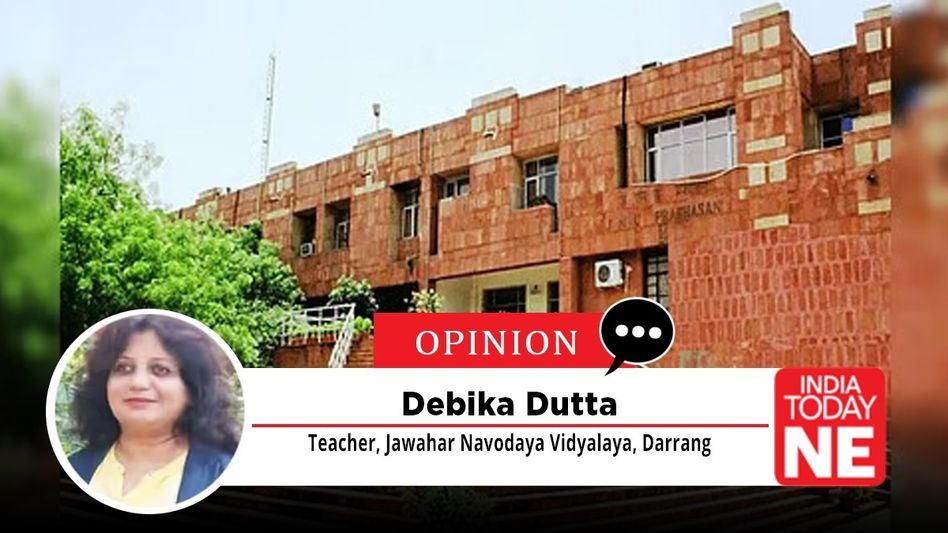
The recent controversy at Jawaharlal Nehru University, where slogans reportedly targeting Brahmins were raised during a protest against a Supreme Court order, is a case in point. The episode has generated predictable responses: outrage from some, rationalisation from others. But to treat it merely as another campus flashpoint would be to miss its wider significance. What unfolded at JNU reflects a deeper drift in campus politics, where identity-based hostility is increasingly framed as resistance, and ethical limits are treated as negotiable.
The central question is not whether protest was justified. In a country marked by deep and enduring caste inequalities, protest is not just justified—it is necessary. Caste oppression is not an abstraction confined to textbooks or court judgments; it is a lived reality that has shaped access to education, dignity, and opportunity for generations. Anger against this history is neither surprising nor illegitimate. Many of the most consequential reforms in India were born of sustained, confrontational mobilisation.
But acknowledging the legitimacy of protest does not absolve it of ethical responsibility. The moral strength of social justice movements lies in their commitment to equality, not in the inversion of prejudice. When protest rhetoric shifts from challenging oppressive structures to vilifying entire communities, it undermines the very idea of justice it seeks to defend.
Targeting an entire caste group through slogans—even one historically associated with privilege—does not dismantle caste hierarchies. It merely reproduces their logic. Discrimination does not become progressive by changing direction. Hatred does not acquire moral legitimacy simply because it is articulated in the language of resistance.
This is not a matter of tone or political sensitivity; it is a constitutional question. The Indian Constitution does not recognise graded forms of prejudice. Article 15 prohibits discrimination categorically, not conditionally. The promise of equality is universal or it is meaningless. The constitutional vision seeks the annihilation of caste as a system of social organisation, not its repurposing as a rhetorical weapon.
The context in which the slogans were raised makes the episode even more troubling. The protest was directed against a Supreme Court order. In a constitutional democracy, disagreement with judicial decisions is both permissible and healthy. Courts are not infallible, and Indian constitutional history is rich with examples of public debate
shaping legal interpretation. But there is a crucial difference between contesting a judgment and rejecting the authority of constitutional institutions.
Universities are expected to understand this distinction better than most. They are not merely sites of political mobilisation; they are spaces where civic norms are learned and internalised. Students do not enter campuses as finished citizens. They absorb cues from what is encouraged, tolerated, or ignored. When defiance of judicial authority is coupled with identity-based hostility, it sends a corrosive message: that constitutional processes are optional and ethical limits expendable.
This is why the JNU episode cannot be dismissed as an isolated excess. It fits into a broader pattern visible across campuses nationwide. Over the past decade, universities have increasingly become theatres of performative politics. Slogans replace arguments, outrage substitutes engagement, and provocation becomes an end in itself. This tendency cuts across ideological lines. Hyper-nationalist displays on some campuses and radical posturing on others share a common feature: both prioritise spectacle over substance.
What distinguishes the present controversy is the growing normalisation of caste-based antagonism within this performative framework. There appears to be an emerging belief that certain forms of hostility are acceptable because they are directed “upwards”. This belief is ethically flawed and politically shortsighted.
Social reform has never succeeded through moral shortcuts. Movements that endure are those that persuade rather than merely provoke. They expand the circle of empathy instead of narrowing it. When protest rhetoric alienates large sections of society, it does not advance equality; it hardens resistance to it.
There is also the question of selective outrage. Hate speech is rightly condemned when it targets marginalised communities. Legal safeguards, institutional norms, and public discourse increasingly recognise the harm such speech causes. Yet when similar language targets communities perceived as socially dominant, the same standards are often suspended. This inconsistency weakens the credibility of anti-discrimination discourse and fuels accusations of double standards.
University administrations cannot afford ambiguity in such moments. Silence is not neutrality. Upholding free expression does not require indifference to its consequences. Campuses routinely regulate speech to preserve dignity, safety, and order. Drawing ethical boundaries is not censorship; it is governance. When institutions fail to respond clearly to identity-based hostility, they risk legitimising it by default.
JNU’s symbolic weight makes this failure especially consequential. For decades, the university has occupied a distinctive place in India’s intellectual and political imagination—as a space of debate, dissent, and pluralism. Its visibility ensures that
events on its campus resonate far beyond its gates. That visibility also carries responsibility. What is normalised at JNU shapes how dissent itself is perceived nationally.
Supporters of the protest argue that focusing on slogans distracts from the larger issue of caste injustice. This is a false opposition. It is entirely possible to challenge structural inequality while rejecting discriminatory language. Indeed, the latter is essential for the former. A movement that cannot articulate its anger without resorting to collective vilification risks losing both moral authority and public support.
The danger is not merely reputational. When the language of protest mirrors the logic of prejudice, it normalises a politics of resentment. Such politics rarely remain confined to campuses. They seep into public discourse, deepen social divisions, and make constructive dialogue increasingly difficult. In a society as complex and diverse as India’s, this is a risk that cannot be dismissed lightly.
None of this is an argument for depoliticised universities or muted dissent. Campuses must remain spaces of vigorous disagreement. They must challenge power, expose injustice, and amplify marginalised voices. But dissent that abandons ethical restraint ultimately weakens itself. It replaces persuasion with performance, and justice with spectacle.
The JNU episode should therefore be read as a warning rather than an aberration. It forces an uncomfortable reckoning with the moral vocabulary of contemporary protest. Are campuses nurturing critical citizens, or merely rehearsing new forms of exclusion? Is resistance guided by constitutional values, or by the impulse to shock?
The answers to these questions will shape not only campus culture, but the quality of India’s democratic life. Protest is indispensable to democracy. So is the discipline that prevents it from becoming indistinguishable from the injustice it seeks to oppose.
MORE NEWS












Copyright©2026 Living Media India Limited. For reprint rights: Syndications Today
