
Who Speaks for the Northeast?
Northeast India’s diverse communities seek better representation and inclusive development. Dialogue and policies are key to addressing their unique concerns.
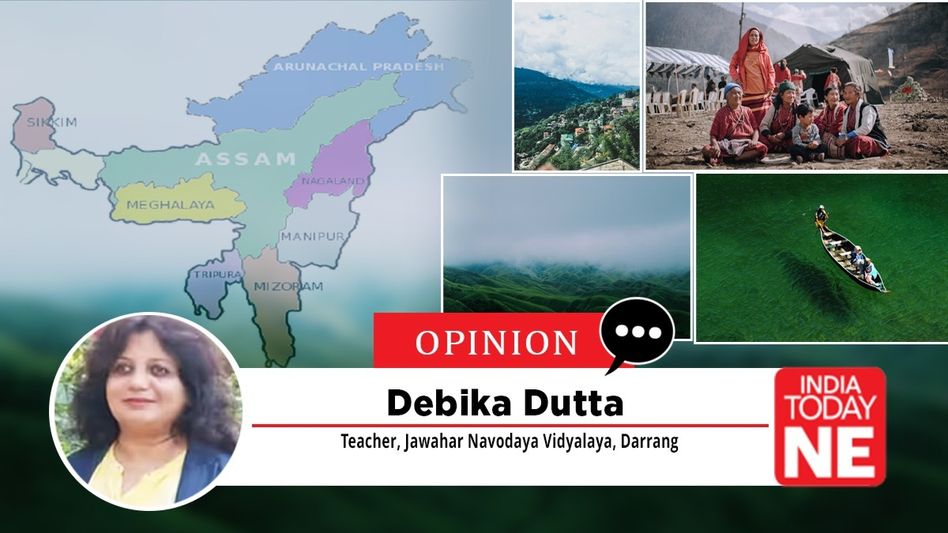

- Feb 02, 2026,
- Updated Feb 02, 2026, 3:31 PM IST

For decades, the Northeast has occupied a peculiar and uneasy place in India’s national imagination. It enters the national conversation suddenly—during elections, episodes of violence, border tensions or moments of exceptional tragedy—and exits just as abruptly. In between these bursts of attention lies a long silence, broken only by stereotypes and shorthand descriptions: conflict-prone, ethnically fragile, geographically distant, culturally exotic. What remains largely absent is a sustained, informed and empathetic engagement with the region as a lived political and social space. This raises an uncomfortable but necessary question: who actually speaks for the Northeast in India’s national media?
The problem is not merely one of visibility. In the age of 24/7 news cycles and viral social media, the Northeast is more visible than ever. Images circulate rapidly, hashtags trend, panels debate, outrage peaks. Yet visibility without context can distort rather than illuminate. The region is frequently reported, but rarely interpreted. Stories are told about the Northeast, seldom from within it.
A glance at national newsrooms explains part of the problem. Editorial leadership, prime-time anchors and agenda-setters remain overwhelmingly concentrated in a handful of metropolitan centres. Periodic industry assessments suggest that a large majority of senior editorial positions in national English news media are based in Delhi and Mumbai, with minimal long-term representation from the Northeast. The region continues to be treated as a “beat” rather than a lived space. Reporters are often flown in during moments of crisis, dependent on official briefings or hurried local contacts, and flown out once the headline value diminishes. What gets lost in this episodic journalism is history, social complexity and the slow churn of everyday governance and change.
This structural distance has real consequences. Conflicts in the Northeast—whether related to ethnicity, borders, citizenship or governance—are often flattened into binary frames. Long-standing issues such as land rights, migration patterns, colonial-era administrative boundaries and post-Independence political arrangements receive limited attention. The emphasis remains on immediacy rather than depth, spectacle rather than explanation.
Equally limiting is the tendency to exoticise. Cultural festivals, traditional attire and “unexplored destinations” are enthusiastically showcased, but often detached from social and political context. The Northeast becomes a postcard—colourful, timeless, consumable—rather than a contemporary region grappling with urbanisation, unemployment, environmental stress and the aspirations of a young population deeply connected to national and global currents.
To be fair, the national media is not a monolith. In recent years, there has been a visible increase in coverage of infrastructure development, connectivity projects and economic initiatives in the Northeast. This reflects a broader policy emphasis on integration, mobility and growth, and deserves acknowledgement. However, even here, the framing often centres on intent and announcement rather than sustained local impact, leaving limited space for voices that can assess outcomes on the ground.
The absence of Northeastern voices in national discourse is not due to a lack of intellectual capital. The region has produced accomplished journalists, scholars, writers and public thinkers who engage rigorously with questions of identity, federalism, development and democracy. Yet their presence in national debates remains sporadic. Panels discussing the Northeast frequently feature familiar metropolitan voices, while those with lived experience are invited only when their identity fits a convenient narrative.
Social media was expected to bridge this gap, and to some extent it has. Digital platforms have enabled local journalists and commentators to bypass traditional gatekeepers. Stories ignored by mainstream outlets often gain traction online. But algorithms reward outrage over nuance and speed over verification. Complex regional realities are compressed into viral fragments, often amplified by partisan ecosystems far removed from the region itself.
This distortion has a deeper cost. When national discourse repeatedly frames the Northeast as a problem to be managed or a spectacle to be consumed, it reinforces alienation. Young people from the region, studying or working in metropolitan cities, often find themselves explaining their geography, identity and politics to a country that prides itself on growing connectivity. Physical distances may have reduced, but cognitive distances persist.
There is also a responsibility closer home. Local media in the Northeast, vibrant and diverse though it is, often remains regionally bound. Language barriers, limited syndication and resource constraints restrict wider dissemination. Beyond these constraints lies a challenge of ambition: engaging national platforms not merely as respondents to crises, but as contributors to policy and idea-driven debates. Opinion writing, long-form analysis and institutional critique from the region must aspire to shape national conversations, not merely react to them.
Editors in national newsrooms, too, must introspect. Representation cannot be tokenistic. It requires sustained investment—hiring reporters from the region, cultivating local correspondents, commissioning regular columns, and resisting the impulse to frame every Northeastern story through security or identity lenses. The region deserves the same editorial seriousness accorded to any other part of the country.
Ultimately, the question of who speaks for the Northeast is inseparable from a larger question about Indian democracy: whose voices are allowed to shape the national narrative. A truly integrated media landscape cannot survive on episodic empathy or selective listening. It demands patience, institutional commitment and a willingness to let regional voices complicate dominant narratives.
The Northeast does not seek exceptionalism or indulgence. It seeks a fair hearing—one that recognises the region as contemporary, diverse and intellectually engaged with the future of the republic. Until national media learns to listen with the same seriousness with which it speaks, the Northeast will continue to be visible in moments of crisis, yet unheard in the conversations that truly matter.
MORE NEWS











Copyright©2026 Living Media India Limited. For reprint rights: Syndications Today
