
Why the Hills want answers about Citizenship Inquiry into GTA Chief Executive Anit Thapa?
Darjeeling Hills residents demand transparency on Anit Thapa citizenship inquiry report amid growing public concern. Calls for accountability and openness intensify to maintain trust in governance.
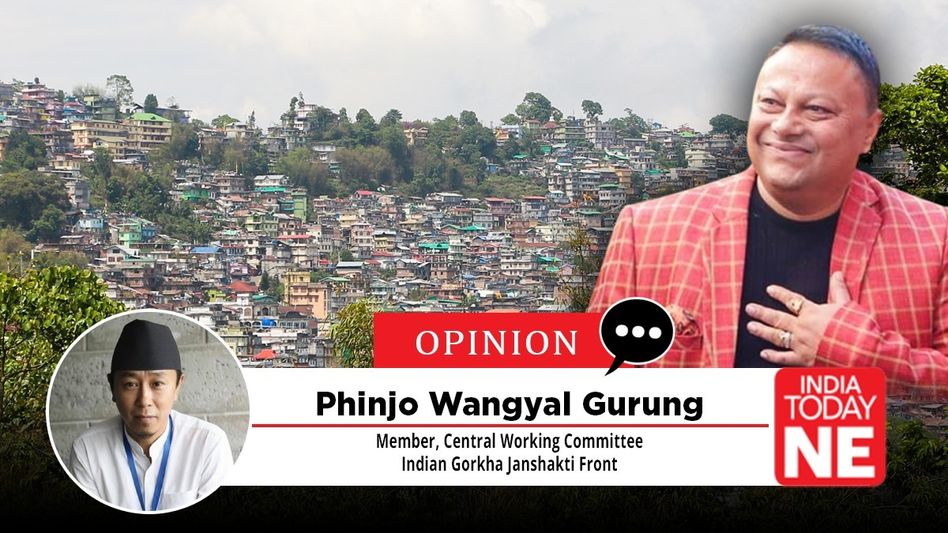

- Dec 02, 2025,
- Updated Dec 02, 2025, 2:20 PM IST

- Anit Thapa's citizenship status remains unclear, raising transparency concerns.
- MHA's 2020 inquiry into Thapa's citizenship lacks public disclosure.
- RTI requests for the inquiry report face resistance, citing 'personal information.'
For several years, the people of Darjeeling were choose to be kept in the dark – The Reason is all about a question that should have been answered long, long ago.
What exactly happened to the official inquiry of the alleged dual citizenship case of GTA Chief Executive Anit Thapa? This question remained forever and refuses to fade away, as every document, every reply, as well as every administrative movement just points to one inescapable truth: something is being withheld from the public. And we all know that in a democracy, hidden truth is always a danger.
Let me be absolutely clear, our demand for the police verification report is neither personal nor political. It is a demand rooted in public accountability, transparency, and the dignity of governance.
And most importantly, it is a demand born out of the collective identity of the Gorkha people.
The person at the centre of this controversy is not just an ordinary citizen. He is the highest executive authority in the GTA region, enjoying the status and privileges of a cabinet minister. When the chief executive of the GTA faces serious allegations of foreign citizenship, the public has not only the right but the constitutional duty to question. Equally, he has the moral obligation to respond, clearly, officially, and without evasion.
In 2020, when the Ministry of Home Affairs directed the SDO of Kurseong to examine the allegations regarding Thapa’s citizenship status, the inquiry was duly conducted. A report was also submitted. And after that, everything went into silence.
When I filed an RTI seeking a copy of the report and clarity on why it was never forwarded to the Ministry that itself ordered the enquiry, the district administration responded with an excuse, which I have heard far too often, that “the matter was personal information.” Astonishingly, anyone in a position of authority could claim that the citizenship of a public office-bearer is a private matter. Citizenship is the core requirement for contesting elections, holding office, signing decisions, and representing the people. It is the foundation of political legitimacy. If this is not public information, then what is?
The administration’s refusal becomes even more questionable when we examine the very documents they provided in their own reply. Buried inside the RTI response is an admission that the Darjeeling district authorities had already sent reports relating to the citizenship concerns about Thapa to the West Bengal Chief Electoral Officer in 2018. This is not a trivial detail. It shows that two years before the MHA ordered an inquiry, the matter had already reached the Election Commission, the very body responsible for verifying citizenship and determining eligibility to contest elections. The Election Commission only demands information or pushes for verification when the allegations relate directly to electoral integrity. In such cases, the Commission requires a Statutory Inquiry Report. These reports are not private documents. They are essential records used to uphold the Representation of the People Act. For the district administration to pretend today that this matter is merely personal contradicts its own actions from 2018 and undermines the credibility of the entire process.
What is even more disturbing is the journey this missing report has taken. From the SDO in Kurseong to the District Magistrate of Darjeeling, from the district office to the First Appellate Authority, and now pushed all the way to the West Bengal Information Commission, the file has left a trail of acknowledgements but no answers. Every office admits the inquiry took place. Every office confirms the report existed. Yet none will say where it is. None will explain why it never reached the MHA. None will disclose why the Election Commission was informed in 2018, but the public cannot be informed in 2025.
This secrecy does not serve the people. It serves only power.
The question of citizenship becomes even more complicated in a region like Darjeeling, which sits at the crossroads of India and Nepal. The open border has shaped our history and our identity. Migration, intermarriage, and cross-border movement have been part of hill life for generations. Indian Gorkhas have an unshakeable and proud legacy in this country. They have shed blood for India on the frontlines. They have contributed to public service, government, art, sports, and culture. No one disputes the legitimacy of the people of these hills.
But the blurred borders of our past become a political tool when leaders with unclear personal histories slip between administrative cracks. Ordinary citizens cannot afford such ambiguity. Politicians, on the other hand, can exploit it if systems are weak and enforcement is selective. That is why transparency is not optional. It is the only safeguard that ensures the border does not become a loophole for those who seek power.
When an inquiry ordered by the Ministry of Home Affairs can disappear without explanation, the public has every valid reason to be concerned. When information already shared with the Election Commission is suddenly treated as private, trust begins to erode. And when citizens asking questions are met with silence, democracy suffers.
I am not asking for anything extraordinary. I am asking for the truth, the truth that belongs to the people of this region. If the inquiry clears Anit Thapa, let the administration say so openly. If it raises concerns, the people have the right to know. What we cannot accept is the continued disappearance of a government-ordered report and the continued evasion of responsibility by those tasked with answering to the public.
The hills have borne too long under the weight of political manipulation, shifting narratives, and selective law enforcement. This time, the administration must not be allowed to hide behind procedure. The truth cannot remain buried forever. And I will continue to ask for it, because the people of Darjeeling deserve clarity, fairness, and accountability, not silence.
MORE NEWS










Copyright©2026 Living Media India Limited. For reprint rights: Syndications Today
