Will India listen before Sonam Wangchuk falls silent?
A man who inspired a generation to think differently is now starving to make the nation listen—but why does the silence around his protest grow louder with each passing day? As Sonam Wangchuk's hunger strike enters its nineteenth day, the story is no longer just about one activist; it is about what happens when a democracy hears a weakening heartbeat but still refuses to answer.

- Jul 16, 2026,
- Updated Jul 16, 2026, 12:45 PM IST

- Medical reports say he has lost weight, muscle and stable sugar levels
- Supporters across fields have urged him to stop fasting for safety
- He says the government should answer instead of asking him to stop
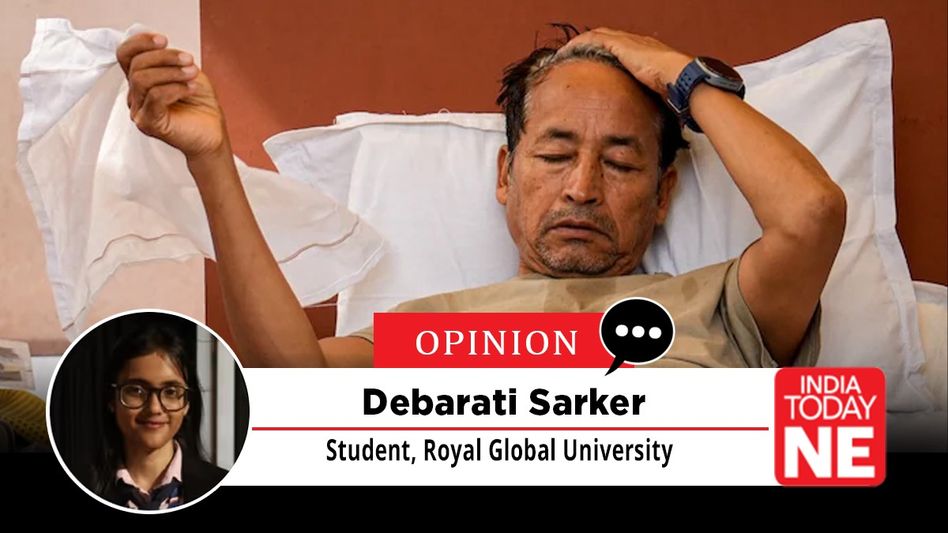
Eighteen days, more than eight kilograms lost. Muscle mass disappearing. Blood sugar falling. Yet the loudest sound surrounding Sonam Wangchuk’s hunger strike is the silence that follows it.
A democracy isn’t tested when people vote. It is tested when people stop eating just to be heard.
For the past eighteen days, education reformer and climate activist Sonam Wangchuk has chosen one of the oldest and most powerful forms of non-violent resistance: an indefinite hunger strike. He joined the Cockroach Janata Party (CJP) protest at Jantar Mantar, demanding accountability over the alleged NEET examination irregularities, the resignation of Union Education Minister Dharmendra Pradhan, and justice for the students and their families. His protest is rooted in the Gandhian belief that when institutions stop listening, conscience must speak louder than power.
But today, that conscience is paying a heavy price.
History offers an uncomfortable comparison. During India’s freedom struggle, even the British administration eventually responded to the hunger strikes by Mahatma Gandhi and Bhagat Singh. Today, as Sonam Wangchuk enters the nineteenth day of his fast, many are asking a difficult question: “Should a democracy require more patience than colonial rule before it begins a conversation?”
Medical reports reveal a grim reality. Wangchuk has lost over eight kilograms, his blood sugar has dropped, his blood pressure remains low, and he has reportedly begun to lose muscle mass. Those around him describe him as being in constant pain. Politicians, writers, actors and supporters across the country have pleaded with him to end the fast before it is too late. However, his response remains simple: “Instead of asking me to end my hunger strike, ask the government why it refuses to listen.”
His response shifts the burden of responsibility where he believes it belongs- not on the protester, but on those being asked to respond. The question is no longer whether Wangchuk can continue. The question is whether those in authority are willing to engage with a peaceful protest before it reaches a tragic point.
The man who inspired Phunsukh Wangdu in 3 Idiots- the character who taught an entire generation to question rote learning, embrace innovation and think differently, is today risking his own life for that very generation. Actor Omi Vaidya, well known as Chatur, summed up the nation's concern with a single line: "I don't want Phunsukh Wangdu to die." Perhaps that is the greatest irony of all. We celebrate Phunsukh Wangdu on-screen, but struggle to hear Sonam Wangchuk off it.
Sadly enough, people have become better at questioning the sacrifice rather than questioning the systems. They are debating the authenticity of his fast. Speculating about what he drinks. Spreading rumours that he secretly eats. Perhaps that says more about us than it does about the protest.
Several public figures have expressed solidarity with Wangchuk and appealed to him to protect his health. Their concern is real. But the larger question remains unanswered: Where is the meaningful dialogue from those who have the power to address the concerns being raised? Democracy is strengthened by dialogue, not by silence.
This movement is ultimately about students.
It is about millions of young people who spend years preparing for examinations, believing that merit, honesty and hard work will determine their future. If someone is willing to risk his own life to demand accountability on their behalf, the least a nation can do is listen. If today's generation cannot stand behind someone who is risking everything for issues that directly affect students, then perhaps the greatest failure is not just within the examination system; it is within our collective conscience.
Sonam Wangchuk's weakening body should not become another headline that fades with tomorrow's news cycle. Whether one supports his demands or disagrees with them, no citizen should have to starve simply to be heard. A nation is not judged only by how it treats those in power. It is judged by how it responds to those who question power peacefully.
The real question is no longer whether Sonam Wangchuk can endure another day without food.
The real question is whether India’s conscience can endure another day without courage.
(The views expressed in this article are those of the author and do not necessarily reflect the views of India Today NE or its affiliates.)