World Day Against Child Labour 2026: Why every child deserves a Red Card against exploitation?
World Day Against Child Labour 2026 has renewed the global campaign to show a red card to exploitation. The call focuses on turning commitments into action for children's education, safety and future.
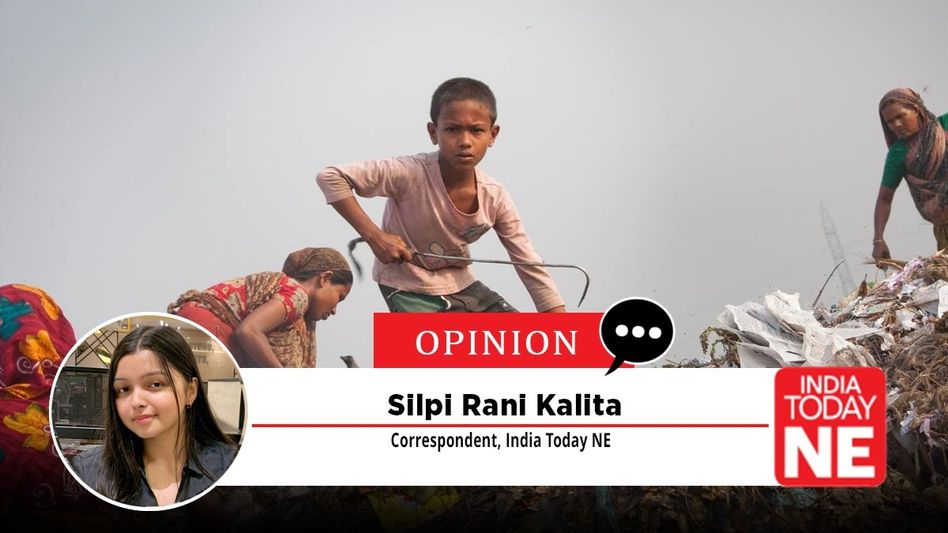

- Jun 12, 2026,
- Updated Jun 12, 2026, 11:17 AM IST

- Around 138 million children worldwide remain trapped in labour, latest estimates show
- Nearly 54 million children face hazardous work threatening health, safety and development
- Agriculture accounts for over 60 per cent of all child labour cases
As the world observes World Day Against Child Labour on June 12, 2026, the global community is once again being reminded that millions of children continue to be deprived of their childhood, education and future due to child labour.
This year's theme, "Red Card to Child Labour: Fair Play for Children, Decent Work for Adults," carries a powerful message. Borrowed from football, a red card is shown by a referee for serious violations that cannot be tolerated. Through this campaign, the International Labour Organization (ILO), UNICEF and global partners are sending a clear message: child labour is unacceptable and must be eliminated.
The campaign's red card has become a unifying symbol of the global movement against child labour. Governments, employers' and workers' organisations, civil society groups, businesses, media institutions and young people across the world are being encouraged to raise the red card and demand concrete action to protect children.
Despite significant progress over the past two decades, the challenge remains enormous. According to the latest ILO and UNICEF Global Estimates of Child Labour 2024, around 138 million children worldwide are still engaged in child labour, while nearly 54 million are involved in hazardous work that threatens their health, safety and development.
The figures show that while child labour has nearly halved since 2000, progress is still too slow. Experts warn that the world has fallen short of its target to eliminate child labour and that efforts need to accelerate dramatically to achieve meaningful results in the coming years.
Child labour is not merely about children working. It is the exploitation of their potential. Every child forced into labour is a child denied the opportunity to study, play, develop skills and dream about a better future. Instead of classrooms and playgrounds, many children continue to work in farms, factories, workshops, mines, markets and households under difficult and often dangerous conditions.
Agriculture remains the largest sector for child labour globally, accounting for more than 60 per cent of all cases, followed by services and industry. Poverty, lack of access to education, social inequalities, conflicts and economic hardships continue to push children into work.
The 2026 campaign was first launched on February 2 ahead of the 6th Global Conference on the Elimination of Child Labour held in Marrakech, Morocco. During the conference, governments, employers, workers and civil society groups reaffirmed that eliminating child labour must remain a global priority beyond 2030.
The conference also adopted the Marrakech Global Framework for Action Against Child Labour, a roadmap designed to accelerate efforts through stronger laws, better enforcement, quality education, universal social protection, decent employment opportunities for adults and improved monitoring systems.
The campaign has now entered its second phase, linked to major international events including the International Labour Conference in Geneva, World Day Against Child Labour on June 12 and the global football season, helping keep the issue in the public spotlight.
Experts stress that ending child labour requires collective responsibility. Governments must invest in education and social protection, businesses must ensure ethical supply chains, communities must report exploitation, and society must create opportunities that allow children to learn and thrive instead of work.
In the 21st century, when the world is witnessing unprecedented technological and economic advancements, there can be no justification for children being forced into labour. The message of World Day Against Child Labour 2026 is simple but urgent: every child deserves a childhood, an education and a future.
As the world raises a symbolic red card against child labour, the challenge now is to turn commitments into action and ensure that no child is robbed of their dreams in the name of survival.