World Music Day: How Indie artists are reshaping India’s music industry
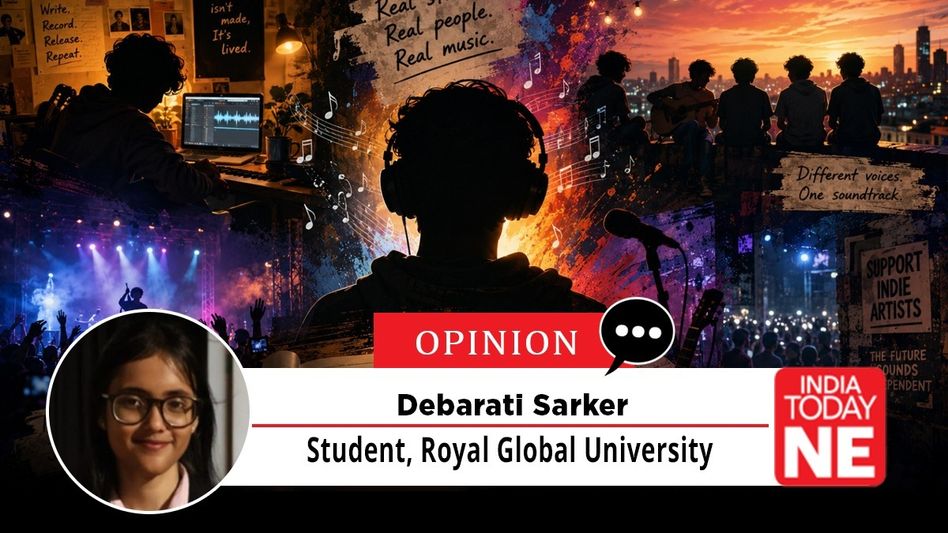
A song recorded in a bedroom can now reach millions before a record label even notices. As World Music Day celebrates the universal language of music, a quieter revolution is unfolding in India — and cities like Guwahati are becoming part of its soundtrack.

- Jun 21, 2026,
- Updated Jun 21, 2026, 2:16 PM IST

- Social media has let independent artists reach listeners without traditional gatekeepers
- Khanin Baruah says human-made music can still outlast rising AI tracks
- Tanmoy Dutta says indie music now offers viable careers for musicians
A random Tuesday. Earphones in. Life happening. Then suddenly, a song says exactly what you've been feeling for months. And that's when you realise something: Music isn't just something we listen to anymore; it's something we live through.
This World Music Day, while millions celebrate playlists, concerts, and favourite artists, a bigger story is unfolding behind the scenes: the rise of independent music and the artists quietly changing how an entire generation listens.
Let's rewind for a second- World Music Day or Fête de la Musique began in France in 1982 with a simple idea: music should belong to everyone. Not just celebrities. Not just concert halls. Everyone. Fast forward to today, the stage isn't a street corner anymore. It's Spotify. It's YouTube. It's Instagram. It's that bedroom where someone records a song at 2 a.m. because sleeping somehow feels harder than writing. And perhaps that’s the biggest change of all.
Khanin Baruah, a music enthusiast, told India Today NE that social media has fundamentally changed the indie ecosystem by allowing artists to reach audiences directly, without relying on traditional gatekeepers. He believes this accessibility will continue to push independent music forward in the coming years. While he remains cautious about the increasing presence of AI-generated music on streaming platforms, he is optimistic that authentic, human-made music will continue to find its audience.
And that's exactly why indie music feels different.
Because it isn't manufactured. It's lived. For decades, Bollywood was India's default soundtrack. If a song became popular, chances were it came from a movie. Today, the rules have changed. Young listeners aren't looking for perfect songs anymore. They're looking for honest ones. Songs that sound like late-night thoughts. Songs that are trying to understand you. The shift is visible not only among listeners but also among musicians themselves. Tanmoy Dutta, a session drummer and educator, noted that independent music is no longer seen as merely a passion project. "Today, artists can build real careers through music, and that's what excites me most about the future. The scene is growing, and with it, opportunities for musicians," he said.
Take Zaeden, for example. Many first knew him as the DJ creating massive EDM tracks and performing on huge stages. Then he did something unexpected. He stepped away from the console and started telling stories. Songs like Tere Bina and Socha Na Tha felt less like performances and more like conversations. Suddenly, listeners weren't just dancing to Zaeden. They were relating to him. That's the thing about indie music. It doesn't shout. It stays.
Then comes Gini. At just nineteen, she's doing something surprisingly rare in 2026. She's asking people to slow down. In a world obsessed with productivity, deadlines, and constant scrolling, Gini's music feels like opening a window after being stuck all day indoors. Her songs like Sukoon, Chaukhat and Feeka are filled with nostalgia, storytelling, and quiet emotions that don't need dramatic production to leave an impact. She doesn't create music that rushes. She creates music that lingers. And maybe that's why so many people connect with her.
Now let's talk about a song that practically became an emotion: Kaahe Mose.
Garvit-Priyansh didn't create a viral trend. They created a feeling. The kind of song that quietly enters your playlist and refuses to leave. Built around longing, vulnerability, and simplicity, Kaahe Mose proved something important: not every great song needs fireworks. Sometimes all it needs is honesty. Then came the moment nobody saw coming- Arijit Singh performed the song live and told thousands of people to "remember the name." The internet did exactly that. But what makes Garvit-Priyansh special isn't the endorsement. It's the journey. Long before the spotlight arrived, they were building something real through songs like Sanware, Theher Jaa, and Kagaz. Their success feels earned because it was built one listener at a time.
Then comes the most unexpected success story of India’s indie scene- OutStation
Five young musicians - Kurien Sebastian, Bhuvan Shetty, Shayan Pattem, Mashaal Sheikh and Hemang Singh. Different places. Different backgrounds. Different stories. One dream. And somehow, it works brilliantly. At a time when many thought boy bands belonged to another era, OutStation arrived and proved otherwise. Tum Se, Aaj Kal, Homecoming - their music feels young, energetic, and unapologetically Indian. When over 10,000 fans RSVP'd for the launch of Aaj Kal in Guwahati, it became clear that audiences weren't just listening. They were showing up.
Which brings us to something interesting - Guwahati. For years, conversations around music revolved around Mumbai, Delhi, and Bangalore.
Not anymore.
From Gini performing at Alcheringa to OutStation choosing the city for their major song launch, from Zaeden's concerts to Garvit-Priyansh receiving overwhelming love from audiences, Guwahati is slowly becoming one of India's most exciting spaces for live independent music. Artists are noticing. Crowds are growing. And listeners are proving that great music doesn't need a metro-city postcode to thrive.
Of course, indie music still comes with challenges.
Algorithms favour trends. Visibility remains difficult. Artists often become their own managers, editors, marketers, and content creators before they even get to be musicians. When asked about a challenge mainstream artists may never fully understand, Tanmoy pointed to survival itself. While mainstream musicians often find audiences faster, independent artists frequently face the difficult reality of balancing creativity with financial sustainability. "If an artist cannot earn enough to continue, the journey can end before it truly begins," he said.
But maybe that's what makes the movement beautiful. Nobody is here because it's easy. They're here because they genuinely love making music.
And maybe that's the real spirit of World Music Day- not the charts, not the streams, not the numbers but the courage to create something honest and put it out into the world, hoping someone, somewhere, presses play.
And if India’s indie scene has proven anything, it’s this: The future of music isn’t waiting for permission anymore; it’s already here. Because great music doesn’t ask for the spotlight. It creates one.