BJP's Sikkim Gambit: Calculated Bet Ahead of Panchayat Polls, But Whose Win Will It Be?
The BJP has put Darjeeling MP Raju Bista in charge of Sikkim before next year's Panchayat polls. The move links a shared ST-status demand to a wider contest over who gains politically in the state.

- Sep 23, 2026,
- Updated Sep 23, 2026, 4:02 PM IST

- Bista's Darjeeling experience gives him familiarity with Sikkim's social fault lines
- Tamang has long sought Scheduled Tribe status for 12 excluded communities
- Darjeeling's parallel campaign covers 11 left-out Gorkha sub-tribes with similar demands
The BJP's decision to hand Raju Bista the charge of Sikkim is being read in political circles as a deliberate, timed move by the party's central leadership — not a routine reshuffle. With Sikkim headed into Panchayat elections next year, the party appears to be betting on Bista's aggressive, results-driven style to build organisational ground in a state where the BJP has historically struggled for a foothold against the ruling Sikkim Krantikari Morcha (SKM).
On paper, the appointment is unusual: Bista is not from Sikkim at all. He represents the neighbouring Darjeeling Lok Sabha constituency in West Bengal. But that proximity may be exactly the point. As Darjeeling MP, Bista has spent years engaging with the Hills' social and political fault lines, giving him a working familiarity with issues that mirror Sikkim's own — most notably, the shared demand for Scheduled Tribe status for communities left off the ST list.
A shared cause across the border
Sikkim Chief Minister Prem Singh Tamang has been pushing for years to get 12 left-out communities — Bhujel, Gurung, Jogi, Kirat Khambu Rai, Kirat Dewan (Yakha), Khas (Chhetri-Bahun), Mangar, Newar, Sanyasi, Sunuwar (Mukhia), Thami and Majhi — included in the Scheduled Tribe list, a demand the state assembly formally backed and which the government has pursued through a dedicated high-level committee and reports to the Centre.
Darjeeling has run a near-identical campaign for its own 11 left-out Gorkha sub-tribes — Bhujel, Gurung, Mangar, Newar, Jogi, Khas, Rai (Kirat Khambu), Sunuwar, Thami, Yakha (Dewan) and Dhimal — a cause Bista has personally raised in Parliament multiple times, tracing it back to the loss of "Hill Tribes" status after Independence.
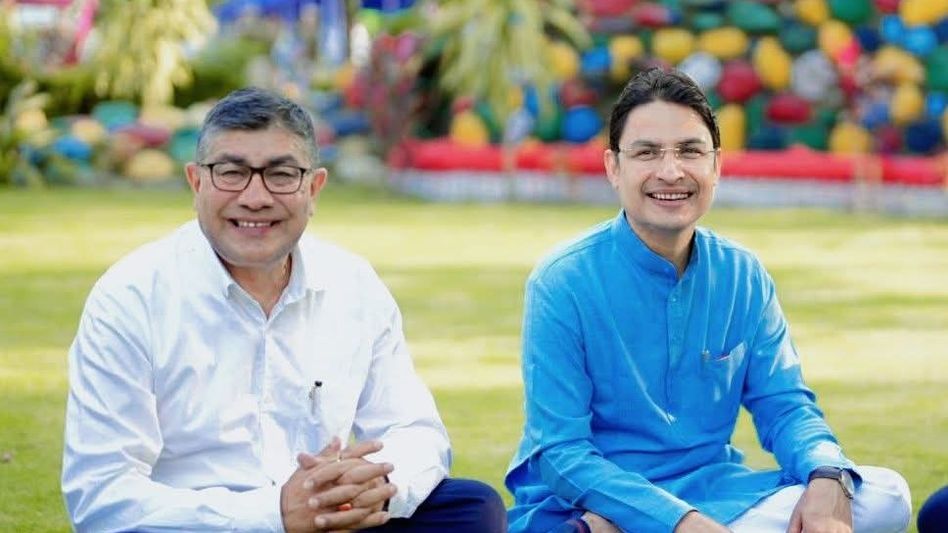
The overlap between the two lists is striking, and it's this shared cause that gives Bista and CM Tamang genuine common ground to have jointly pursued the tribal-status issue for communities straddling both sides of the Sikkim-Darjeeling border.
So who benefits?
That's the question now hanging over the appointment. Bista's charge gives the BJP a leader who already understands the region's grievances and has credibility on an issue that matters deeply to voters in both Sikkim and Darjeeling. If he uses the post to accelerate the ST-status push, it could hand a genuine win to Tamang's government — the SKM would get to show delivery on a decades-old promise, even if BJP helped broker it centrally.
But the same move could just as easily be read the other way: as the BJP using the ST issue and Bista's Hills credibility to build its own independent base in Sikkim ahead of the Panchayat polls, positioning itself as a party that can deliver where the state government hasn't, rather than simply reinforcing the SKM's standing.
For now, the ball is in the BJP's — and specifically Bista's — court. Whether he functions as a bridge that strengthens the SKM-led government's hand with the Centre, or as the spearhead of a more assertive, independent BJP push into Sikkim's politics, will likely become clearer as the Panchayat election season approaches. Time, as much as strategy, will tell which way this calculated move tilts.