Nuba and Numa: Two little sparks of hope in the Himalayas
Born on June 15, 2025, Nuba and Numa — a brother-sister pair — are the latest additions to HZP’s red panda family. The cubs, born to parents Lucky (II) and Mirak, have grown into healthy, active young animals and are now thriving under a conservation programme that places nature, rather than human intervention, at the centre of their development.

- Aug 24, 2026,
- Updated Aug 24, 2026, 8:31 PM IST

High in the mist-shrouded forests of the Himalayan Zoological Park (HZP) in Sikkim, two young red pandas are quietly becoming symbols of hope for one of the Himalayas’ most cherished and threatened species.
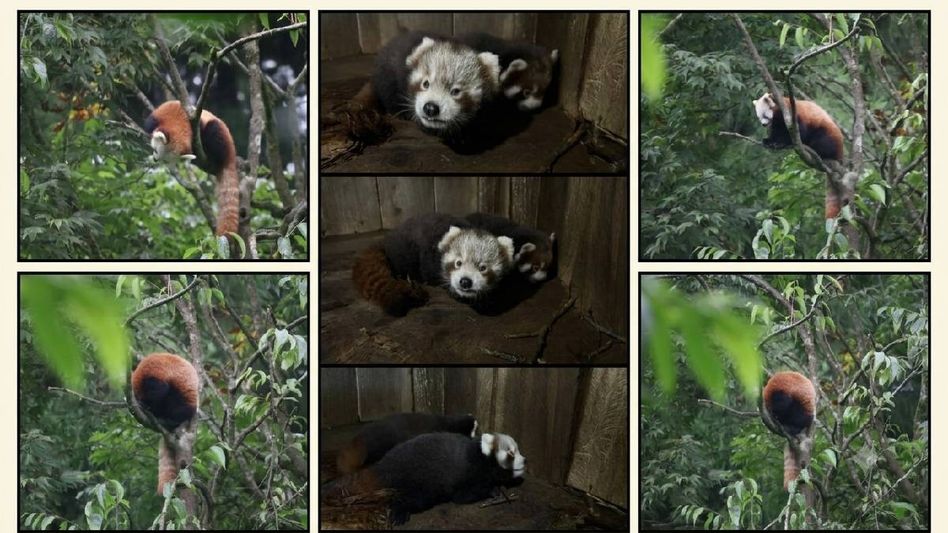
Born on June 15, 2025, Nuba and Numa — a brother-sister pair — are the latest additions to HZP’s red panda family. The cubs, born to parents Lucky (II) and Mirak, have grown into healthy, active young animals and are now thriving under a conservation programme that places nature, rather than human intervention, at the centre of their development.
At around 3 to 3.5 kg each, Nuba and Numa have shown a healthy appetite and steady growth. Their transformation from vulnerable newborns into confident young climbers has been closely observed by the zoo’s conservation team. At about five months old, both began learning to climb trees, an essential natural behaviour for a species that spends much of its life in the forest canopy.
They have also integrated well with the wider red panda group, while their parents continue to remain healthy.
Letting Nature Lead
For HZP, the success of the two cubs is not simply about ensuring their survival in captivity. It is about preserving the instincts and behaviours they would need in the wild.
Dr Minla Zangmu Lachungpa, Zoo Conservation Biologist, says all cubs under the breeding programme are deliberately parent-reared, with human intervention kept to a minimum.
“All cubs in the Breeding Program are parent-reared without human intervention so they can learn natural behaviors like foraging and climbing directly from their parents,” she says.
That approach has been particularly important for Nuba and Numa. Rather than being hand-reared, the cubs have learned vital behaviours from Lucky (II) and Mirak — from exploring their surroundings to navigating trees and interacting with other red pandas.
The strategy reflects a broader conservation principle: captive breeding is most effective when animals retain the behavioural traits that make them capable of surviving naturally.
A Monsoon Beginning
Their arrival, however, came with its own challenge.
The cubs were born during the peak monsoon season, when persistent rain and damp conditions can create additional risks for young red pandas. Mothers may move their cubs between nests in search of drier shelter, potentially exposing the young animals to wet conditions and illness.
“The main difficulty stems from the timing of their birth during the peak monsoon season,” Dr Lachungpa explains. “Mothers often move their cubs to find drier nests, which risks the cubs getting wet and sick.”
In Nuba and Numa’s case, the situation was managed with relatively little disruption. Low visitor disturbance and the availability of dry nesting spaces helped the family navigate the wet season safely.
The episode also underlines the importance of seemingly simple measures in conservation work. Providing a suitable environment and allowing the animals to make their own choices can sometimes be more valuable than direct human intervention.
A Quiet Team Behind the Success
While the cubs have remained at the centre of attention, their progress has also depended on the work of the people watching from behind the scenes.
At HZP, keepers, veterinarians and conservation staff monitor the animals, maintain hygiene and ensure appropriate nutrition and facilities. Their role, Dr Lachungpa says, is not to replace natural processes but to create conditions in which those processes can continue safely.
“Our staff's role — from keepers to vets — is simply to observe the animals, maintain hygiene, and provide optimal nutrition and care facilities to let the animals thrive,” she says.
It is a deliberately restrained approach. The less the animals depend on people, the better positioned they may be to retain natural behaviours.
More Than Two Adorable Cubs
Nuba and Numa's story is also part of a much larger conservation effort.
Their birth represents a milestone in HZP’s participation in the Red Panda Conservation Breeding Programme, implemented under the Central Zoo Authority’s Endangered Species Breeding Programmes.
The objective extends beyond increasing the number of red pandas in captivity. The programme seeks to establish a genetically viable captive population that can contribute to the species’ long-term conservation.
According to Dr Lachungpa, HZP is currently focused on sustainably breeding and maintaining a genetically viable captive founder stock that can provide the foundation for future breeding pairs.
A dedicated Red Panda Conservation Breeding Centre has also been proposed away from the main HZP complex. The planned facility would combine organised breeding with targeted research, with the broader aim of strengthening conservation efforts for red pandas in their natural habitats.
That distinction is important. Conservation breeding is not an end in itself. Maintaining genetic diversity, developing healthy founder populations and understanding the species better can ultimately strengthen efforts to protect wild populations and their habitat.
A Symbol of Sikkim
Few animals are more closely associated with Sikkim's natural identity than the red panda.
The species is the official State Animal of Sikkim and has become a powerful symbol of the Himalayan state's extraordinary biodiversity. Found in high-altitude forests, red pandas depend on intact ecosystems and dense vegetation for food, shelter and movement.
Their survival is therefore closely linked to the health of the forests they inhabit.
For a state where conservation and tourism increasingly intersect, the red panda represents more than an emblem. It is a reminder of the ecological wealth that exists beyond Sikkim's towns and tourist destinations.
Nuba and Numa are still young. Their lives remain within the protected environment of the zoological park, and their future role in conservation will unfold over time.
But their story already offers something valuable.
Born during a difficult monsoon, raised by their parents, learning to climb trees and growing steadily under careful observation, the two cubs embody a simple conservation lesson: sometimes, protecting wildlife means giving nature the space and conditions to do what it already knows best.
In the misty Himalayan forests, Nuba and Numa are growing one branch at a time — and carrying with them a small but significant promise for the future of the red panda