Sikkim bets Rs 18,455 crore on 'Viksit Sikkim' with record capital push, tourism and healthcare focus
Sikkim has unveiled one of its most ambitious Budgets, with Chief Minister and Finance Minister Prem Singh Tamang presenting a Rs 18,455-crore financial plan for 2026-27 that prioritises infrastructure, fiscal discipline, healthcare, education and tourism as the state aims to emerge as a high-income Himalayan economy under its "Viksit Sikkim @2047" vision.

- Jul 20, 2026,
- Updated Jul 20, 2026, 5:46 PM IST

Sikkim has unveiled one of its most ambitious Budgets, with Chief Minister and Finance Minister Prem Singh Tamang presenting a Rs 18,455-crore financial plan for 2026-27 that prioritises infrastructure, fiscal discipline, healthcare, education and tourism as the state aims to emerge as a high-income Himalayan economy under its "Viksit Sikkim @2047" vision.
The Budget projects a Gross State Domestic Product (GSDP) of Rs 62,973 crore and seeks to sustain annual economic growth above 13 per cent while maintaining environmental sustainability and prudent fiscal management.
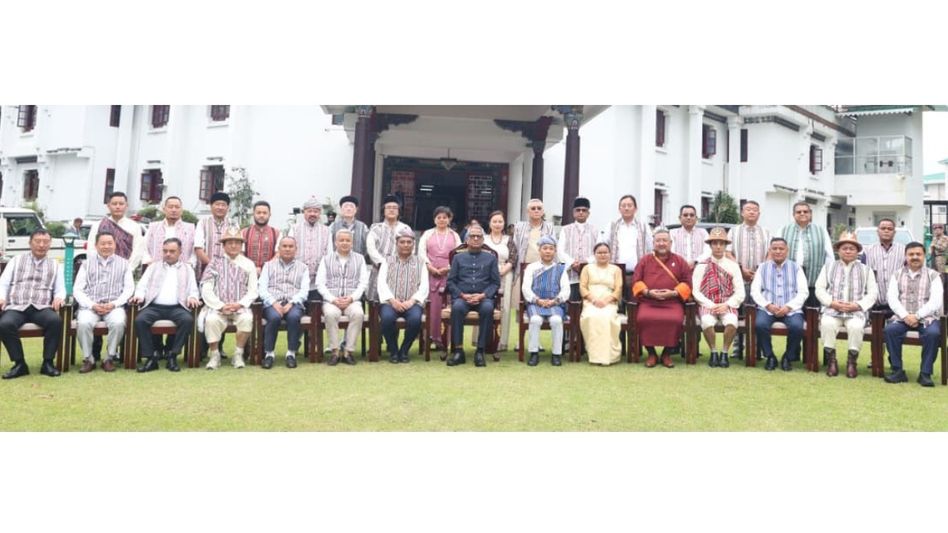
In a symbolic nod to the state's cultural diversity, Tamang and his Cabinet attended the opening day of the Budget Session dressed in traditional Lepcha attire, following Speaker Mingma Norbu Sherpa's appeal to legislators to wear the traditional dress of Sikkim's ethnic communities during the four-day session.
Record capital expenditure
A key highlight of the Budget is the sharp increase in capital expenditure to ₹5,896 crore, reflecting the government's strategy of investing in long-term assets rather than expanding recurring welfare spending.
The government plans to build nearly 570 km of climate-resilient roads using mastic asphalt technology, modernise electricity distribution with Asian Development Bank support, develop satellite townships around Gangtok, upgrade urban infrastructure and create major tourism assets, including the Swarna Jayanti Integrated Sports and Cultural Village and a world-class convention centre aimed at boosting MICE tourism and destination weddings.
Tourism and healthcare get major push
Tourism remains a central pillar of the state's growth strategy, with investments proposed for the Bhaleydunga ropeway and skywalk, the Singshore adventure tourism project, Nathula visitor facilities and several eco-tourism initiatives.
Healthcare also received significant attention, with the government announcing the operationalisation of Sikkim's first Government Medical College offering 100 MBBS seats, the launch of the state's first renal transplant programme, expansion of HPV screening for women and new fertility treatment facilities at STNM Hospital.
Education, agriculture and mental health
Nearly 15 per cent of the Budget has been allocated to education, alongside proposed legislative reforms covering private universities, open schooling and vocational education to better align the sector with future workforce needs.
For agriculture, the government announced that the effective interest rate on Kisan Credit Card crop loans will be reduced to just one per cent for eligible farmers through additional state subsidy. It also reaffirmed its commitment to reviving large cardamom cultivation under the "Mero Alaichi, Mero Dhan" mission.
The Budget also highlighted improvements in mental healthcare, noting that Sikkim's suicide rate had declined by nearly 15.8 per cent—from 43.1 per lakh population in 2022 to 36.3 in 2024—following expanded counselling and preventive mental health programmes.
Fiscal prudence
The government reiterated its commitment to fiscal discipline, stating that interest-bearing debt would be maintained at around 32 per cent of GSDP over the medium term. It also announced measures to strengthen digital governance through e-budgeting, e-sanctions, e-payments and Aadhaar-based direct benefit transfers to improve transparency and expenditure efficiency.
While acknowledging challenges such as climate vulnerability, market connectivity and the need for greater private investment, the Budget positions Sikkim's next phase of growth around infrastructure creation, institutional reforms, human capital development and sustainable tourism, rather than traditional welfare-driven spending.