Sikkim flags healthcare expansion, climate risks and social security priorities on Republic Day
Sikkim CM highlights healthcare improvements and climate change action on Republic Day. Social security schemes also set for enhancement to support vulnerable groups
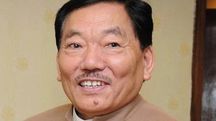
 Sikkim CM Prem Singh Tamang
- Jan 26, 2026,
- Updated Jan 26, 2026, 10:13 AM IST

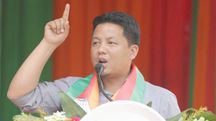
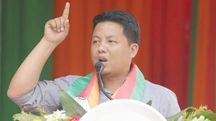
Sikkim chief minister Prem Singh Tamang, on January 26, used his Republic Day address to highlight healthcare expansion, climate-linked disaster risks and social protection as the state’s core priorities, while reaffirming commitment to constitutional safeguards and environmental conservation.
Marking the 77th Republic Day, Tamang said the occasion was a reminder of the sacrifices behind India’s freedom and of the Constitution that anchors “justice, liberty, equality and fraternity”. He said Sikkim’s development path since joining the Indian Union in 1975 had focused on balanced growth, peace and ecological responsibility.
A key focus of the address was healthcare, with the chief minister pointing to a shift from basic services to a multi-tier system spanning primary care to super-speciality treatment. He said complex procedures, including cancer surgeries and cardiac interventions, are now being conducted within the state, reducing dependence on referrals outside Sikkim. The establishment of the state’s first tertiary cancer care centre and the expansion of dialysis services to multiple districts were cited as major milestones.
Flagging rising cancer incidence, Tamang said Sikkim is partnering with national institutions for large-scale screening and early detection. He announced free HPV vaccination for all 14-year-old girls and self-testing kits for women aged 30–65, calling cervical cancer “preventable and treatable”.
Education was presented as another pillar, with the chief minister citing a literacy rate of over 90 per cent and a low teacher–pupil ratio. He said Sikkim had become the first state to introduce kindergarten across all government schools and had seen improved board examination results following targeted mentoring. New locally contextualised textbooks and investments in digital governance were highlighted as steps to improve learning outcomes.
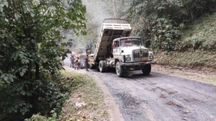
On infrastructure, Tamang said road connectivity remains critical for a mountainous border state, but added that the emphasis is shifting from expansion alone to quality, safety and climate resilience. Landslide mitigation, drainage improvement and durable materials are being prioritised to reduce disruption and disaster risk.
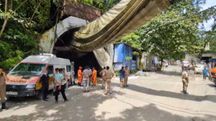
Climate threats featured prominently in the address, particularly glacial lake outburst floods. Referring to the South Lhonak glacial flood of October 2023, Tamang said more than 40 glacial lakes in Sikkim have been identified as high risk. He stressed the need for science-based planning and a “whole-of-government approach” involving specialists across disciplines.
Agriculture and livelihoods were linked to climate resilience through renewed focus on large cardamom, a traditional cash crop facing decline due to disease and environmental stress. The chief minister said farmer-led field laboratories and disease-tolerant trials under the ‘Mero Alaichi Mero Dhan’ mission are showing early promise.
On social security, Tamang underlined what he described as a “zero tolerance” approach to crimes against women and children, expansion of CCTV coverage, and dedicated women’s helplines. Welfare measures for mothers, senior citizens, persons with disabilities and pensioners were reiterated, alongside schemes aimed at women’s mobility and financial support.
Environmental protection and sanitation were also highlighted, with Tamang recalling Sikkim’s status as India’s first organic state and an early achiever of open defecation-free status. He said decentralised waste management and community-led cleanliness initiatives continue to shape policy.
Concluding the address, the chief minister said Republic Day was a moment to “reaffirm our faith in the Constitution” and expressed confidence that Sikkim would continue to progress as a model Himalayan state while contributing to national security and integration.