Sikkim Government steps up efforts to promote Lepcha language, culture and heritage
Sikkim Chief Minister Prem Singh Tamang on Saturday, August 8 said his government has taken several measures to promote the Lepcha language, culture and heritage, including introducing the language in government colleges and universities.

- Aug 08, 2026,
- Updated Aug 08, 2026, 9:32 PM IST

Sikkim Chief Minister Prem Singh Tamang on Saturday, August 8 said his government has taken several measures to promote the Lepcha language, culture and heritage, including introducing the language in government colleges and universities.
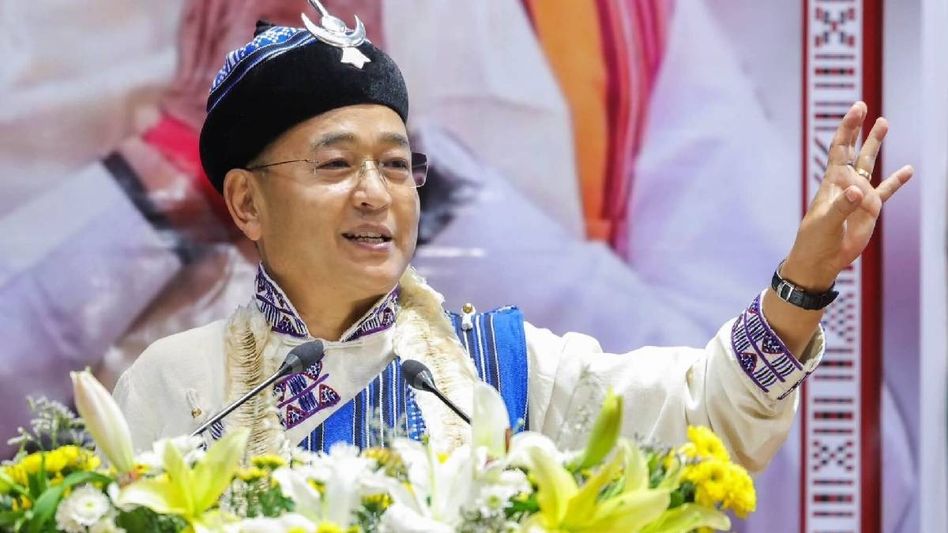
Addressing the Tendong Lho Rum Faat celebrations in Gangtok, Tamang announced that Hee-Gyathang Senior Secondary School in Dzongu would be developed as a Chief Minister’s Model School. He described the initiative as a “gift” to the Lepcha community.
Tamang said the Tendong Lho Rum Faat festival reflected the Lepcha community’s traditional relationship with nature and its ancestral homeland, Mayel Lyang. Referring to the traditional account associated with Mount Tendong, he said the festival represented gratitude towards nature and reinforced the responsibility to protect the environment.
The chief minister highlighted the Lepcha community’s contributions to Sikkim’s history, literature, music, art and traditional knowledge. He said development should be accompanied by efforts to preserve language, culture, identity and the environment.
He said the government had extended the teaching of Lepcha to government colleges and universities and created a post of Assistant Professor for the language. The state government has also sought the inclusion of Lepcha, Bhutia and Limboo in the Eighth Schedule of the Constitution, he said.
On cultural preservation, Tamang highlighted the government’s collaboration with UNESCO to document and revive Ru-Soam, the traditional Lepcha practice of constructing cane and bamboo bridges. He said the Stairway to Heaven project at Daramdin had reached 70 per cent completion.
Tamang also said 166 Lepcha students had received assistance for higher education under the Chief Minister’s Education Assistance Scheme.
Emphasising environmental conservation, the chief minister listed initiatives including Mero Rukh Mero Santati, Mero Bato Mero Bot, Sikkim Paryavaran Parv, A Day for Mother Earth and the Payment for Ecosystem Services programme.
Under Mero Rukh Mero Santati, 2,077 families have benefited through the Shishu Samriddhi Yojana at an investment of Rs 2.24 crore, Tamang said.
He also stressed the need to preserve traditional knowledge while embracing modernisation, saying both should progress together.
During the celebrations, Tamang received a record certificate for the largest gathering of Tungbuk players after 32 musicians performed on the traditional Lepcha instrument at Ridge Park on Friday.
The chief minister also handed over the land parcha to the Sikkim Lepcha Association for the construction of a Lepcha Bhawan in Gangtok. The documentation of Ru-Soam was also formally released during the event.
Three community awards were presented during the programme. Pasong Namgyal Lepcha received the Tendong Award, Pushpa Choden Thomas Lepcha was conferred the G B Mainwaring Award, and Leezong Lepcha received the Lha Tshering Kunchudyangmu Award.
Gnersongmit Lepcha, the first Lepcha woman to summit Mount Everest, was also felicitated. She reached the summit on May 21 as part of the ITBP Women’s Everest Expedition.
Minister G T Dhungel, who is also chairman of the Tendong Lho Rum Faat celebrations committee, said the festival played an important role in preserving Lepcha language, customs and traditional knowledge.
Committee president and MLA-cum-Advisor Delay Namgyal Barfungpa stressed the need to pass the community’s cultural traditions and knowledge on to younger generations.
Speaker M N Sherpa, Cabinet ministers, MLAs, advisors, chairpersons, senior officials, representatives of Lepcha organisations and other dignitaries attended the celebrations.