Sikkim govt schools record sharp rise in CBSE class 10 results, pass percentage reaches 84.24 per cent
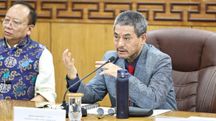
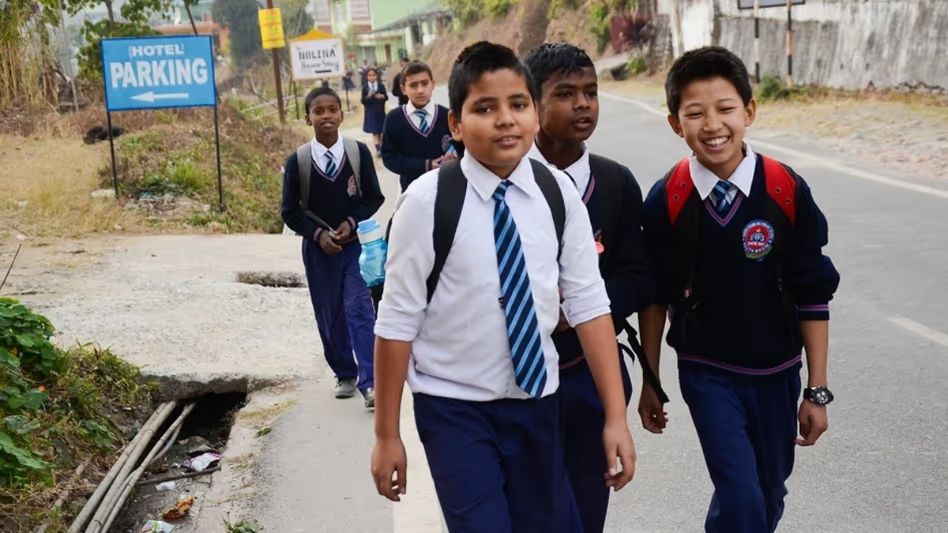
Sikkim’s government schools have recorded a major improvement in the CBSE Class 10 examination results for 2026, with the overall pass percentage rising to 84.24 per cent, Education Minister Raju Basnet announced during a press conference on April 30.

- Apr 30, 2026,
- Updated Apr 30, 2026, 10:19 PM IST

Sikkim’s government schools have recorded a major improvement in the CBSE Class 10 examination results for 2026, with the overall pass percentage rising to 84.24 per cent, Education Minister Raju Basnet announced during a press conference on April 30.
Calling the results an important achievement for the state’s education sector, Basnet said the steady rise in performance over the past three years reflected the impact of continuous academic support programmes introduced by the Education Department, especially the “Chief Minister’s Mentorship Programme” launched in 2024.
“This is not just ordinary good news for our state,” Basnet said while addressing the media. “The results have already been declared and along with this we also wanted to discuss some important issues related to the department. But first, we wanted to share this happy news.”
According to figures shared by the department, government schools in Sikkim had recorded a pass percentage of 54.55 per cent in 2023. The figure increased to 61.47 per cent in 2024. After the launch of the Chief Minister’s Mentorship Programme on September 5, 2024, the results improved further to 76.58 per cent in 2025. In 2026, the pass percentage climbed again to 84.24 per cent.
Basnet said the improvement was a strong indication that efforts made by teachers, school heads, education officials and students were beginning to show results.
The minister said the mentorship programme was launched with a special focus on students appearing for Class 10 board examinations. Under the initiative, additional academic guidance and close monitoring were provided to students in government schools.
District-wise data released by the department showed that Mangan district recorded the highest performance with a pass percentage of 92.86 per cent. Pakyong district followed with 90.71 per cent, while Gyalshing recorded 89.17 per cent. Gangtok district registered 88.42 per cent, Namchi 80.64 per cent and Soreng 77.69 per cent.
The minister also said that girl students performed slightly better than boys in the examinations.
Apart from overall pass percentages, the department also highlighted improvements in the quality of results. Officials said there had been a gradual increase in the number of students securing higher marks.
Data shared during the press conference showed that 20.64 per cent of students scored between 60 and 70 per cent marks. Around 7.92 per cent students secured marks between 70 and 80 per cent, while 3.01 per cent students scored between 80 and 90 per cent. A smaller number of students also scored above 90 per cent.
Basnet said students who secured more than 90 per cent marks were invited during the recent visit of Prime Minister Narendra Modi to Sikkim. Although they could not meet the Prime Minister directly because of scheduling constraints, Chief Minister Prem Singh Tamang later met the students personally and congratulated them for their performance.
The department also released details on school-wise performance. According to the data, 46 senior secondary schools achieved a 100 per cent pass result in the CBSE Class 10 examinations this year. Another 42 schools recorded pass percentages above 90 per cent.
Officials said the results marked a significant turnaround after concerns were raised in recent years about learning gaps among students following the COVID-19 pandemic.
“After the COVID period, there were serious concerns about falling learning standards among students,” Basnet said. “But through continuous efforts and support from teachers and schools, we are now seeing improvement.”
During the press conference, the Education Minister also addressed concerns regarding the shortage of textbooks in schools for the current academic session.
Basnet explained that the issue arose after the National Council of Educational Research and Training (NCERT) revised the curriculum framework for Class 9 for the 2026 academic session. Since Sikkim follows the CBSE curriculum, government schools depend on NCERT textbooks.
He said the department had already arranged funds and prepared payments before March for the purchase of books. However, the revised curriculum delayed the printing and supply of new textbooks.
“Our school session starts from February, whereas many CBSE schools in other parts of the country begin classes from April or May,” Basnet said. “Because of this difference in the academic calendar, schools that start earlier faced difficulties in getting the new books on time.”
He clarified that the problem was not limited to government schools in Sikkim alone. According to him, even several private schools in Sikkim and outside the state were facing similar issues because of delays in the availability of revised NCERT textbooks.
The minister said that except for Social Science, soft copies of most textbooks had already been shared by NCERT through its website and emails. Schools have been instructed to continue classes using digital copies, available study materials and teacher-prepared notes.
“In most subjects there have not been major changes in the syllabus except in areas like Mathematics,” he said. “Teachers are continuing classes without interruption and students are being supported with notes and online materials.”
Basnet further said that Class 11 textbooks were also facing delays because the curriculum had been revised for that level as well. However, the department expected the books to become available within May.
Another major issue discussed during the press conference was the rationalisation and merger of schools with very low student enrolment.
Basnet said that last year the department had proposed the merger or downgrade of around 97 schools. However, after discussions with School Management Committees, teachers, village communities and local residents, many schools managed to improve enrolment and continue functioning.
Initially, around 79 primary schools were identified for merger. Later, the number was reduced to 52 after local communities worked to increase admissions. In many places, parents reportedly shifted children from private schools back to government schools to help save village institutions.
The minister said 14 schools that were earlier considered for closure were later reopened after enrolment improved. Another eight schools were allowed to continue functioning after the government considered the difficulties young children would face if forced to travel long distances.
Finally, around 30 schools remained under the merger process due to extremely low enrolment.
Basnet cited the example of Kabarbote Primary School, which was merged with Dalapchand School. Out of five students from the school, four joined Dalapchand Senior Secondary School while one child reportedly stayed back at home. He said the department was closely monitoring such cases to ensure students were not affected.
The minister also spoke about an ongoing assessment survey being conducted across the state to study the learning levels of Class 3 students in English and Mathematics.
He said early findings suggested that while there had been some improvement in learning standards over the past few years, more work was still needed in both subjects.
To address the issue, the Education Department on Wednesday signed a memorandum of understanding with Bengaluru-based Step Foundation. The programme will focus on improving English language skills and Mathematics learning among students of Classes 3, 4 and 5.