Sikkim's Magar community secures ownership of indigenous digital font developed in 2007
In a significant step towards strengthening the digital preservation of indigenous languages, software engineer Bikram Rai has officially transferred the copyright of the Magar language digital font to the All Sikkim Magar Association (ASMA), nearly two decades after developing the software.

- Jul 18, 2026,
- Updated Jul 18, 2026, 5:17 PM IST

In a significant step towards strengthening the digital preservation of indigenous languages, software engineer Bikram Rai has officially transferred the copyright of the Magar language digital font to the All Sikkim Magar Association (ASMA), nearly two decades after developing the software.
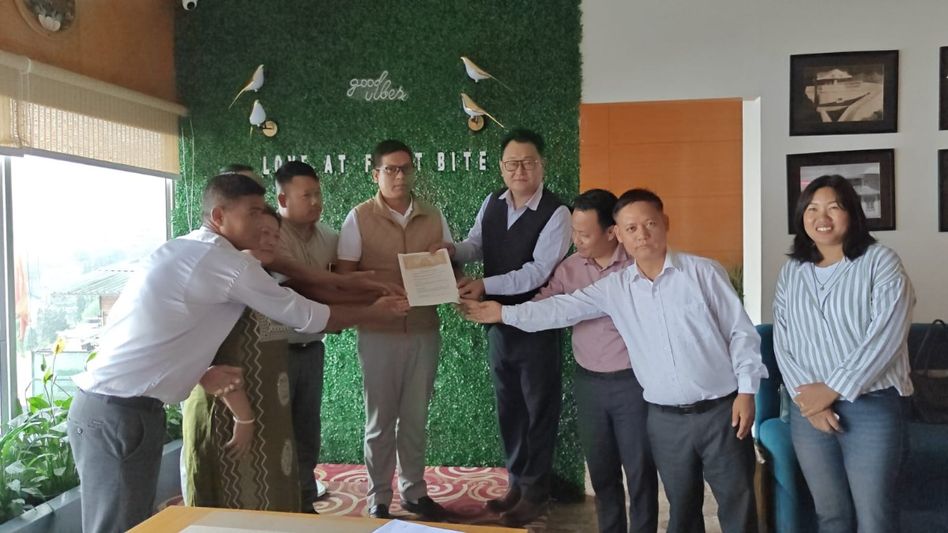
The copyright assignment agreement, signed on Saturday, transfers all ownership and intellectual property rights of the Magar digital font, created by Rai in 2007, to the association. The transfer concludes a 19-year journey that began when efforts were initiated to digitise the Magar script at a time when language computing tools in India were still at a nascent stage.
Under the agreement, Rai, the original creator and copyright holder, has permanently assigned all rights related to the software, including its use, reproduction, modification, publication and distribution. The association will now hold complete ownership of the font and oversee its future use and development.
Speaking after the programme organised by ASMA, Rai said the project originated shortly after he completed his engineering studies and was working on software development while seeking employment in Gangtok. His first assignment involved digitising the Rai language script, which had not yet been adapted for computer use.
Following the successful completion of that project and recognition from the Rai community, Rai was approached by former ASMA president Bishnu Rana Magar to develop a digital font for the Magar language. He subsequently created fonts for both the Magar and Tamang languages, enabling these scripts to be used on computers for publications, educational material and official documentation.
Explaining the significance of the software, Rai said digital fonts make it possible for computer keyboards to display characters in indigenous scripts, allowing books, newspapers and other publications to be produced in the respective languages. He noted that the fonts have since been extensively used for publishing textbooks, language books and educational resources by different communities.
Rai said he had retained the legal copyright as the software's creator but never intended to exercise ownership in a manner that could hinder the growth of the language. He added that his objective had always been to contribute to the preservation and promotion of indigenous languages rather than create legal disputes.
Recalling the development process, Rai said creating the software nearly two decades ago posed significant technical challenges due to limited internet connectivity and the lack of readily available software development resources. The project required nearly six months of research, during which he received technical guidance from senior colleagues at IIT Powai, Mumbai, where he had studied engineering.
He also acknowledged the contribution of architect Jigme Dorji Bhutia, who helped design the script characters using AutoCAD before they were converted into digital fonts. Rai added that the Tamang font required additional work as several characters absent from the Sambhota script had to be individually designed.
Expressing satisfaction over the formal transfer, Rai thanked the Magar community for recognising the contribution after nearly 19 years, saying he was pleased that the software would continue serving future generations.
ASMA president Reman Thapa described the copyright transfer as a major milestone for the association and the Magar community. He said the initiative, which began in 2007, had involved sustained efforts by the association's language committee, teachers and community members over nearly two decades.
Thapa said the association considers technology essential for preserving language and literature, adding that ownership of the software would strengthen efforts to digitally archive publications, records and research material related to the Magar language. He said the font would remain an important resource for researchers, educators and future generations.
He also thanked Rai for allowing the community to freely use the software over the years despite retaining its legal copyright, noting that he had consistently extended support without raising objections. Thapa acknowledged the efforts of the ASMA team in completing the transfer process and said the association had paid an agreed amount to acquire the software.
The Magar digital font has already played a key role in publishing Magar-language textbooks, the community's Herald publication and several other books following the official recognition of the language. The formal transfer of copyright is expected to further strengthen initiatives aimed at preserving and promoting the Magar language through digital technology.