
While Delhi chokes on smog, Sikkim records some of India's cleanest air
Delhi's AQI reached 373 while all eight monitored Sikkim locations stayed below 100. The capital activated Stage 2 GRAP as Diwali raised concerns about further deterioration.
Advertisement


Sujal Pradhan
- Nov 04, 2026,
- Updated Nov 04, 2026, 1:23 PM IST
Story highlights
- Rangpo posted the state's highest reading of 81 in February
- Pelling recorded readings of 19 in July and 20 in August
- Chungthang maintained readings between 28 and 31 across eight months
As Delhi's air quality deteriorated to the 'Very Poor' category, with the Air Quality Index (AQI) touching 373, Sikkim has emerged as one of the country's cleanest regions, with all its monitored locations recording air quality within the 'Good' or 'Satisfactory' categories.
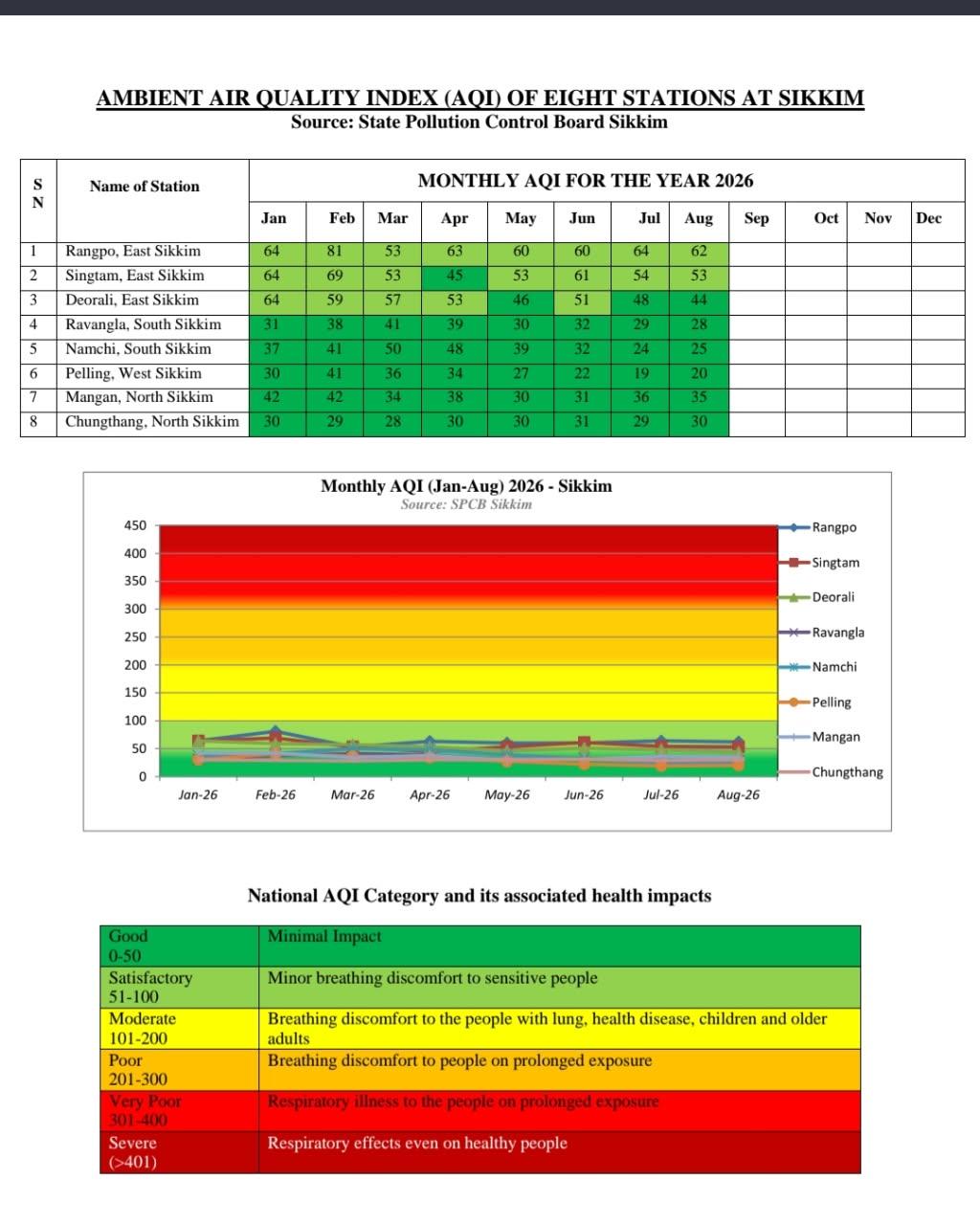
Data released by the State Pollution Control Board, Sikkim, covering eight monitoring stations between January and August 2026, shows that none of the locations recorded an AQI above 100 during the period. The highest reading was 81, recorded at Rangpo in East Sikkim in February.
The data also highlights the relatively better air quality in Sikkim's higher-altitude regions. Pelling in West Sikkim recorded AQI readings of 19 in July and 20 in August, while Chungthang in North Sikkim maintained readings between 28 and 31 throughout the eight-month period.
Other locations, including Ravangla and Namchi in South Sikkim, and Mangan in North Sikkim, also largely remained in the 'Good' category, particularly during the monsoon months.
The three monitoring stations in East Sikkim — Rangpo, Singtam and Deorali — recorded comparatively higher readings, generally ranging between the 40s and 60s. However, these figures remained below the threshold for the 'Moderate' category.
The contrast comes as Delhi's air quality slipped into the 'Very Poor' category on November 2 for the first time this season, prompting the Commission for Air Quality Management (CAQM) to activate Stage 2 of the Graded Response Action Plan (GRAP).
With Diwali scheduled for November 8, concerns over a further deterioration in the national capital's air quality have also grown.
Under India's National AQI classification, readings between 0 and 50 fall under the 'Good' category, indicating minimal health impact, while the 'Very Poor' category is associated with respiratory illnesses following prolonged exposure.
POST A COMMENT