
How associate nations ended cricket’s ‘Minnow’ era at T20 World Cup 2026
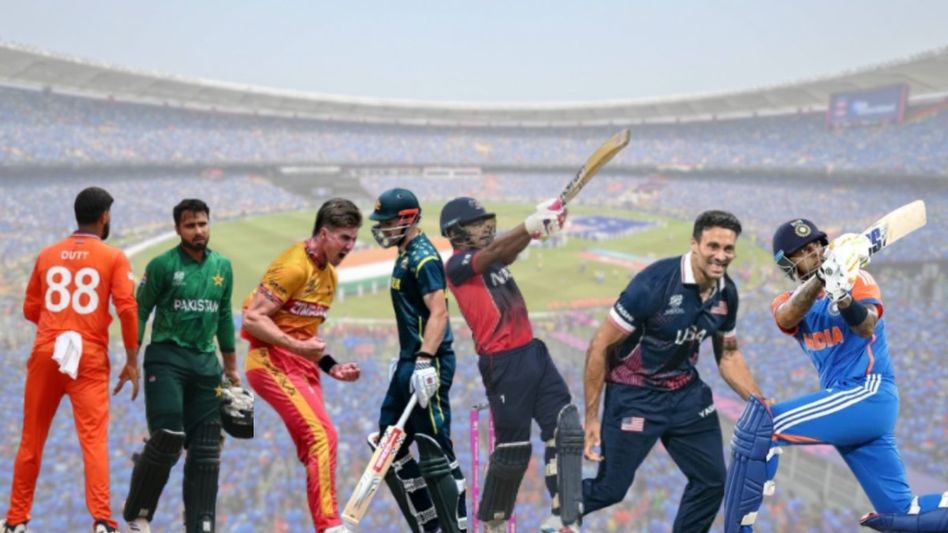
For decades, global tournaments followed a familiar script. India, Australia, and England arrived as the protagonists; everyone else was a guest. Associate sides were spoken of as useful opponents to inflate a Net Run Rate. This World Cup has not just challenged that script; it has rewritten it.

- Feb 22, 2026,
- Updated Feb 22, 2026, 3:36 PM IST

- Associate teams challenge cricket's traditional hierarchy in 2026 World Cup.
- Nepal secures first T20 World Cup win in 12 years, beating Scotland.
- Zimbabwe eliminates Australia, highlighting the new competitive landscape.
- USA's data-driven approach signals North America's cricketing rise.
- Super Eight stage sees traditional favourites under pressure from associates.
The ICC Men's T20 World Cup 2026 did not begin with a cover drive or a yorker but with controversy. Pre-tournament tension involving the Bangladesh national cricket team and Pakistan national cricket team over boycott talk set a dramatic tone. But once the cricket started, the narrative quickly moved from geopolitics to a far more compelling storyline: the steady dismantling of the sport’s old hierarchy by its so-called smaller nations.
For decades, global tournaments followed a familiar script. India, Australia, and England arrived as the protagonists; everyone else was a guest. Associate sides were spoken of as useful opponents to inflate a Net Run Rate. This World Cup has not just challenged that script; it has rewritten it.
This shift has been building. Expansion of the tournament and increased qualification pathways introduced by the International Cricket Council have given Associate nations more exposure, funding, and competitive fixtures. In the last two editions alone, Associate teams have registered multiple wins over Full Members, a trend that has accelerated in 2026.
Much of the recent surge also traces back to the last two years of global franchise evolution. Players from emerging nations have spent seasons in Major League Cricket (USA) and the ILT20 (UAE). They have shared dressing rooms and flight cabins with the very stars they once watched on television. The aura is gone. What remains is a contest of skill, and the gap has narrowed dramatically.
The first tremor hit at the Wankhede Stadium. Nepal pushed the England cricket team to a four run finish. England escaped with the points, but there was no celebration in their body language, only the hollow stare of survivors. Tens of thousands of Nepal supporters turned Mumbai into a sea of red and blue, a deafening reminder that passion and pressure now travel well beyond traditional borders.
Nepal made sure they didn't leave India empty handed. On February 17, 2026, the Rhinos scripted a new chapter in cricket history at the Wankhede Stadium. By chasing down 171 to defeat Scotland by seven wickets, Nepal secured their first T20 World Cup victory in 12 years. It was a win 4,352 days in the making. Since their maiden success in 2014, Nepal had faced a decade of qualification hurdles and winless campaigns. For the 19,000 fans in the stands, this wasn't just a win, it was a decade of devotion finally being repaid on the world's most iconic stage.
If England was rattled, Pakistan was nearly broken. In Colombo, the Netherlands produced a tactical masterclass that turned a routine chase into a nightmare. Pakistan’s middle order crumbled under Dutch discipline, collapsing from a comfortable position to 114 for 7. The Green Shirts were on the brink of an opening defeat until Faheem Ashraf struck 29 off 11 balls in the second last over to pull the game back and deny the Netherlands a historic upset.
Soon after, the United States national cricket team crushed the Netherlands by 93 runs. This was not a fluke built on one extraordinary innings. It was a clinical, data driven demolition that signalled North America’s arrival as a tactical force.
Then came the result that altered the tournament’s DNA. In Colombo, the Zimbabwe national cricket team outplayed the Australia national cricket team in every department. Blessing Muzarabani’s raw pace exposed an elite top order, but the cruelty of the exit lingered. A washout in the Zimbabwe Ireland fixture handed Zimbabwe the point they needed.
The image of the tournament was not a wicket or a six, but the sight of the Australian squad in a silent Pallekele hotel room, watching rain end their campaign while they still had a game to play. The giant did not fall to a miracle blow. It fell to the consistency of a side that refused to blink.
Even the teams that advanced carry scars. At the Wankhede, India’s vaunted batting lineup slumped to 77 for 6 against the USA. The stadium fell into an eerie silence as Shadley van Schalkwyk’s four wicket spell dismantled the top order. India struggled, but captain Suryakumar Yadav ensured his side recovered and crossed the line.
In Chennai, Afghanistan pushed the South Africa national cricket team to a Double Super Over, stretching one of the game’s most athletic sides to their physical and mental limits.
If there were still doubts about whether these teams were merely riding momentum, Italy’s rise as a competitive European Associate side offered further proof. Their 10-wicket demolition of Nepal was not chaos. It was precision. Line, length and composure executed without reputational baggage.
The closing days of the group stage underlined the shift. Zimbabwe defeated cohosts the Sri Lanka national cricket team to top their group unbeaten. Afghanistan’s 82 run win over Canada was not enough to save them, a brutal reminder that margins are now unforgiving for everyone, not just the underdogs.
Australia is home. Sri Lanka are hanging on. The Super Eight features not just the usual heavyweights, but hunters who no longer see themselves as guests at the table.
The Super Eight stage has already begun with a rain hit fixture between the New Zealand national cricket team and Pakistan called off, handing both sides a point. With the margins tighter than ever, the race for the semifinal spots is wide open. For the first time, the question is no longer whether an upset will happen, but which giant will fall next.
MORE NEWS












Copyright©2026 Living Media India Limited. For reprint rights: Syndications Today
