IMD strengthens Tripura’s weather watch with advanced x-band doppler radar
In a significant boost to disaster preparedness and real-time weather monitoring, the India Meteorological Department (IMD) is expanding its meteorological infrastructure in Tripura with the installation of a state-of-the-art X-Band Doppler Weather Radar and the integration of additional Automated Weather Stations into the national network.

- Dec 31, 2025,
- Updated Dec 31, 2025, 4:16 PM IST

In a significant boost to disaster preparedness and real-time weather monitoring, the India Meteorological Department (IMD) is expanding its meteorological infrastructure in Tripura with the installation of a state-of-the-art X-Band Doppler Weather Radar and the integration of additional Automated Weather Stations into the national network.
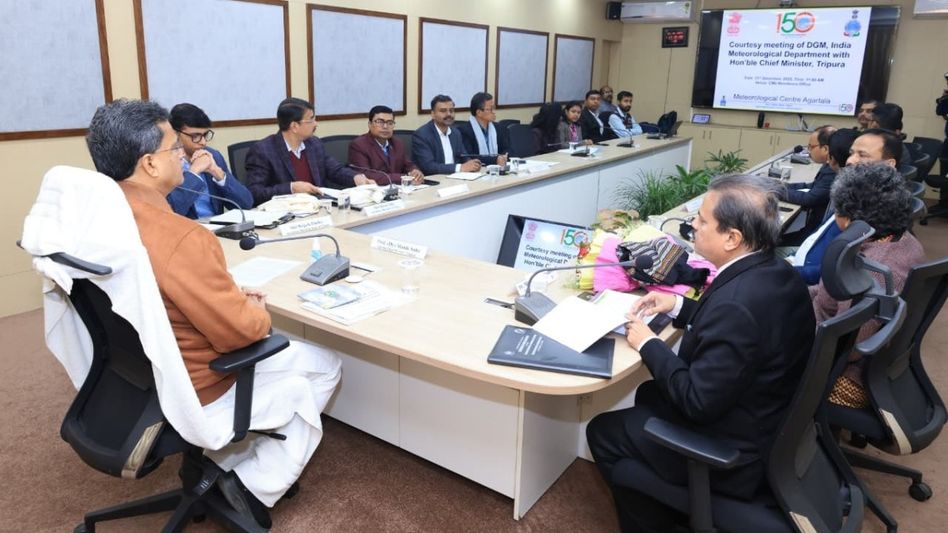
The IMD, under the leadership of Director General of Meteorology Dr Mrutyunjay Mohapatra, and the Government of Tripura on Wednesday exchanged land lease documents for the installation of the advanced Doppler Weather Radar. The ceremony was held at the TIFT Conference Room in the presence of Tripura Chief Minister Dr Manik Saha.
As part of the initiative to strengthen weather observation and disaster risk reduction, three Automated Weather Stations (AWS) were also formally handed over to the IMD for integration into its national grid. Officials said this expansion would significantly enhance flood forecasting capabilities and improve water resource management across the state.
Addressing the gathering, Dr Mohapatra announced that a second advanced Doppler Weather Radar will be installed at Belonia subdivision. He said work on the project would begin shortly, with the radar expected to be installed within the next three months.
Highlighting Tripura’s vulnerability to a wide range of weather-related hazards, Dr Mohapatra said the state faces recurrent challenges such as urban flooding during the monsoon, cloudbursts, landslides and mudslides, cyclones originating in the Bay of Bengal during pre- and post-monsoon periods, nor’westers, cold waves, fog, and heatwaves.
“Keeping these challenges in mind, IMD has decided to strengthen the entire meteorological observation network in Tripura. We are making concerted efforts to install automatic rain gauges, automated weather stations, and modern instruments such as wind profilers,” he said.
Officials informed that Tripura currently has 34 rain gauges for district-level rainfall monitoring. From 2025 onwards, IMD has also initiated block-level rainfall monitoring across the state to improve localised forecasting. At present, there are 28 Automated Weather Stations in Tripura, with plans underway to install 14 more in the near future.
Dr Mohapatra noted that over the past decade, the IMD’s meteorological centre in Tripura has expanded its scope well beyond aviation services to support multiple sectors, including agriculture, disaster management, and public safety. He said forecast accuracy has improved substantially, rising from about 40 percent over the last ten years.
“IMD is now moving towards Panchayat-level forecasting, which will provide more precise and actionable weather information. This will be particularly beneficial for farmers and local administrations,” he added.
The high-resolution X-Band Doppler Weather Radar, with a coverage radius of around 100 kilometres, will enable accurate, real-time monitoring of heavy rainfall, thunderstorms, cyclones, and other severe weather events. Officials said the radar is targeted to be installed and made operational before the upcoming pre-monsoon season.
The new installation will become the second Doppler Weather Radar in Tripura, following the existing radar at Agartala Airport, which has been operational since 2011.
The event was attended by Revenue Secretary Brijesh Pandey, Dr Partha Roy, Head of the Meteorological Centre Agartala, and other senior state and IMD officials.