
Solar microgrids light up remote tribal villages as Tripura agency wins national honour
Electricity has reached some of the most isolated tribal habitations in the North East, transforming daily life for thousands of families—a breakthrough that earned the Tripura Renewable Energy Development Agency (TREDA) the Silver Medal at the 105th SKOCH Awards for 2025.

- Jan 20, 2026,
- Updated Jan 20, 2026, 10:18 AM IST

Electricity has reached some of the most isolated tribal habitations in the North East, transforming daily life for thousands of families—a breakthrough that earned the Tripura Renewable Energy Development Agency (TREDA) the Silver Medal at the 105th SKOCH Awards for 2025.
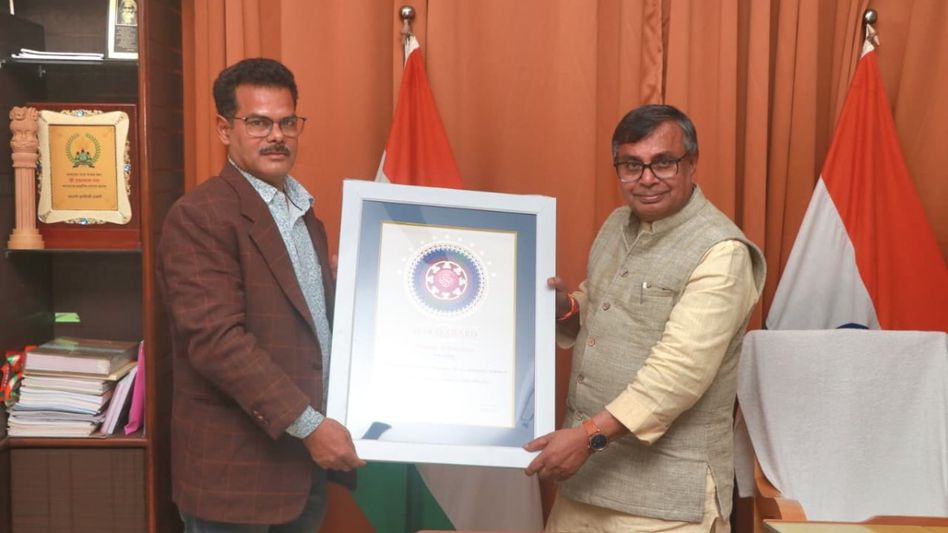
The award was presented at the ceremony in the national capital by Sameer Kochhar, chairman and managing director of SKOCH Group, recognising TREDA’s work in delivering solar-powered microgrids to regions where conventional power infrastructure is either impractical or financially unviable.
Implemented under the central government’s PM-DEVINE scheme in partnership with the Tripura government, the project has brought electricity to 274 remote tribal villages. A total of 274 solar microgrids—ranging from 2 kW to 25 kW—have been commissioned, creating an installed capacity of 3 MW. The initiative has benefited 9,762 households across 247 habitations at a total cost of Rs 81.02 crore.
Each beneficiary household has received four LED lights and a mobile charging point, while solar-powered streetlights now illuminate village roads and busy public areas. For communities that were once dependent on kerosene lamps, the shift has reduced health risks and improved living conditions.
The logistical challenges were significant. Many settlements lie 15 to 20 kilometres from the nearest accessible road, making grid extension nearly impossible. Even where partial grid access existed, frequent power failures—especially during the monsoon and pre-monsoon months—often plunged villages into prolonged darkness, disrupting education, healthcare and economic activity.
The impact of reliable solar power is already visible. Children are able to study after sunset, improving learning outcomes. Mobile charging and access to television have connected villagers to information, government services and the wider world. Traditional livelihoods such as bamboo weaving and handloom work now continue into the evening, increasing productivity and household income.
Local shops remain open after dark, strengthening village economies, while street lighting has made night-time movement safer. The project, officials said, demonstrates how decentralised renewable energy can address long-standing development gaps in India’s most inaccessible regions.
MORE NEWS






Copyright©2026 Living Media India Limited. For reprint rights: Syndications Today
