Tripura's Alpana Gram loses its colours, locals appeal for government support
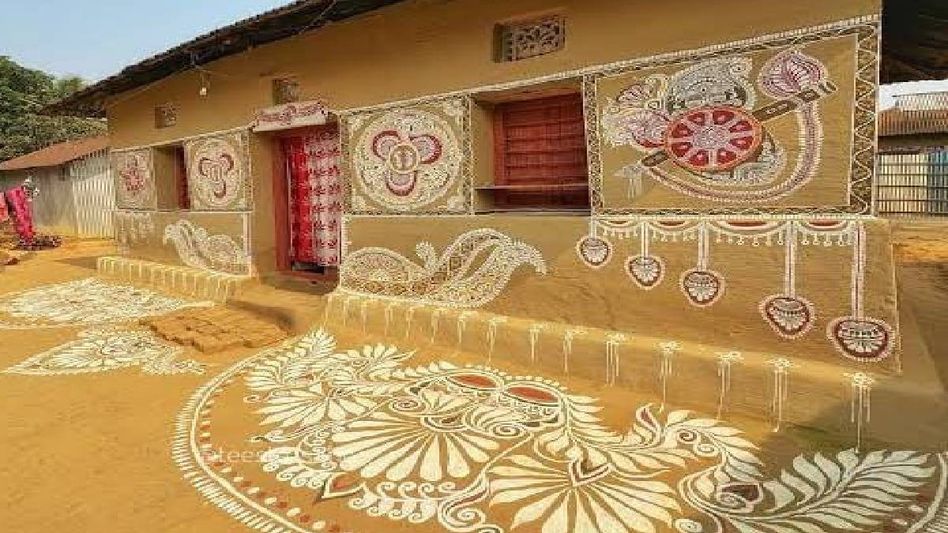
A few kilometres away from Agartala, near the Bangladesh border, lies Lankamura village now widely known as “Alpana Gram” for its beautiful traditional wall paintings.

- Aug 13, 2026,
- Updated Aug 13, 2026, 7:08 PM IST

A few kilometres away from Agartala, near the Bangladesh border, lies Lankamura village now widely known as “Alpana Gram” for its beautiful traditional wall paintings.
However, the colours that once brought tourists and economic opportunities to the village are slowly fading, leaving residents worried about their future.
The village gained recognition in 2020 after a folk culture workshop was organised with financial support from the Eastern Zonal Cultural Centre under the Government of India and the initiative of Sanskar Bharati Tripura. Artists decorated the mud walls of homes with traditional alpana designs, highlighting the rich cultural heritage of the region.
The transformation soon placed Alpana Gram on the tourism map. Visitors from Tripura and other parts of the country started arriving to witness the colourful artwork. Local residents found new sources of income by selling handmade products, vegetables, traditional snacks, and other items to tourists.
Amrit Sarkar, a resident of this village told India Today NE that earlier, this area was known as Lankamura Kapali Para, but now people recognise it as Alpana Gram. Sanskar Bharati played an important role in creating this identity. People from different parts of the country and even abroad visited our village to see the artwork,” he said.
He added that the annual three-day Pitha Puli festival during Makar Sankranti helped promote the village’s culture and provided opportunities for local families to earn. “We hope the government continues to support us so that the village can develop further and people can benefit economically,” he said.
The village, home to more than 150 families, mainly depends on flower cultivation, vegetable farming, and small businesses. During the peak tourism period, many families earned additional income by selling their produce and traditional items.
However, residents say that visitor numbers have declined in recent years, affecting their earnings.
“During the Alpana festival, we used to sell pitha, vegetables, and other products. Many people came, and we were very happy. Earlier, every house was decorated with alpana during Poush Sankranti, and everyone participated. But now fewer tourists visit, and our income has reduced,” said Malati Kapali.
Another resident, Arati Sarkar, said, “During the festival, many visitors used to come. We sold vegetables and created alpana designs. Now, very few people visit. If the government takes steps to develop the village further, it would benefit everyone.”
For the people of Alpana Gram, the paintings on their walls are more than just artwork — they are symbols of their culture, identity, and hopes. As the vibrant colours continue to fade, residents are seeking renewed attention and support to revive tourism and restore economic opportunities in the border village.