Ancient Tai Ahom script deciphered in Arunachal's Namsang, unveiling Nocte Salt legacy
In a significant stride toward uncovering the deep-rooted cultural and historical legacy of the Nocte region, Arunachal Pradesh Minister for Environment & Forest, Geology, Mining and Minerals, and DoTCL, Wangki Lowang, along with Padma Shri awardee Professor Jogendra Nath Phukan, undertook an intensive field study on the second day of their tour, leading to the decipherment of ancient inscriptions on earthen artefacts and a renewed focus on the region’s historic salt heritage.
- Jan 18, 2026,
- Updated Jan 18, 2026, 5:33 PM IST
In a significant stride toward uncovering the deep-rooted cultural and historical legacy of the Nocte region, Arunachal Pradesh Minister for Environment & Forest, Geology, Mining and Minerals, and DoTCL, Wangki Lowang, along with Padma Shri awardee Professor Jogendra Nath Phukan, undertook an intensive field study on the second day of their tour, leading to the decipherment of ancient inscriptions on earthen artefacts and a renewed focus on the region’s historic salt heritage.
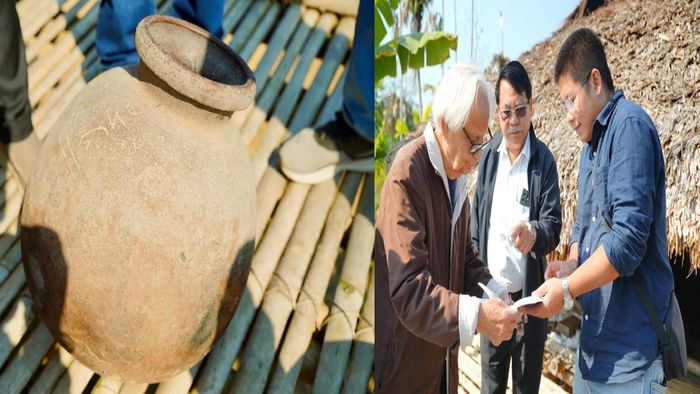
The day began at Namsang village, where the minister and Professor Phukan were accorded a traditional welcome by local youths dressed in full Nocte attire. The highlight of the visit was the detailed examination of five ancient scripted earthen pots—locally known as Ngolo or Kolo—believed to be relics of a bygone civilisation. Each pot, standing nearly two feet tall and weighing between 14 and 15 kilograms, bears inscriptions that had long intrigued historians and researchers.
During the study, Professor Phukan, assisted by his team members Dhiraj Phukan and Dipak Phukan, successfully deciphered one of the inscriptions. He confirmed that the script belongs to the Tai Ahom tradition, with the decoded word “Mohong,” meaning “salt” in the Ahom language. The finding strongly indicates that the pots were either used for storing salt or were integral to traditional salt production practices, offering fresh insights into the economic and cultural exchanges of the region.
The decipherment marks a major breakthrough in understanding the origin and function of these artefacts, which were first documented in 2020 by Nocte Digest but had remained undeciphered until now. The delegation also paid a brief visit to the historic Namghar at Namsang, where they offered their respects, acknowledging its enduring spiritual and cultural significance.
From Namsang, the team proceeded to Subang village to inspect the historic and sacred salt well known as Moran Sum, a site developed for tourism in 2019 under the initiative of Minister Wangki Lowang. Recent scientific studies have revealed that the physico-chemical properties of Nocte salt are superior to those found in other parts of the Northeast, reinforcing its historical value.
Historically, Nocte salt was a prized commodity, extensively traded with the Ahoms and neighbouring tribes. Control over salt resources often triggered conflicts between the Noctes and the Ahoms—disputes that eventually ended between 1696 and 1714 during the reign of Ahom king Rudra Singha. During this period, Hote, also known as Latha Khunbao—the chief of Namsang, Borduria and Laptang—embraced Vaishnavism after being initiated by Sri Ram Ata at the Merbil Bareghar Satra in present-day Sasoni village under Naharkatiya, Assam. He was bestowed the name Narottam, meaning “the best among men,” marking a transformative chapter in regional history.
The tour concluded with a formal dinner hosted at the minister’s residence, attended by senior officials and dignitaries, including the ADC and AC of Deomali, ZPMs of Deomali and Soha blocks, the Executive Engineer (Power), and other prominent representatives, underscoring the administrative and cultural significance of the visit.