Arunachal: AAPSU slams minister Dukam over remarks on 80:20 reservation policy, seeks apology within 12 hours
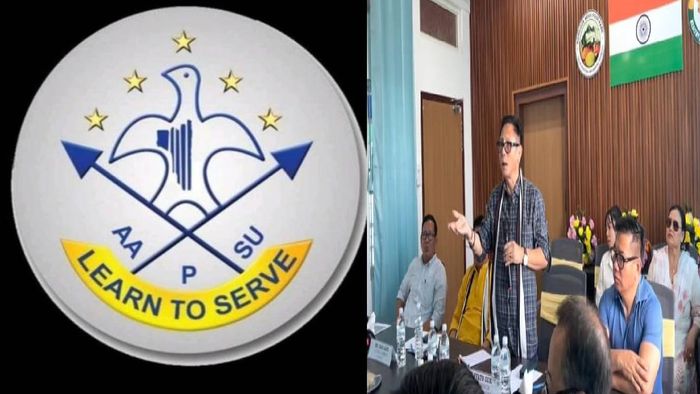
The All Arunachal Pradesh Students' Union (AAPSU) has strongly criticised Arunachal Pradesh Minister Nyato Dukam over his remarks on the state's 80:20 job reservation policy, describing them as "immature" and "irresponsible" and demanding that he issue a clarification and apologise to the union and the people of the state within 12 hours.
- Jul 11, 2026,
- Updated Jul 11, 2026, 9:25 PM IST
The All Arunachal Pradesh Students' Union (AAPSU) has strongly criticised Arunachal Pradesh Minister Nyato Dukam over his remarks on the state's 80:20 job reservation policy, describing them as "immature" and "irresponsible" and demanding that he issue a clarification and apologise to the union and the people of the state within 12 hours.
Dukam, who also chairs the state government-appointed committee examining the demand for abolition of the 80:20 reservation ratio, recently cautioned that any move to alter the existing policy could face legal challenges. He had warned that if the matter reached the courts, there was a possibility of the entire reservation framework being struck down, raising concerns over the consequences of such an outcome.
Responding sharply, AAPSU said the Minister's remarks were unbecoming of the chairman of a committee entrusted with examining the issue and alleged that the statement created unnecessary fear and confusion among the public instead of providing legal clarity. The union said Dukam was expected to maintain neutrality, uphold the integrity of the committee's deliberations, and refrain from expressing personal opinions before consultations with stakeholders were completed.
AAPSU further claimed that the Minister's comments had demoralised those advocating a review of the existing reservation policy and undermined the concerns of the state's indigenous communities. The union also pointed out that Dukam's media interaction coincided with AAPSU's own press briefing on the issue, creating an impression of hostility and raising questions over the impartiality expected from the committee's chairman.
Rejecting the Minister's apprehensions, AAPSU asserted that reservation in state government recruitment falls within the constitutional powers of the state under Articles 15(4) and 16(4) of the Constitution, which empower states to make special provisions for Scheduled Tribes. The union maintained that there is no legal impediment to revising the existing ratio to reflect Arunachal Pradesh's overwhelmingly indigenous tribal population.
AAPSU President Meje Taku said it was disappointing that a sitting Minister heading the committee had chosen to create apprehension rather than instil confidence in the process.
He argued that several neighbouring states have implemented similar reservation policies for decades without judicial intervention and maintained that the abolition of the 80:20 ratio falls squarely within the authority of the state government. Taku further alleged that the Minister had failed to appreciate the significance of the issue and the sentiments of the people.
He said the committee chairman should conduct the review process with legal rigour and institutional responsibility instead of making public statements that could undermine the exercise. Taku also asserted that AAPSU would not allow what it termed "fear-mongering" to derail what it described as a constitutionally valid demand of the indigenous people of Arunachal Pradesh.
Seeking accountability, AAPSU demanded that Dukam clarify his remarks and apologise to the union and the people of the state within 12 hours, stating that his comments had caused misunderstanding and demoralisation among stakeholders.
The union also urged the state government to ensure that the committee conducts its work with due diligence and seriousness, reiterating that the abolition of the 80:20 reservation ratio remains its foremost and non-negotiable demand.