Arunachal CM pushes for dialogue as Siang dam opposition intensifies after Pasighat violence
Pema Khandu held consultations on the Siang project after violent protests in Pasighat. The outreach seeks to address local concerns while balancing strategic and environmental considerations.
- Oct 25, 2026,
- Updated Oct 25, 2026, 8:59 PM IST
Arunachal Pradesh Chief Minister Pema Khandu on October 25 called for greater transparency and dialogue over the proposed 11,200-MW Siang Upper Multipurpose Project (SUMP), as protests against the mega dam escalated into violence in the state earlier this week.
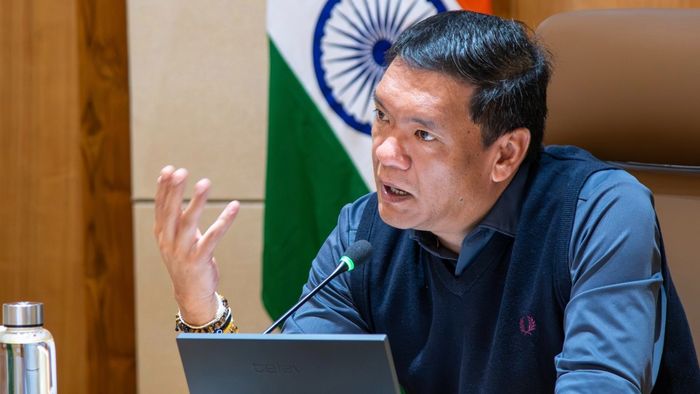
Khandu held separate meetings with legislators and representatives of the Arunachal Indigenous Tribes Forum (AITF) and community-based organisations (CBOs), discussing the project's strategic significance, environmental implications and concerns of people living in the Siang Valley.
The chief minister said misinformation and misconceptions surrounding the project had contributed to public apprehension, emphasising the need to bridge the information gap through factual communication and open discussions.
“Our people deserve accurate information to understand the project, its strategic importance and the concerns associated with it,” Khandu said in a social media post.
At the meeting with legislators, discussions centred on the project's pre-feasibility report (PFR), national security considerations, environmental concerns and the aspirations of people in the Siang Valley.
“Our priority is to protect national interests while respecting the rights and aspirations of the people of Siang Valley,” Khandu said.
The consultations come against the backdrop of mounting resistance from sections of the indigenous Adi community, which fears that the project could lead to displacement, loss of ancestral land, disruption of livelihoods and ecological damage. Residents have also questioned the safety of constructing a mega dam in a seismically sensitive region.
The opposition intensified on Friday when a 12-hour bandh across Siang, Upper Siang and East Siang districts was followed by violence in Pasighat. An NHPC office and a police station were set on fire, properties belonging to political leaders were vandalised and police personnel sustained injuries.
The Centre on Sunday moved additional Rapid Action Force personnel to the state following the unrest.
Beyond local concerns, the project has a strategic dimension linked to China's proposed large hydropower project on the Yarlung Tsangpo River in Tibet. The river flows into India as the Siang and later becomes the Brahmaputra. The proposed Indian project is intended to provide substantial water storage capacity and strengthen water and energy security.
The ongoing pre-feasibility exercise is intended to assess the project's viability and does not, by itself, amount to final approval for construction, officials have maintained. Opponents, however, have demanded that survey work be stopped and affected communities consulted before the process advances.
With protests intensifying and security forces being deployed, the government's efforts to address public concerns through consultations are unfolding amid growing tensions over the project's future.