Arunachal commissions biogas plant in Nirjuli to cut LPG dependence
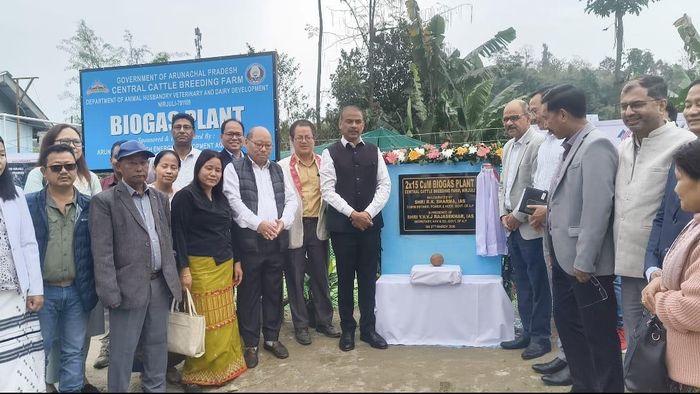
In a push towards clean energy and sustainable practices, the Government of Arunachal Pradesh has commissioned a biogas plant at the Central Cattle Breeding Farm (CCBF) in Nirjuli, near Itanagar, aimed at reducing dependence on LPG.
- Mar 27, 2026,
- Updated Mar 27, 2026, 6:56 PM IST
In a push towards clean energy and sustainable practices, the Government of Arunachal Pradesh has commissioned a biogas plant at the Central Cattle Breeding Farm (CCBF) in Nirjuli, near Itanagar, aimed at reducing dependence on LPG.
The project, developed under the Department of Animal Husbandry, Veterinary & Dairy Development (AHV&DD), was undertaken following directions from state minister Gabriel D. Wangsu. The plant, with a capacity of 2×15 cubic metres (30 cubic metres total), was fast-tracked and formally commissioned on March 27.
The CCBF houses around 150 cattle, generating 5–6 quintals of cow dung daily. While the waste was earlier used primarily as manure, it is now being converted into clean biogas for cooking and lighting. The process also produces nutrient-rich slurry, which can be used to enhance soil fertility.
The initiative has directly benefited over 12 families residing within the farm परिसर, whose kitchens have now been connected to the biogas system, significantly reducing their reliance on LPG. Officials said the minister had directed timely completion of the project to ensure households could transition to biogas-based cooking.
The project was implemented in collaboration with the Arunachal Pradesh Energy Development Agency (APEDA), with senior officials including Commissioner R.K. Sharma and Secretary Y.V.V.J. Rajasekhar present during the inauguration.
Following the launch, Wangsu directed the department to prepare proposals for scaling up capacity and replicating similar biogas plants across other state-run farms. He emphasised that efficient utilisation of cattle waste can generate clean energy, reduce environmental pollution, promote organic farming, and lower dependence on LPG.
Project in-charge Dr. Taba Heli described the initiative as a significant step toward sustainable development, highlighting its role in converting waste into valuable resources while promoting eco-friendly living.