Arunachal Congress attacks BJP over NEET crisis, poses eight questions on exam failures
The Arunachal Pradesh Congress Committee (APCC) on July 24 launched a sharp attack on the BJP over the ongoing NEET controversy, accusing the ruling party of deflecting accountability and failing to address the concerns of millions of students affected by alleged examination irregularities.
- Jul 24, 2026,
- Updated Jul 24, 2026, 6:58 PM IST
The Arunachal Pradesh Congress Committee (APCC) on July 24 launched a sharp attack on the BJP over the ongoing NEET controversy, accusing the ruling party of deflecting accountability and failing to address the concerns of millions of students affected by alleged examination irregularities.
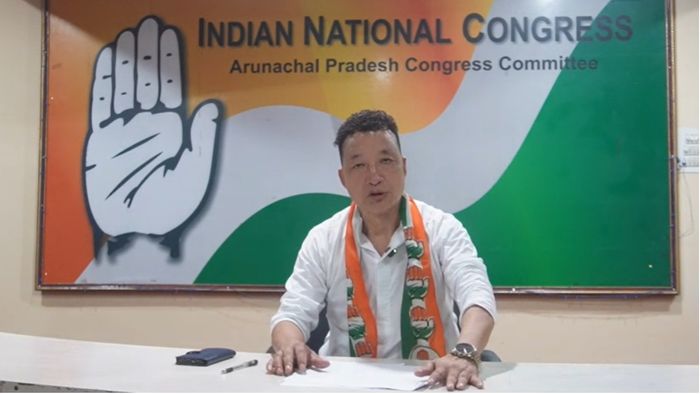
In a statement issued from Itanagar, APCC spokesperson Johny Yangfo said the nationwide protests over NEET were not a political battle between the Congress and the BJP, but a "national educational emergency" arising from repeated allegations of paper leaks, administrative failures and weaknesses in the examination system.
The Congress alleged that instead of responding to the issues raised by students and their families, the BJP had attempted to divert attention by accusing the Opposition of disrupting Parliament and politicising the issue. It maintained that Parliament is the appropriate forum to discuss the concerns of students and seek accountability from the government.
The APCC also questioned how the government could deny systemic failures when investigative agencies had already registered cases, made arrests and launched probes into alleged examination irregularities and paper leaks. It argued that accountability should extend beyond those directly accused of wrongdoing to include officials and institutions responsible for safeguarding the examination process.
Seeking answers from the Centre, the Congress asked why the Union Education Minister had not accepted political responsibility for repeated examination-related controversies. It further demanded an independent investigation into the alleged irregularities, comprehensive reforms in the National Testing Agency (NTA), stronger security protocols for question papers, a transparent examination calendar, protection for whistle-blowers and relief for students whose careers had been affected.
The party also questioned whether the Centre's proposal to establish fast-track courts for paper leak cases could substitute for institutional reforms and preventive measures. It argued that while swift punishment of offenders was necessary, the government must explain why such failures were allowed to occur in the first place.
Rejecting allegations that students were being politically influenced, the APCC said young people across the country were raising their voices independently because their future was at stake. The Congress asserted that it was merely amplifying their concerns and reiterated its willingness to participate in a "constructive, transparent and meaningful debate" on the NEET crisis and broader examination reforms.