Arunachal moves to overhaul traffic management in Itanagar–Naharlagun twin capital
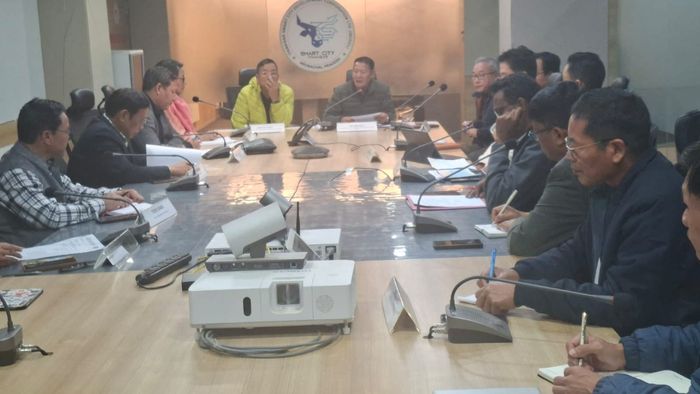
In a major step towards improving traffic management and urban mobility in the Itanagar–Naharlagun Twin Capital Region, Urban Affairs, Land Management and Civil Aviation Minister Sri Balo Raja on Thursday convened a high-level review meeting at the Integrated Command and Control Centre (ICCC) at the Civil Secretariat.
- Jan 23, 2026,
- Updated Jan 23, 2026, 9:00 PM IST
In a major step towards improving traffic management and urban mobility in the Itanagar–Naharlagun Twin Capital Region, Urban Affairs, Land Management and Civil Aviation Minister Sri Balo Raja on Thursday convened a high-level review meeting at the Integrated Command and Control Centre (ICCC) at the Civil Secretariat.
The meeting was held as a follow-up to the State Cabinet’s first sitting on June 13, 2024, which identified effective traffic management as one of the 24 high-priority decisions aimed at developing a world-class, future-ready capital city. The deliberations focused on easing congestion and ensuring smoother movement for commuters in the rapidly growing urban region.
The meeting was attended by Itanagar MLA Techi Kasso, the Mayor of Itanagar Municipal Corporation, Chief Engineer (Highways), Officer on Special Duty to the Chief Minister, Additional Secretary (Urban Affairs), ADC (ICR), DSP (Traffic), Directors of Town Planning and Urban Local Bodies, the Executive Engineer of the Smart City Mission, and other senior officials.
During the discussions, the minister emphasized the need to replace the existing traffic regulation system with modern, state-of-the-art technologies. It was decided that automated traffic signal lights integrated with artificial intelligence-based cameras would be installed at all identified junctions, starting from Chimpu to Lok Bhavan Tin Ali in B-Sector, on a pilot basis. These systems will work in tandem with AI cameras installed along the national highway under the Smart City Mission to detect violations and issue e-challans directly to violators and the concerned district transport authorities.
The meeting also resolved to introduce a one-month trial period for the e-challan system before full-scale enforcement. To strengthen monitoring and enforcement, the ICCC will be handed over immediately to the State Police, with a dedicated team deployed round-the-clock for operations.
Several administrative and infrastructural measures were also proposed, including restricting slow-moving vehicles such as tempos and trucks to the extreme left lane on four-lane highways, removal of unfit and outlived public transport vehicles, provision of proper bus and tempo bays, and relocation of tempo and sumo parking stands. Strict adherence to traffic rules, especially by two-wheelers and commercial vehicles, was stressed.
To address congestion caused by encroachments, the authorities decided on the relocation of street vendors to designated vending zones and the declaration of certain congested stretches as no-vending zones. The district administration and the municipal corporation will jointly remove illegal constructions along the right of way to create space for parking and improve traffic flow.
The Urban Development Department was directed to process estimates for constructing automated multi-layer parking facilities at identified locations near Zero Point and the main post office. Meanwhile, the PWD Highway Zone will ensure immediate white line markings and zebra crossings to aid enforcement against illegal parking.
A committee headed by the Director of Town Planning will conduct surveys to identify vulnerable traffic points and recommend junction clearances, along with the construction of overhead pedestrian bridges equipped with elevators to assist senior citizens and persons with disabilities.
Public awareness campaigns on traffic discipline and emergency vehicle right-of-way will be intensified through FM radio and social media platforms. The meeting concluded with directions for regular city cleaning, repair of footpaths and drainage, and strict implementation of building bye-laws to ensure long-term traffic and urban management solutions.