Arunachal pays final tribute to veteran administrator and cultural luminary Oshong Ering
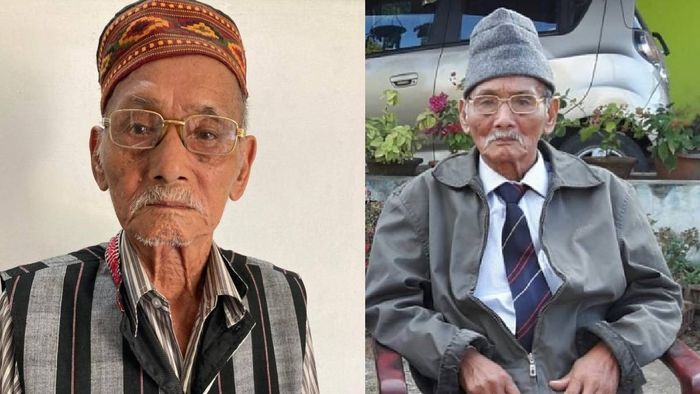
Arunachal Pradesh bid an emotional farewell to one of its most revered pioneering personalities, Retired IAS officer, prolific writer, and cultural icon Oshong Ering, who passed away on Monday at his Mirku residence after a prolonged illness. He was 88.
- Dec 09, 2025,
- Updated Dec 09, 2025, 7:39 PM IST
Arunachal Pradesh bid an emotional farewell to one of its most revered pioneering personalities, Retired IAS officer, prolific writer, and cultural icon Oshong Ering, who passed away on Monday at his Mirku residence after a prolonged illness. He was 88.
Ering, celebrated as one of the first-generation officers of the state and among the earliest tribal scholars, leaves behind an enduring legacy that spans administration, literature, cultural preservation, and intellectual thought. His demise has triggered an outpouring of grief across the state, with tributes pouring in from political leaders, academicians, community organisations, and citizens.
He was laid to rest on Tuesday at Mirku Village, where prominent figures, relatives, admirers, and community members gathered in large numbers to offer their final respects. The atmosphere at his residence and the funeral site reflected the profound loss felt by all sections of society.
Born on February 1, 1937, to Late Adul Ering and Late Gomyi Gao Ering in Roing village near Pasighat, Ering’s academic journey began at L.P. School Pasighat in 1942. He later studied at Sadiya Government Higher Secondary School and Pasighat Middle School before completing his matriculation at Government HSS Pasighat. He pursued higher studies at St. Edmund’s College, Shillong.
Ering joined government service in 1960 as Area Superintendent at Pasighat and went on to hold several key administrative positions including Deputy Commissioner, Director of Arts & Culture, Director of Civil Supplies, Director of Relief & Rehabilitation, and Registrar of Cooperative Societies. Known for his honesty, humility, and unwavering dedication to public service, he worked extensively across regions such as Pasighat, Yingkiong, Pangin, Boleng, Mariyang, Anini, and Tezu.
Parallel to his administrative career, Ering became a towering figure in Adi literature and indigenous knowledge systems. His contributions to the Bogum Bokang Kebang institution and his writings played a crucial role in strengthening cultural identity and intellectual discourse within the Adi community. Scholars recall him as a profound thinker whose philosophical insights will continue to shape generations.
Condolences poured in from leaders across the state. Member of Parliament Tapir Gao said Ering’s death was “a great loss to Arunachal Pradesh and to all who had the privilege of knowing and working with him.” Pasighat MLA Tapi Darang, Mebo MLA Oken Tayeng, former MLAs Kaling Moyong and Bosiram Siram also paid rich tributes.
Pasighat West MLA Ninong Ering, while offering his last respects, described him as “an officer of impeccable character—simple, grounded, and wholly devoted to the welfare of the people.” He added that Ering’s life would remain an enduring source of inspiration for future generations of officers and youth.
East Siang Deputy Commissioner Sonalika Jiwani and SP Pankaj Lamba also expressed their condolences, acknowledging his profound impact on the district and beyond.
The Adi Agom Kébang (AAK), Pasighat, led by President Dr. Tayek Talom, paid deep homage, describing his death as “an irreparable loss for Arunachal Pradesh and the Adi community.” The organisation noted that his passing leaves a void in literature, philosophical epistemology, and cultural scholarship.
Late Oshong Ering is survived by three sons, three daughters, and several grandchildren. Though he lived a quiet life after retirement, his intellectual footprint remained deeply influential. His passing marks the end of an era for Arunachal Pradesh.