Arunachal Pradesh: Jawaharlal Nehru College Pasighat hosts panel discussion on human-wildlife conflict and coexistence
Jawaharlal Nehru College Pasighat convened experts to address human-wildlife conflict challenges. The panel focused on collaborative solutions for sustainable coexistence in Arunachal Pradesh.
- Mar 27, 2026,
- Updated Mar 27, 2026, 8:04 PM IST
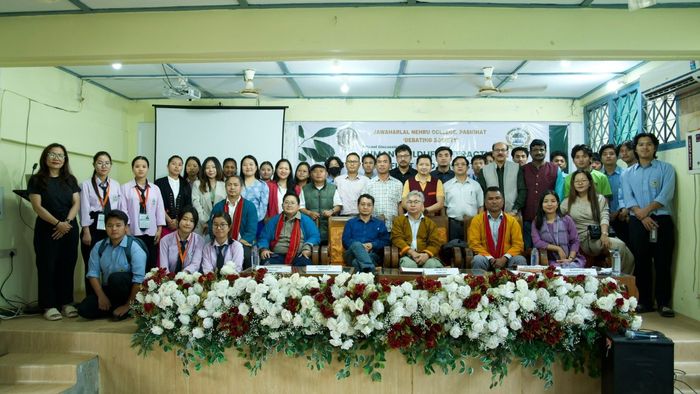
The Debating Society of Jawaharlal Nehru College Pasighat organised a significant panel discussion on “Human-Wildlife Interactions: Conflict and Coexistence,” bringing together experts and conservationists to deliberate on sustainable solutions to growing human-animal conflicts.
Held under the leadership of Dr. Gindu Borang, the session focused on practical approaches to address the increasing friction between humans and wildlife. The programme was coordinated by Dr. Kaling Darung, with Dr. Apilang Apum serving as co-coordinator. It was supported by the college’s Internal Quality Assurance Cell (IQAC) and Research & Development (R&D) Cell. The discussion was moderated by journalist Marina Dai, who facilitated an engaging and interactive session.
Among the panelists, Maksam Tayeng, Honorary Wildlife Warden and Chairman of the Eco-Development Committee of Daying Ering Memorial Wildlife Sanctuary, highlighted habitat destruction and hunting as key drivers of conflict. Drawing from over 15 years of experience, he stressed the importance of sustainable practices and protection of natural habitats.
Indigenous conservationist Jibi Pulu emphasised community-led conservation, noting that prioritising preservation over material gain is crucial. He cited successful local efforts in increasing wildlife populations through grassroots initiatives.
Dr. Kento Kadu, Associate Professor and Head of the Zoology Department at JNC, pointed out that rural communities and farmers are the most affected by such conflicts. He called for long-term, proactive policies rather than reactive compensation measures.
Adding a conservation policy perspective, Tajum Yomcha, Research Officer in the Office of the PCCF (Wildlife & Biodiversity), suggested reframing human-wildlife “conflict” as a shared challenge, advocating for a balanced coexistence approach.
The event concluded with an interactive session where students and faculty actively engaged with the experts, reflecting growing awareness and interest in ecological balance and conservation challenges in the region.